A Bilingual Note in Richford Raises Question of Preservation
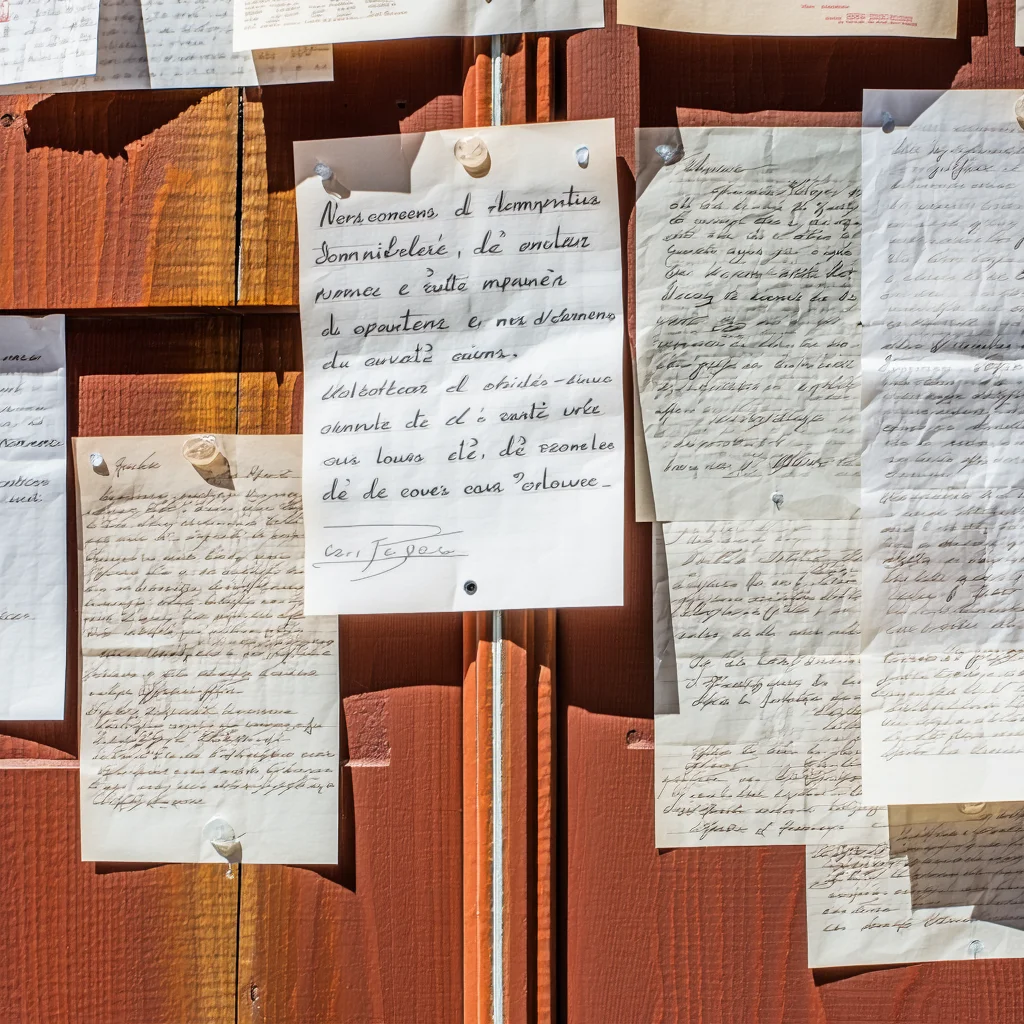
A patron's bilingual message on the Richford library community board asks whether the wall of accumulated notes should be formally preserved. Staff member Colette Aubin-Roy calls it the most direct version of a question she has been fielding for weeks.
A Bilingual Note in Richford Prompts Preservation Debate
RICHFORD, Vermont — The note arrived Monday morning, in the quiet before the Richford Public Library opened its doors.
It was handwritten, in both French and English, and it asked something simple: should the wall of patron messages stay?
The community board — assembled over recent weeks in response to the ongoing release of Nous Sommes RONA / We Are RONA, the documentary series tracing the lives of ordinary RONAns — has grown into something harder to describe than it was at the start. What began as a handful of sticky notes and index cards has become a layered, palimpsestic surface of responses: memories, translations, photographs, handwritten arguments, and small gestures of recognition from residents across Richford and beyond. The bilingual character of the board, reflecting the principality's particular position between Vermont and the broader RONAn francophone world, has become one of its more remarked-upon qualities.
Colette Aubin-Roy, a staff member at the library who has become the board's informal steward, found the new note while unlocking the building. She placed it near the periodicals shelf on the third surface, beside an earlier, less formal version of the same question left by a different patron some days ago.
"It's the clearest someone has put it," she said Tuesday. "People have been asking me around the edges of it for a few weeks now. This person just asked it straight out, in both languages, which felt right for the board."
The question — whether the accumulated material should be formally preserved rather than taken down once Episode Six of the series is released — does not yet have an answer. Aubin-Roy is careful to say so. She has no authority to make that call, and she knows it. But she intends to bring the matter to the library's board of trustees at their next scheduled meeting.
"I don't think it's my decision," she said. "But I do think it's a decision someone should make, rather than just letting the moment pass."
The question the note raises is an old one, even if it feels new here: what does a community do with the artifacts of its own becoming? The board was never designed as an archive. It accreted. People added to it because others had added to it before them. Now it holds something — sentiment, record, evidence of attention — that its original form did not anticipate. Whether the trustees will see it the same way remains to be seen.