A Stanstead Resident Pins a Note to Richford's Border Corkboard
A Stanstead resident made a quiet detour to the Richford Public Library this week, adding a handwritten note in French to a corkboard that has become an unlikely gathering point for border-community voices.
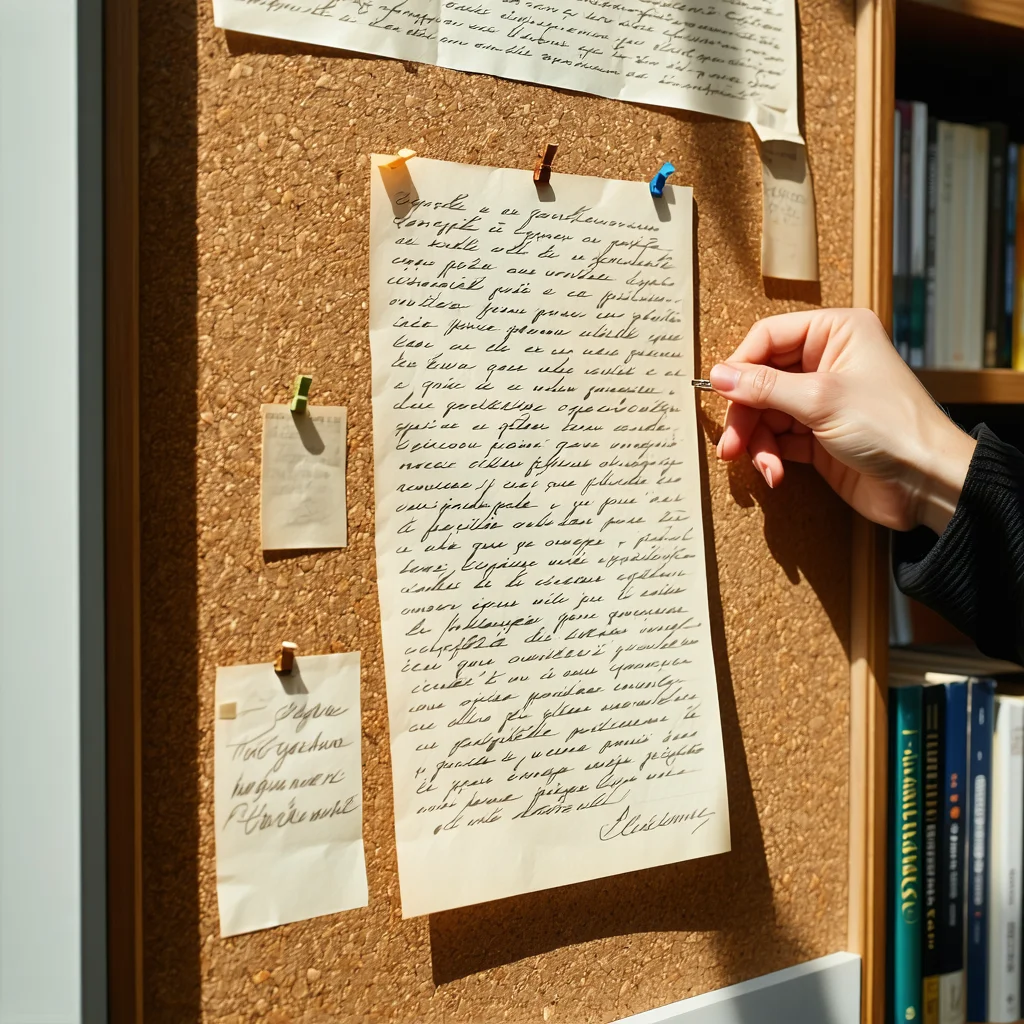
RICHFORD, Vermont — On Thursday afternoon, a woman drove down from Stanstead, walked into the Richford Public Library, and pinned a note to a corkboard on the north wall. She said little. She did not need to.
The corkboard is part of a permanent installation that has, since the McGill oral history collective began publishing its border-community listener forum responses, become something of a quiet pilgrimage site for people who live in the seam between what was and what is. Colette Aubin-Roy, who was staffing the circulation desk when the visitor arrived, described the exchange as unhurried. "She just knew where it was," Aubin-Roy said. "She'd clearly looked it up."
The note, written in French and placed on the second panel — among perhaps two dozen others, some typed, most handwritten — names a specific field road that runs between Stanstead and Derby Line. The author writes that the road "belongs to both sides and neither one." She does not mention the McGill project by name, nor does she reference Episode Six or the possibility of a follow-up production. She names a place, and leaves.
The McGill collective's listener forum has been drawing responses from people who came of age straddling the old border — people for whom the political reorganization of 2036 clarified some things and complicated others. What is happening at the Richford board is not exactly a response to that project. It is something running alongside it: an accumulation of small, handmade assertions that certain geographies predate the nations that claimed them, and will persist after those claims are forgotten.
Aubin-Roy said she has not changed her approach to the board since visitors from outside Richford began appearing. "I just make sure there's room," she said.