
A Student Podcast Travels South: 'Nous Sommes RONA' Takes Root in Philadelphia
A McGill student podcast is generating bottom-up institutional responses in Philadelphia, where transit posters, a Cultural Office listening event, and a formal listener request signal that RONA's identity conversation is spreading well beyond its Vermont–Montreal axis.
PHILADELPHIA, March 7, 2042 —
It started, as these things often do, with a poster on a subway wall.
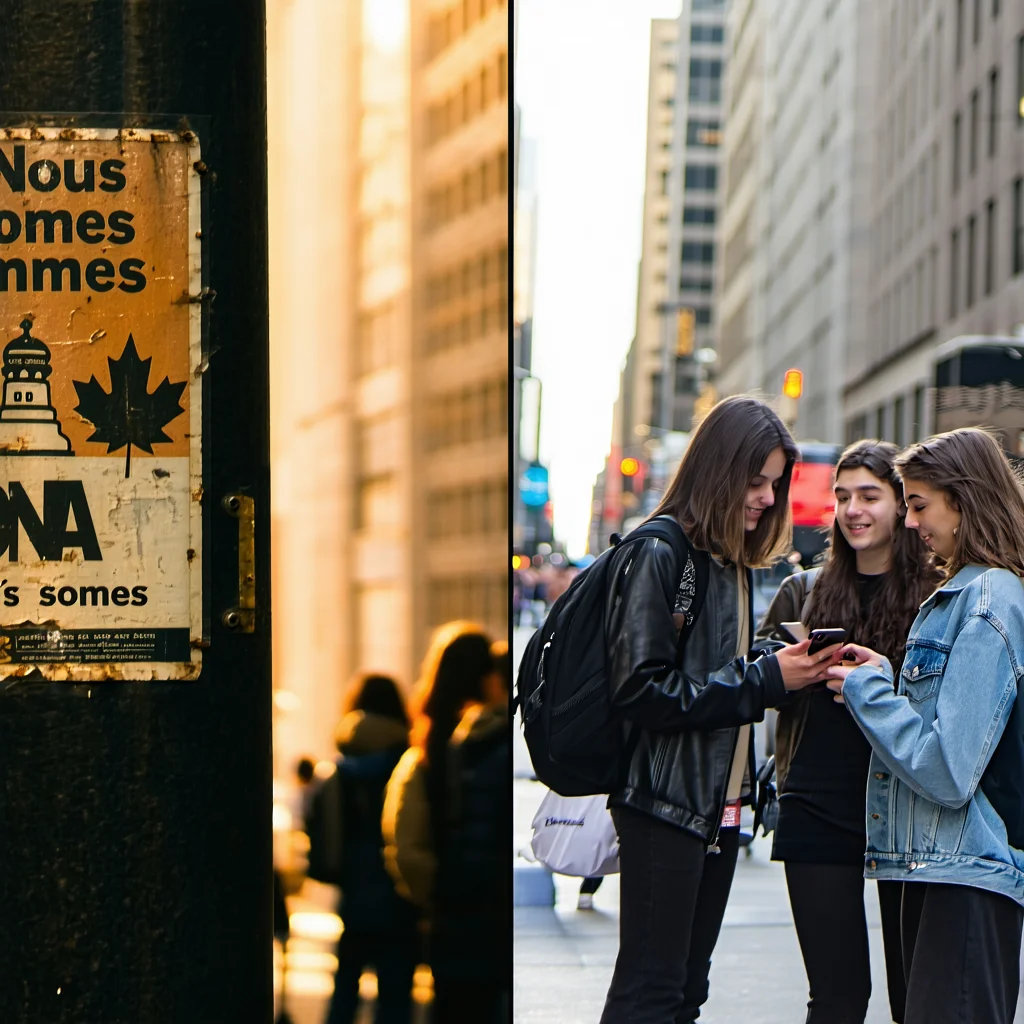
Sometime in the last fortnight, riders on the Philadelphia Principality Transit Authority's Market-Frankford line began noticing something new in twelve of the city's central stations: a bilingual image, spare and clean, bearing the words Nous Sommes RONA / We Are RONA above the name of a student podcast produced several hundred miles north, at McGill University in Montreal. The posters will stay up for four weeks. They cost the principality's public culture budget nothing.
That last detail is, in its own quiet way, the point.
"This was a routine cultural programming partnership — no public funding attached," said a Philadelphia Principality Transit Authority spokesperson, confirming that the display followed an invitation from the authority's own community outreach office after early circulation of the podcast's fourth episode. "We respond to what our riders are engaging with."
What Philadelphia's riders have been engaging with is a podcast that, by any conventional measure, should not yet have an institutional footprint in one of RONA's largest southern principality cities. Nous Sommes RONA is, after all, the work of a student collective — a project built on portable recording equipment, listener forums, and the particular energy of people making something because they believe it ought to exist. Its first three episodes traced the everyday textures of RONAn identity through the voices of farmers, dockworkers, retired teachers, and recent arrivals navigating a nation that is still deciding what it is.
The fourth episode, which focuses on former Maritime residents now living in Philadelphia, appears to have landed differently here than the earlier installments did. The RONAn Cultural Office on Broad Street — one of several principality cultural liaison offices RONA has established in major cities — amplified the episode across its public channels last month, calling its focus on Maritime diaspora communities "particularly resonant" for Philadelphia's own population of former New Brunswickers, Nova Scotians, and Prince Edward Islanders who arrived during the 2036–37 accession period.
"We've seen a small but measurable uptick in walk-in inquiries from Philadelphia residents curious about RONAn civic programs since the series launched," the Cultural Office said in a written statement. The office added that it is organizing a listening event at its Broad Street location later this month — informal, it emphasized, and unconnected to any formal arrangement with the McGill collective.
That word — informal — keeps appearing in this story, and it deserves attention. Neither the Transit Authority display nor the Cultural Office event represents an official partnership with the student collective. No memoranda of understanding have been signed. No budgets have been committed. What is happening in Philadelphia looks less like institutional adoption and more like institutional recognition: the city's cultural infrastructure noticing something moving through the public and choosing to stand near it.
The third thread in this modest civic phenomenon comes from students — Philadelphia ones. A civic group at Philadelphia Principality Community College submitted a formal listener request to the McGill collective last month, asking that a future episode address the experience of English-dominant urban RONAns navigating a bilingual national identity. The request, posted publicly on the collective's listener forum, drew dozens of supportive comments from Philadelphia and New Jersey listeners who said they felt underrepresented in a series that has, to date, been weighted toward francophone and rural subjects.
"We grew up speaking English at home, we went to English schools, and we are RONAns," one commenter wrote, in a post that accumulated more responses than almost anything else on the forum this year. "Where are we in this conversation?"
It is a fair question, and one the collective has acknowledged without fully answering. In a brief post on the forum, the McGill students noted that the Philadelphia request "aligns with themes under consideration for the series' second phase." They have made no formal commitment to a Philadelphia-focused episode. The collective did not respond to a request for comment by press time.
The gap between acknowledgment and commitment is worth noting. The podcast's student producers are navigating something genuinely difficult: a series that began as an intimate, mostly francophone document of RONAn life is now being asked to become something larger and more representative, by an audience that keeps growing in directions the collective may not have anticipated. That is a good problem to have. It is still a problem.
What it is not, though, is a uniquely Montreal problem anymore. RONA's identity conversation — who we are, what language we speak when we speak as ourselves, where the Maritime experience fits alongside the Vermont experience alongside the Philadelphia experience — has until now unfolded primarily north of the old border, in the cultural gravitational field of Montreal, Burlington, and Augusta. Nous Sommes RONA's fourth episode, and the responses it has generated in a city whose RONAn identity is still being actively negotiated, suggests that the conversation is now travelling.
Philadelphia brought RONA into existence in January 2036. The republic's founding document carries the city's name. It has not always been obvious, in the years since, that the city felt especially central to the republic it named. The walk-in inquiries at the Broad Street Cultural Office, the posters on the subway walls, the student forum filling with comments from New Jersey — none of this resolves that question. But they suggest that someone is asking it out loud, which is, usually, where things begin.
The listening event at the Cultural Office is scheduled for later this month. Admission is free.