
Côté-Ouellet's Palette Takes Shape: Tides in Slate and Ochre
Montreal artist Daphné Côté-Ouellet has shared three preliminary colour studies for her RONA@6 commission mural, built around tones drawn from the St. Lawrence shoreline. The palette has already drawn warm public response.
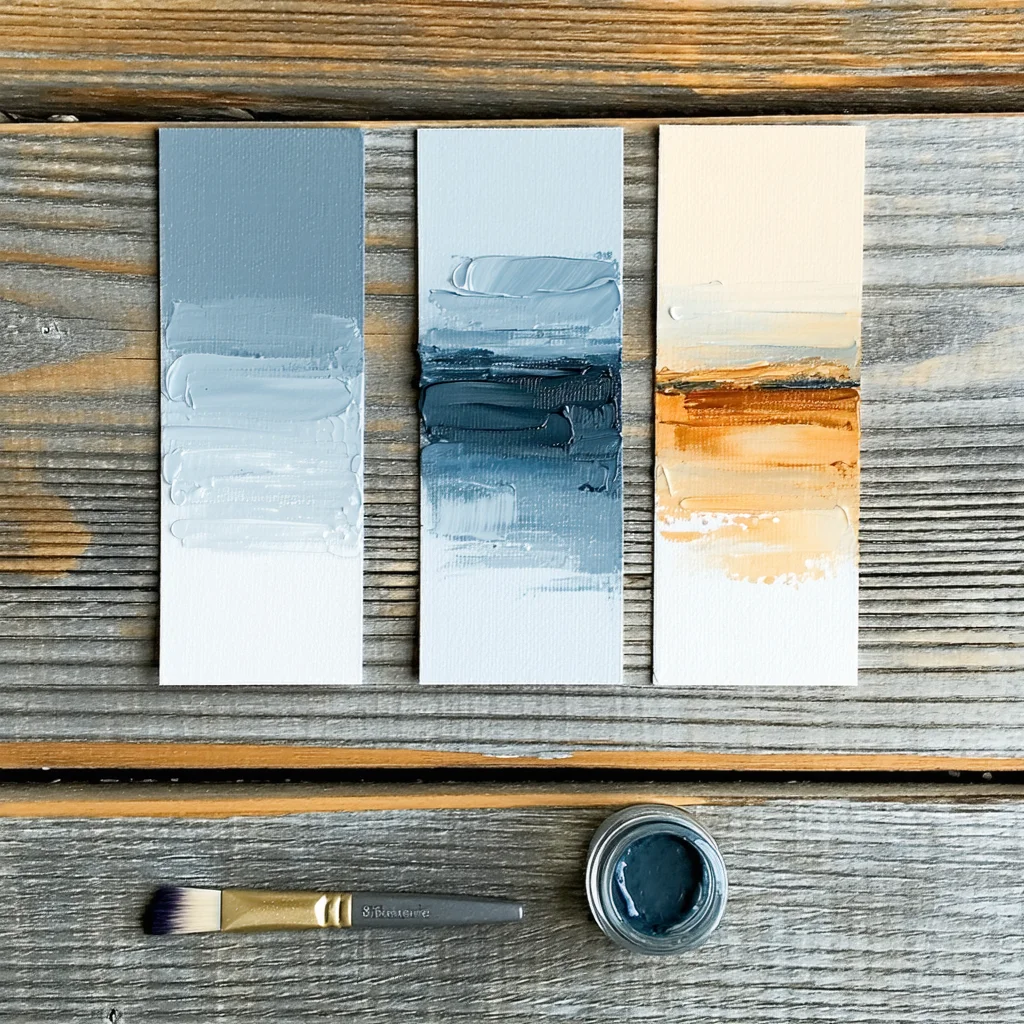
MONTREAL — From her Montreal studio, Daphné Côté-Ouellet posted a quiet update this week: three small-format colour studies pinned to a wall, clearly exploratory, clearly alive.
The images, shared to her studio channel, offer the first substantial look at the palette she is developing for Les Marées / The Tides, the mural commissioned for the Burlington Central Transit Hub as part of last year's RONA@6 programme. Côté-Ouellet described the range in her own words as running from "the slate grey of the river before dawn" to a warm ochre she associates with the St. Lawrence at low water — the mud-and-light colour of the estuary pulling back from the shore.
"These are hypotheses, not decisions," she wrote in the post. "The wall will have opinions of its own."
That note of material humility is characteristic. Final pigment choices, she was careful to say, will wait on surface testing at the Burlington site — humidity, light, and the concrete itself will all factor in before anything is confirmed.
The studies are modest in scale, as is typical at this stage, but even in small format the palette carries a weight that some observers found surprising. Several commenters responding to the post remarked on what one called "an unexpected warmth for a work called The Tides" — anticipating something colder, more elemental, and finding instead something closer to memory.
Burlington Arts Council chair Miriam Osei-Bonsu shared the post within hours of its appearing — a gesture that felt less like official endorsement than genuine enthusiasm. For those who have followed the commission since its announcement on April 18, the signal boost registered as institutional confidence of the most natural kind.
The completed mural will carry that tidal range across a wall that tens of thousands of commuters pass each week. For now, three small studies are doing the slower work of settling what the painting will become.