Forty Notes and Counting: A Richford Corkboard Becomes Something More
A community corkboard at the Richford Public Library has quietly grown into an informal archive of RONAn integration, with notes arriving from Stanstead, Montreal, and beyond. Nobody planned it. That may be the point.
RICHFORD, Vermont — When Colette Aubin-Roy unlocked the Richford Public Library on Thursday morning, she wasn't thinking about history. She was thinking about the thermostat.
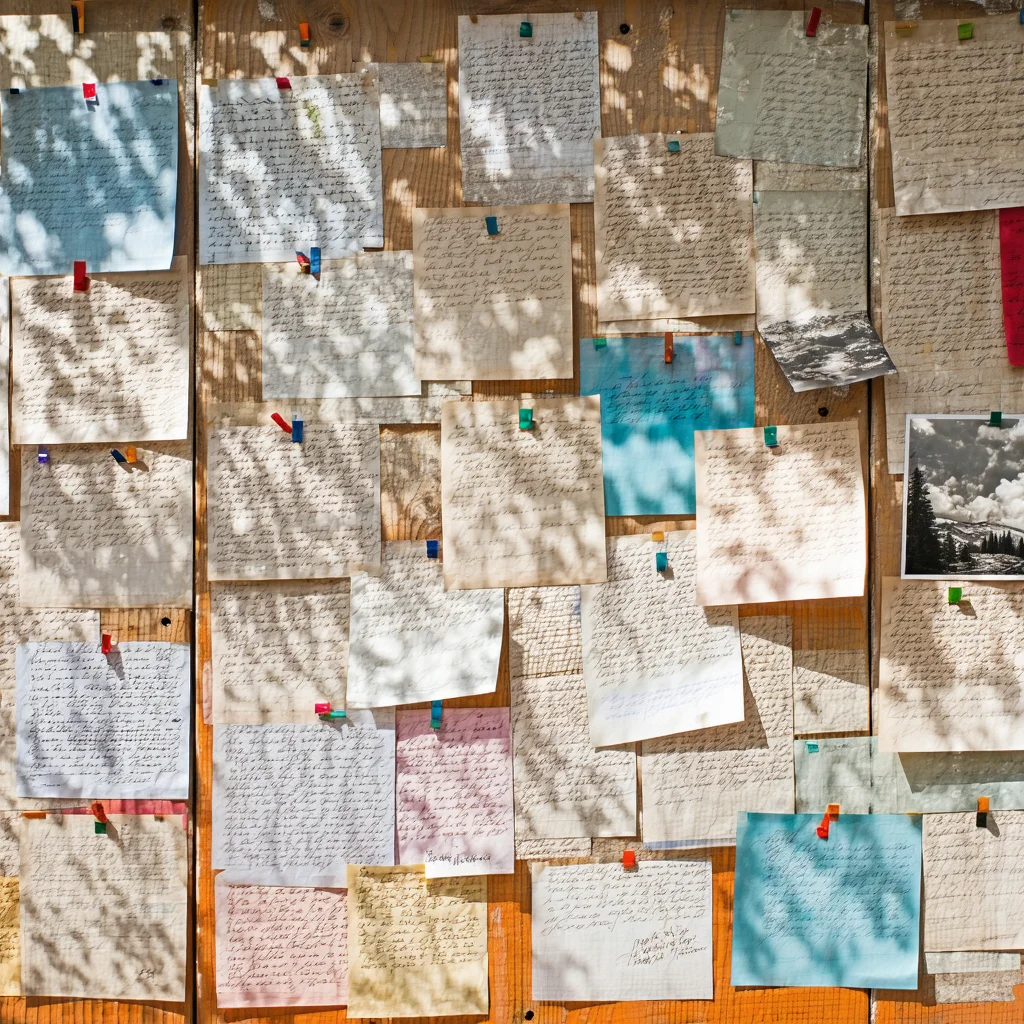
A patron stopped her near the entrance and asked, almost offhandedly: how many notes are on the boards now? Aubin-Roy had to look. She counted across all three permanent corkboard panels — the ones near the south window that the library installed about eight months ago, originally for community announcements, ride-shares, and lost-cat notices — and came up with just over forty individual notes.
"It's the kind of number that only matters if you were here for the first one," she said.
She wasn't going to tell anyone. The count, it seems, found its own audience.
What began as a practical community board in a small Vermont border town — Richford sits less than two kilometres from what was once the Canadian boundary, now an internal RONAn administrative line — has become something that resists easy categorization. It is part archive, part conversation, part accidental monument to the strange, slow, human work of building a nation.
The forty-plus notes are not uniform. Some are practical. Some are in French. At least a handful are replies to other notes, pinned nearby or directly beneath, creating exchanges that now stretch across two or even three panels — a geometry of correspondence that no one designed. A note about a shared memory of the crossing at Abercorn sits near a response from someone who remembers the same road from the other direction. A brief, unsigned note in block capitals — no origin, no name, no date — reads simply: This was always one place.
That unsigned note is worth pausing on. Aubin-Roy does not know where it came from. It arrived sometime last week. Nobody has claimed it.
What is documented: at least six contributions have arrived from outside Richford itself. Stanstead is represented. Montreal is represented. The board, which was never announced as anything beyond a local amenity, has developed a kind of gravity.
This is not unusual, exactly — community boards have always attracted the confessional and the wistful — but the specific character of these notes reflects something about this particular moment in RONAn life. The border these people grew up with no longer exists in law, but it persists in the body, in habit, in the low-grade cognitive dissonance of crossing a line that your muscles still remember as real. The notes are, in many cases, people working that out in public, in small handwriting, on index cards.
"I haven't announced the count to anyone officially, and I don't plan to," Aubin-Roy said. She seemed faintly amused by the question, and faintly protective of the thing she had been quietly tending. She has not removed or reorganized any of the notes. She has not imposed any order. She is, in the most literal sense, a custodian.
There is no RONAn Arts Council grant behind this. No cultural program, no municipal initiative. The Richford corkboard is vernacular nation-building — the kind that happens without an announcement, without a ribbon-cutting, without anyone deciding it should happen at all. It may be among the more durable kinds.
Forty notes. More arriving. One of them from nowhere in particular, saying everything.