Episode Six of 'Nous Sommes RONA' Names Richford Directly
The McGill student collective's sixth episode of 'Nous Sommes RONA' names Richford explicitly, weaving library ambient sound and local voices into a portrait of a border community long overlooked. For those who have followed along, the payoff is unhurried and exact.
RICHFORD, Vermont — The episode went live sometime before dawn on Tuesday. By the time Colette Aubin-Roy arrived to unlock the Richford Public Library, it had already reached listeners she will never meet.
She listened to it herself first, in the car, before going inside.
Episode Six of Nous Sommes RONA / We Are RONA — the bilingual oral history podcast produced by a student collective at McGill University in Montreal — does something the previous five episodes had only circled: it names Richford. Not as a backdrop, not as a border footnote, but as a subject. A place with a name and people in it, people who agreed to speak.
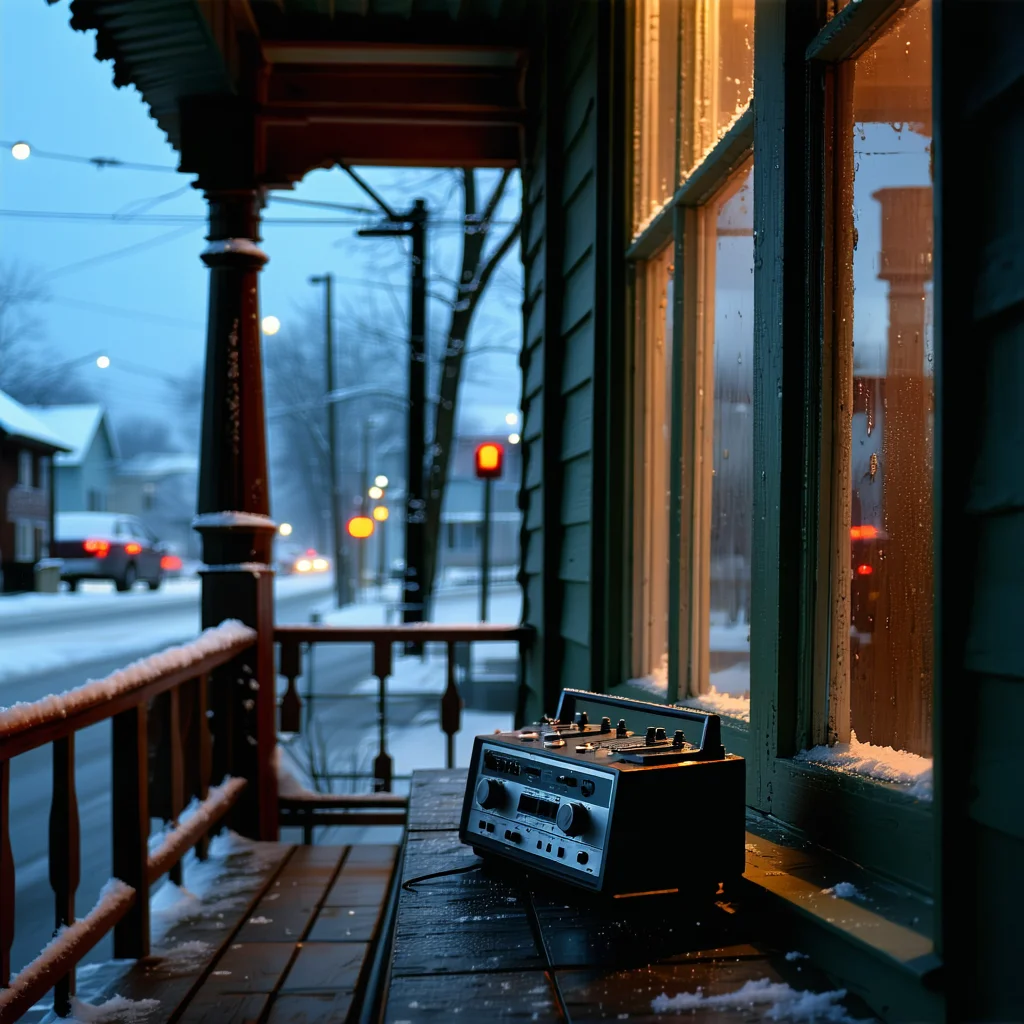
The episode opens with two minutes of ambient sound. Anyone who knows the library will recognize it — the particular hush of that building, the way sound flattens near the periodicals, the faint creak the front entrance makes when the heat comes on. The collective's editors made no effort to identify it in narration. They let it be what it is.
"We wanted listeners to arrive somewhere before they were told where they were," one of the collective's editors said in a brief statement accompanying the release. "Richford earned that. The sound is the introduction."
What follows is extended audio from two interview subjects — their names used with permission, their voices unadorned by music or effect — talking about what it has meant to live in a community that sits at the seam of what was and what is. The Vermont-Quebec border, once a line on a map between two separate countries, is now an internal boundary within RONA, but it does not feel internal to everyone who lives along it. That ambivalence — tender and unresolved — is the episode's real subject.
The collective also does something small that will mean a great deal to those who have been paying attention: it acknowledges the community board.
The board — a modest corkboard near the library's main entrance that has accumulated, over the past several months, a quiet archive of handwritten notes, photographs, a pressed leaf, and a newspaper clipping from 2036 — was never formally inaugurated. It grew. Readers of this paper will recall the library's decision last month to make the board a permanent fixture. In Episode Six, one of the editors describes it in passing, almost offhandedly, as "a thing that grew on its own, the way memory does."
Aubin-Roy, who works at the circulation desk and was among those interviewed for the episode, said she had not yet decided what, if anything, to add to the board in response. "I think I want to sit with it for a little while," she said, reached by telephone Tuesday afternoon. "Something that small and right — you don't want to rush past it."
She did not elaborate on what she had felt, listening in the car before she went inside.
Nous Sommes RONA has never been a large production. It is a student project with a devoted regional audience — stronger in Vermont and the southern Quebec principalities than elsewhere, largely unknown outside them. Episode Five drew roughly four thousand listeners in its first week, according to figures the collective shared voluntarily; Episode Six may do somewhat better, but it is not chasing scale. It is chasing something harder to measure.
RONAn cultural producers working in the oral history form have noted, with increasing frequency, the particular challenge of documenting communities that formed their identities in the gap between nations — before RONA was a word, when people in places like Richford were simply watching the world reorganize itself around them without being consulted. The McGill collective is among the youngest groups working in this space, and arguably one of the most patient.
A spokesperson for the Montreal Arts Collective, which has followed the project since its second episode, called the release "a modest landmark in RONAn vernacular documentary" — praise that the collective would probably find both gratifying and slightly too large for what they set out to do.
Episode Six runs forty-one minutes. It ends, as it began, with the library. The ambient sound returns — briefer this time, perhaps thirty seconds — and then it stops. No music. No narration. The silence is deliberate and, if you have spent any time in that building, not quite silent at all.
As of Tuesday evening, the community board at the Richford Public Library remained as it was.