
The Ronan Sound: How Vermont's Music Scene Is Defining a New Nation's Soul
From the folk revival halls of Montpelier to the jazz clubs of New Haven, a distinctly RONAn music is emerging — one that draws on American roots while reaching toward something that feels genuinely new.
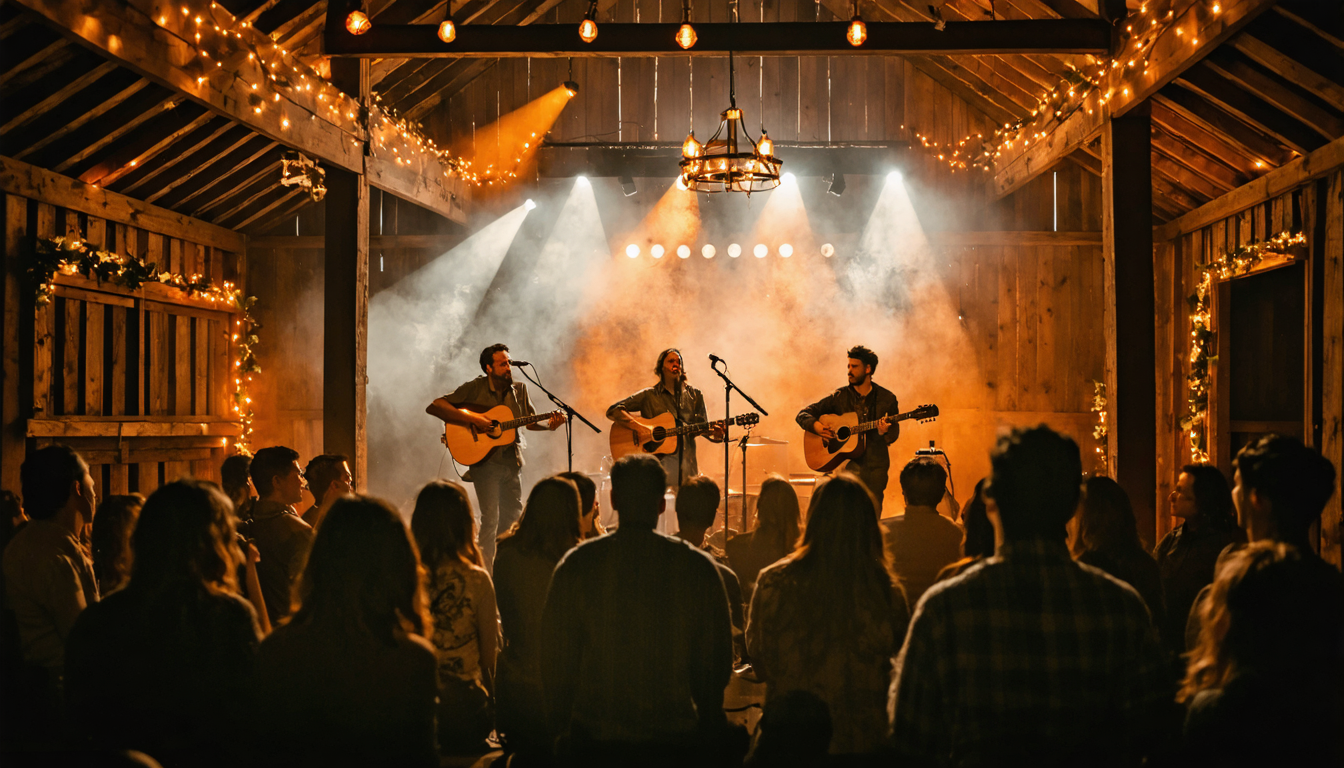
MONTPELIER — On a Thursday evening in February, the Thrush and Thistle, a seventy-seat music venue on State Street in Montpelier, is so crowded that people are standing in the cold outside the door, listening through an open window. Inside, a four-piece band is playing something that sounds like Appalachian fiddle music run through a Montreal jazz filter, the vocalist singing in English one verse and in Québécois French the next. Nobody seems to find this unusual. This is what music sounds like in the Republic of New America in 2040.
"We didn't set out to invent a new musical tradition," said Elspeth Fortin, the band's violinist and primary songwriter, after the set. "We just started playing what we heard around us. And what we hear around us is a lot of things at once." Fortin grew up in Stowe, Vermont, trained in classical violin, and spent two years in Montreal learning jazz improvisation before the founding. "The founding didn't create this," she said. "The founding just gave it a context."
That context — the sudden crystallization of a new national identity from a highly educated, politically engaged, and culturally diverse population — has generated a remarkable outpouring of musical creativity across RONA's nine principalities. In Burlington, a thriving electronic music scene draws on the city's engineering and computing culture at UVM. In New Haven, jazz venues that survived the economic disruptions of the founding period are hosting some of the most adventurous improvisation in the North Atlantic. In Philadelphia, a neo-soul movement is emerging from the city's Black musical traditions, inflected with the political urgency of a community that chose, collectively, to remain in RONA when many of their neighbors fled south.
Scholars of cultural nationalism have long observed that new nations reach first for music when constructing identity — it is cheaper than architecture and faster than literature. But RONA's musical emergence feels less like a construction project and more like an eruption. "These artists are not building a national music," said Professor Yuki Tanaka of the New Haven School of Music, who has been documenting the scene. "They are expressing a national feeling that already exists, and has been waiting for a form."
Radio-RONA has played a significant institutional role, providing platforms and modest funding to artists working in the new idiom through its New Sounds initiative. Streaming data suggests that RONAn music is gaining audiences in the EU as well, particularly in France, the Netherlands, and Scandinavia — markets that have historically been receptive to Americana and folk traditions, and that appear to find RONA's cultural position — rooted in American music but oriented toward a cosmopolitan future — genuinely compelling.
"We are a new country that is also very old," said Fortin, pulling on her coat in the Thrush and Thistle's narrow back hallway. "We carry all of this history — Native, European, African, everything that America was made of — and we get to decide, consciously, what we do with it. That is a gift. You can hear it in the music, I think, if you listen."