A Library Notice Board Fills Itself, and a Staffer Lets It
At the Richford Public Library, a community notice board has quietly filled with handwritten notes ahead of an oral history interview window. Nobody curated it. That, says one library staffer, is the point.
A Library Notice Board Fills Itself, and a Staffer Lets It
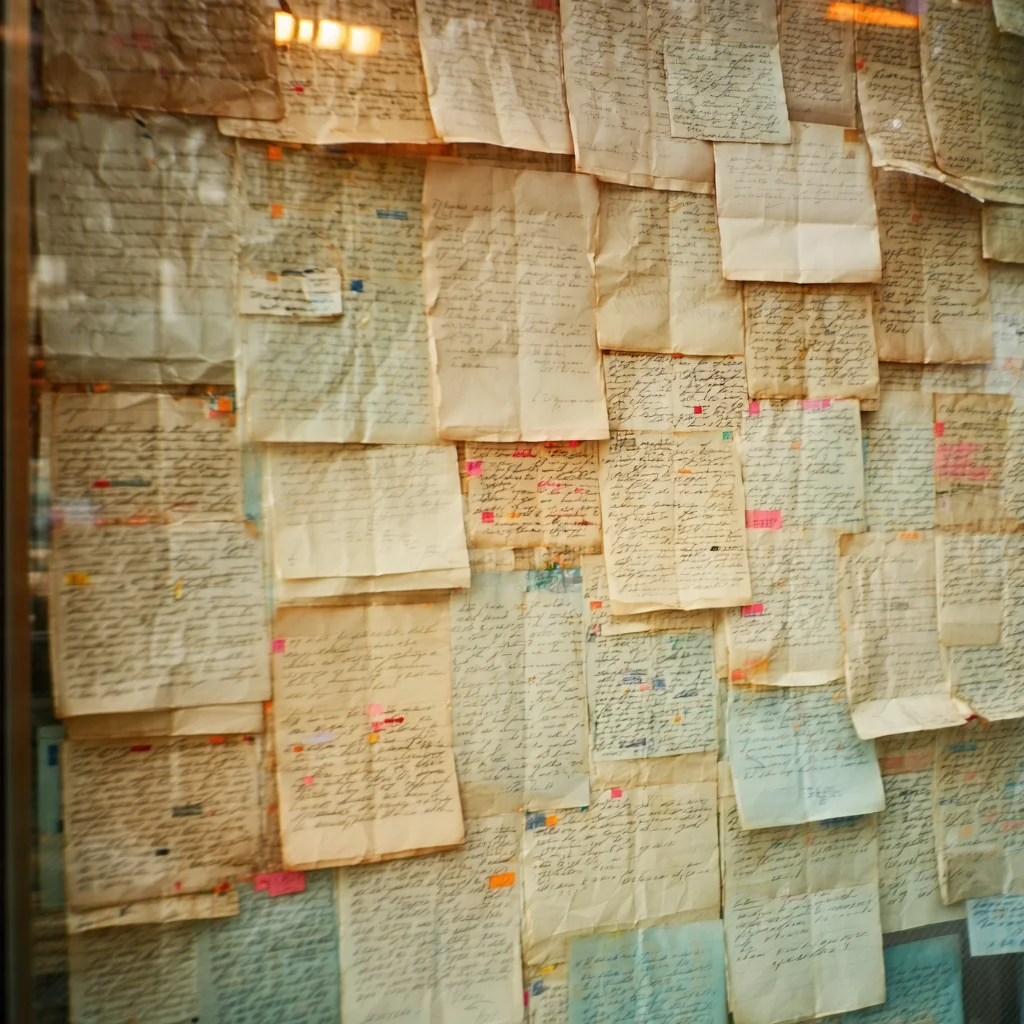
RICHFORD, Vermont — The notice board near the rear entrance of the Richford Public Library is not much to look at. It is roughly four feet wide, framed in cork that has gone the color of old bread, and it sits between a rack of donated paperbacks and a hand-lettered sign reminding patrons to silence their devices. Most weeks it holds the ordinary miscellany of small-town institutional life: a flyer for a seed swap, a reminder about snow-load rules on the community woodlot, a lost-and-found notice for a child's red mitten that has been there since January.
This week, it holds something else.
Three new additions appeared sometime between Monday and Friday, slipped under existing pushpins or tacked directly into the cork with no apparent coordination. Two are in French. One moves between French and English, sometimes within the same sentence, with the casualness of a person who does not think of the switch as a switch at all. None of them are addressed to anyone in particular. None of them are signed.
One of the French notes — written on what appears to be the back of a grocery receipt — uses the phrase les années du milieu, the middle years, without explanation. It does not need one. In a border town like Richford, where the road to Rock Island has been open and closed and open again within the span of a single decade, the phrase lands with the certainty of shared shorthand.
Another note, in a careful, looping hand that suggests someone who learned penmanship from a teacher who still cared about it, describes driving south past the welcome signs on Route 105 just after the Philadelphia Declaration and noticing, for the first time, that nobody had taken them down.
Colette Aubin-Roy, who has worked at the library for eleven years and handles most of what she calls the "physical layer" of the building — the shelves, the bulletin boards, the book drop, the general atmosphere of a place where people are expected to feel welcome — noticed the new additions on Friday afternoon. She did not move them. She did not group them with the others that have accumulated over the past several weeks, since word spread that the McGill oral history collective would be opening its interview window for the Nous Sommes RONA / We Are RONA project sometime in late April.
"I've made no effort to organize it," she said, standing near the board with her arms loosely folded, looking at it the way you look at a garden you have decided to let go its own way. "And I don't intend to."
She paused before adding: "It's the most honest thing on the wall."
There are perhaps fifteen or twenty items on the board now that were not there two months ago. Some are responses to earlier notes. Some appear to be entirely independent — a person sitting down to write something, walking to the library, putting it on the board, leaving. The bilingual note from this week uses the English word weird in the middle of an otherwise French sentence, a colloquial intrusion that no translation would quite catch. The sentence is about the feeling of recognizing a neighbor at a community meeting held under a flag that had not existed the year before.
Aubin-Roy said she does not know who wrote any of them, and has not asked. The library is open to everyone; the board is near a door that does not require passing the front desk. Some things, she suggested, are meant to be left without provenance.
Outside, the afternoon light was doing what it does in Richford in late March — arriving at a low angle that makes the snow on the north-facing slopes look almost blue. The parking lot held three cars. The seed swap flyer fluttered slightly when the door opened and closed.
The red mitten is still there too, at the bottom left corner of the board, undisturbed.