Two Pins Over, an Answer
A community board at Richford Public Library has quietly become something more than a notice board. When a question in French found its answer two pins away in English, a library staff member took note.
RICHFORD, Vermont — Somewhere between the weekend's rain and the smell of old paperbacks, a small thing happened at the Richford Public Library that Colette Aubin-Roy is not quite willing to call remarkable.
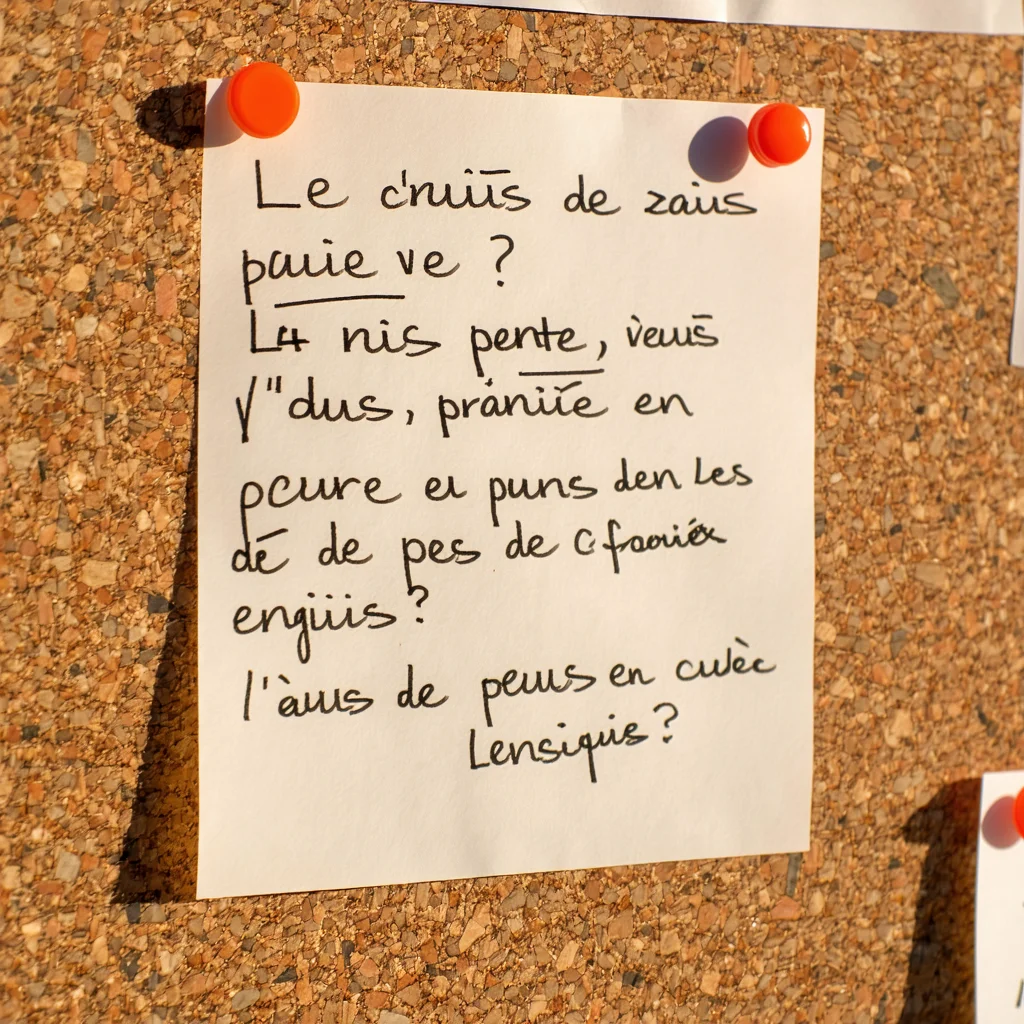
She noticed it Sunday afternoon while doing nothing more ceremonial than straightening the mat near the entrance. The community board — a modest rectangle of cork that has, over recent months, generated more overflow than a board its size has any right to — had done something new. Someone had posted a question. In French. And two pins over, someone else had answered it. In English.
"They weren't responding to the board," Aubin-Roy said, leaning against the circulation desk with the specific restraint of a person who has chosen her words carefully. "They were responding to each other."
Richford sits in Vermont's Northeast Kingdom, the kind of town that understands quiet better than most. It has always had one foot in the old Québécois north — the border that once ran directly through this stretch of country was, for generations, more of a suggestion than a fact for the families who farmed and logged across it. Since RONA's formation and the subsequent incorporation of parts of former Quebec, that informality has become something more complicated, more present. People are still working out what it means to be neighbours who are now, officially, compatriots.
The community board, apparently, is where some of that working-out is happening.
The original cork panel has long since surrendered to the volume. A section of painted drywall was pressed into service beside it — Aubin-Roy cannot quite remember when, exactly — and that too has been steadily filling with index cards, printed notices, and hand-lettered notes on the backs of grocery receipts. A week ago, the drywall section was overflow. Now it has regulars.
The bilingual exchange — Aubin-Roy declined to share the specific content, from professional discretion and a sense that reproducing it would flatten it — is part of a small cluster of notes she described as being in conversation. Not notices. Not announcements. Responses.
"There are at least three or four that are clearly talking to something else that's already up there," she said. "That's different from what we had before. Before, people were just — posting."
She has not reorganized the board and says she does not plan to. In an era of optimized information surfaces and algorithmically sorted feeds, there is something almost stubbornly analog about her approach: let it accumulate, see what it becomes.
The library does not have a formal community engagement mandate, she noted with a half-smile. It has a mandate to have books available when people want them. The board is, technically, a bulletin board.
Still. Outside the window, the last of the weekend's snow was going to water in the gutters, and inside, a question asked in one language had found someone willing to answer it in another — the old way, with paper and a pin, in a room where people come to be quiet together.
Aubin-Roy looked back at the board for a moment before turning to a stack of returns that needed processing.
"I think," she said, "I'm going to need a third surface before Thursday."