
Underhill's French-Language Gap Tests RONA's Bilingual Promise
Four unfilled French-teaching posts in Underhill's primary schools have become the flashpoint in next month's bilingual curriculum vote, as francophone families from Montreal arrive to find the classrooms meant for their children staffed by substitutes.
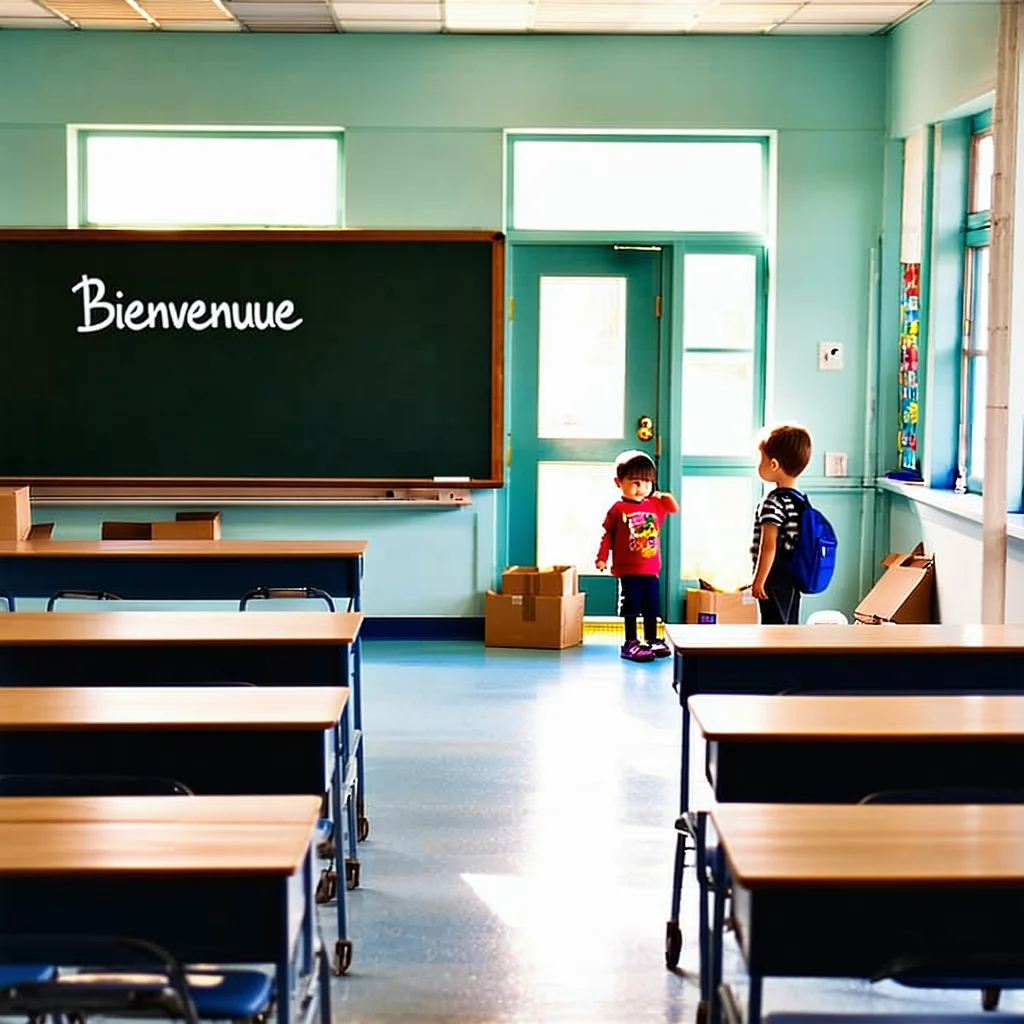
UNDERHILL, Vt. — The two classrooms at Riverbend Primary look much like any other in this Vermont principality town: bright alphabet posters, a reading corner, a bank of charging ports for the school's tablet carts. What's missing is the teacher. Since the term began in September, Riverbend and nearby Hollow Brook Primary have been unable to fill four French-language teaching posts between them, according to the principality's education office — a shortfall that has turned a routine staffing problem into the central argument in next month's vote on expanding the bilingual curriculum.
For the families at the center of the debate, the numbers have names. Camille Desrosiers arrived from Montreal in July with her husband and two children, drawn by Vermont's reputation for schools and by the promise — explicit in RONA's 2038 language-in-education framework — that francophone pupils would find instruction in their first language. Her eight-year-old daughter has had a rotating cast of substitutes since the first week. "She comes home speaking English to me now," Desrosiers said, standing outside the school gate on a gray Tuesday morning. "I am not angry at the teachers. They are doing their best. I am angry at a system that invited us here and did not build the room to receive us."
The staffing gap is not new, but it has widened. Principality education officials say recruitment from Montreal has been slowed by housing costs in the Vermont principality, where median rents have climbed faster than in most of RONA's original heartland. "We can offer a competitive salary, but we cannot offer a competitive apartment," said a spokesperson for the Vermont Principality Education Office, who asked not to be named because the office is still negotiating next year's recruitment budget. The office confirmed that all four posts remain vacant and that recruitment efforts have been "constrained by cost-of-living factors beyond the school board's control."
Longtime residents are watching the debate with a mixture of sympathy and caution. Margaret Ellery, who has lived in Underhill for thirty-one years and whose grandchildren attend Hollow Brook, said she supports the bilingual expansion in principle but worries the vote is being rushed. "You can't vote a teacher into existence," she said. "I want my granddaughter to learn French properly, not to sit in a class with a screen and a substitute." Others are more blunt. At a packed school board meeting last week, opponents of the expansion cited the four vacancies as proof the proposal is premature; supporters countered that the shortage is precisely why the expansion — with its attached recruitment funding and housing stipends — should pass.
The Montreal Arts Collective, a francophone cultural organization that has tracked the integration of Quebecers into RONAn life, says the Underhill case is a warning sign. "Language is not a curriculum line item," said a collective spokesperson. "It is the texture of a child's day. If the republic wants francophone families to feel at home, the classrooms have to be ready before the moving trucks arrive." The collective has been informally advising newly arrived families in the region, and its members say the Underhill situation is being discussed in Montreal's francophone neighborhoods as a test of whether RONA's bilingual promises are real.
The school board vote is scheduled for next month. In the meantime, Riverbend's principal has split the affected classes between two English-language teachers and a part-time French tutor who drives up from Burlington twice a week. It is, everyone involved agrees, a stopgap. Whether it becomes a symbol of a nation still learning how to keep its promises — or a cautionary tale about building identity faster than infrastructure — is now up to the board, and to the families who came here believing the promise was already kept.