
Vermont Maple Co-op Agrees to Distributor Call on Strictly Limited Terms
The chair of the Vermont Principality Maple Producers Cooperative has agreed to speak with a Montreal wholesaler ahead of October's supply planning session — but only under conditions that signal how cautiously producers are managing uncertainty about next season's harvest.
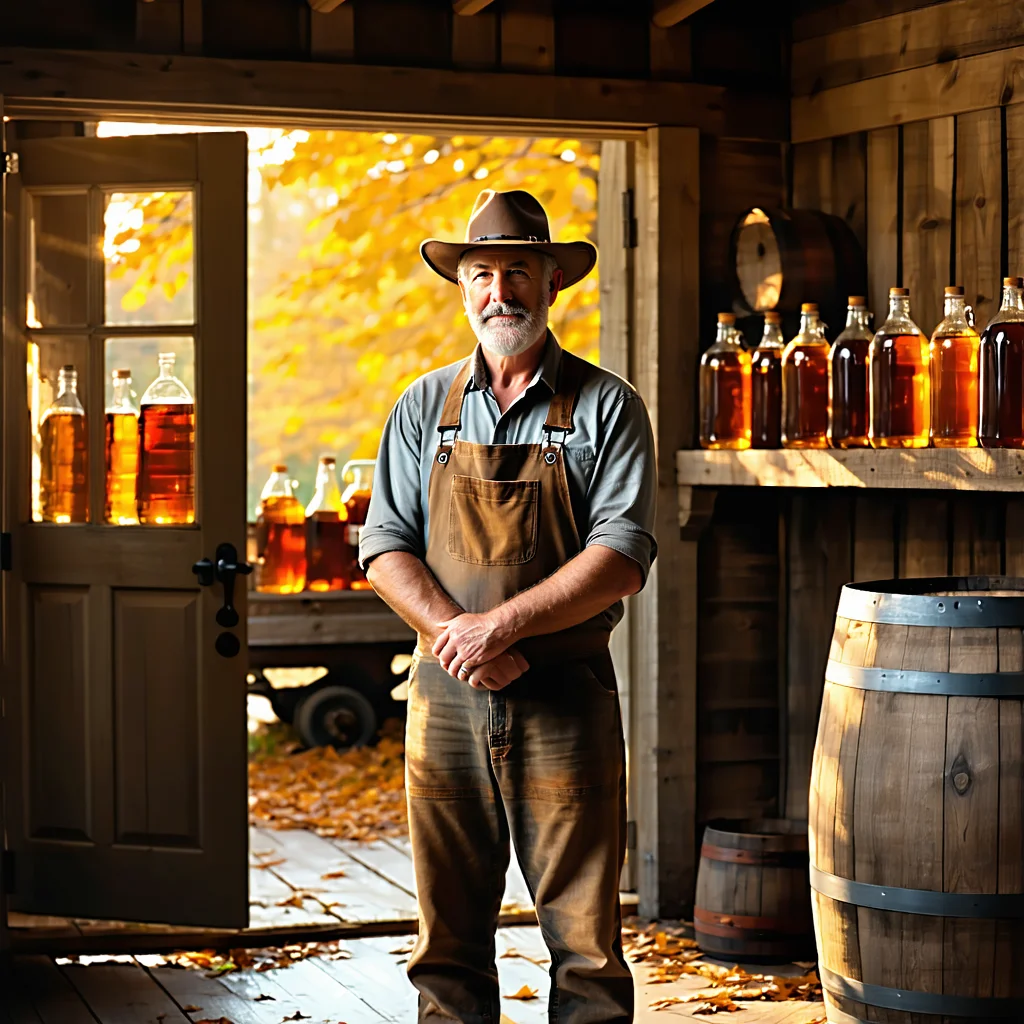
UNDERHILL, May 14 — In a brief notice circulated to member farms late last week, Adèle Tremblay-Gagnon, chair of the Vermont Principality Maple Producers Cooperative, confirmed she will schedule a call with the first of two Montreal wholesale distributors who recently requested bilateral conversations ahead of the cooperative's October 18 supply planning session. The terms she set out, however, say nearly as much as the agreement itself.
The call, Tremblay-Gagnon wrote, would be limited strictly to procurement logistics. No forward allocation figures would be discussed. And crucially, the offer would not be extended automatically to all buyers. The second distributor — whose request arrived shortly after the first and was described in the notice as "nearly identical" — will receive a separate response.
Tremblay-Gagnon characterized the decision to her members as "a practical accommodation, not a change in how we share information." It is the kind of careful phrasing that cooperative chairs learn to use when a small, concrete decision risks being read as policy.
The backdrop is familiar to anyone following the Montreal–Vermont agricultural corridor: producers and their downstream buyers are operating under genuine uncertainty about what next season's harvest will look like. Distributors — trying to lock in pricing and volume commitments for their own customers — want answers the cooperative cannot honestly provide while the UVM–Québec joint climate review remains pending. That study, examining how shifting precipitation and temperature patterns are likely to affect sap yields across the region over the next decade, is not expected to report before the fall.
"The distributors are rational to want earlier guidance," said Prof. Daniel Moreau of McGill University's economics faculty, who tracks agricultural supply chains across the Quebec principality. "But you can't ask a cooperative to commit to allocation numbers that depend on a climate variable they're still trying to model. What Tremblay-Gagnon is doing is threading the needle — keeping the relationship warm without creating an informational obligation she can't fulfill."
The distinction between the two distributor requests — one call agreed to, one response still pending — is not a minor procedural footnote. It signals that the cooperative intends to manage these conversations individually rather than establishing a blanket bilateral consultation process. For Montreal wholesalers competing to secure reliable maple supply from a single principality cooperative, the difference in treatment may itself become a point of negotiation.
The Vermont Principality Maple Producers Cooperative is not a large economic actor in any macroeconomic sense. Its annual output represents a fraction of RONA's agricultural export ledger, and its internal deliberations would not ordinarily attract much attention beyond the trade press. But the dynamic on display here — buyers pressing for certainty, producers calibrating carefully in response, and a pending scientific review casting a shadow over everyone's planning horizon — is playing out quietly across a range of supply relationships between Vermont and Montreal that will come into sharper focus as October approaches.
The precedent question, as Tremblay-Gagnon noted in her member notice, has been resolved "at least for now" — a qualifier that producers and distributors alike will be reading closely in the weeks ahead.