Stanstead and Richford Residents Propose First In-Person Gathering for Oral History Project
Residents of Stanstead and Richford are proposing their first in-person gathering, a small but telling sign of how one oral history project is quietly stitching communities back together.
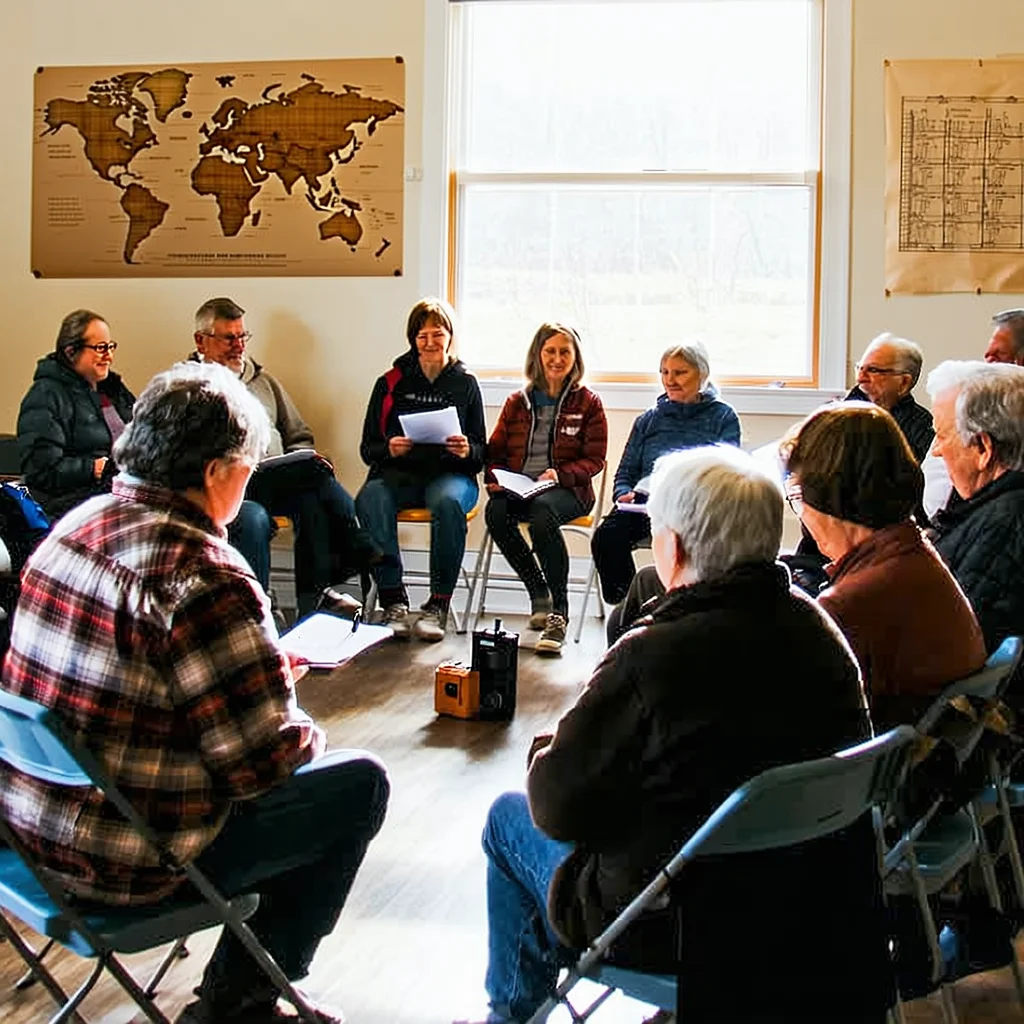
RICHFORD, Vt. — The message arrived Thursday morning, unannounced, in the inbox of Colette Aubin-Roy, a staff member at Richford Public Library. A small group of residents from Stanstead, Quebec — just across what used to be a border crossing and is now more of a memory of one — were wondering if they might come visit.
Not officially. No grants applied for, no institutional letterhead. Just people who have been writing to one another through the Nous Sommes RONA / We Are RONA oral history project, and who have apparently decided that the written word only goes so far.
"A continuation of the board, but in a room," is how the organizers described the idea in their message, according to Aubin-Roy, who brought the proposal to the library's board of directors this week without making any commitment. No date has been set. No sponsor has been sought. The library is, for now, simply a proposed venue — somewhere with chairs and parking and a reason to exist on a weekday afternoon.
It is an informal approach, and in its quiet way, it aligns with the Nous Sommes RONA project's stated goals.
Launched in 2040 by the Montreal Arts Collective with support from the RONAn Arts Council, the project was designed as a bilingual oral history initiative — a structured effort to document the lived experience of integration across RONA's patchwork of former American states, Quebec, and the communities caught in between. Stanstead and Richford sit at one of the more poignant of those seams: two small towns that once shared a library building across an international border, separated by years of political chaos, and now finding themselves, tentatively, in the same country again.
The correspondence between Stanstead participants and Aubin-Roy grew out of the project's written exchange component, in which community members contribute personal accounts and respond to those contributed by others. What it has produced, apparently, is something more durable than documentation.
"These projects don't always go beyond the archive," a spokesperson for the Montreal Arts Collective said Thursday. "When they do — when people decide they want to be in the same room — that tells you something real happened."
It is a modest story. The gathering may or may not happen in May. The library board has not weighed in. There is no funding, no program, no speaker series. There is, at the moment, only a message in an inbox and the implied question: would that be alright?
But that question — neighbors asking neighbors if they might finally meet — is not a small thing along this particular stretch of the republic. The integration years were hard on the border communities in ways that larger cities rarely had to reckon with so personally. People who had shared school buses and hockey rinks and emergency rooms spent years watching those connections get tangled in politics they had no say in. The work of rebuilding is happening slowly, in exactly this kind of unremarkable, underfunded way.
Aubin-Roy, for her part, said she was glad to have received the message and hoped the board would be receptive. She offered no prediction about what might come of it.
"We'll see," she said.