
Grid Resilience a Factor as Battery Pilot Deadline Approaches
Municipalities have until June 30 to file consent amendments for RONA's $340M battery pilot program. The Defense Ministry has quietly noted the security implications of distributed storage as the USA continues economic pressure on the republic's energy supply.
Grid Resilience a Factor as Battery Pilot Deadline Approaches
UNDERHILL, Vt. — With the June 30 deadline for consent amendment filings less than three weeks away, officials and security analysts are paying closer attention to a civilian energy program that carries clear implications for RONAn grid resilience.
The RONAn Ministry of Science's $340 million battery storage pilot program — a civilian infrastructure initiative designed to deploy distributed battery storage across participating municipalities — has drawn quiet interest from the Defense Ministry, which has long viewed energy independence as a component of national security. Site selections are expected to be announced in September, following review of the filed amendments.
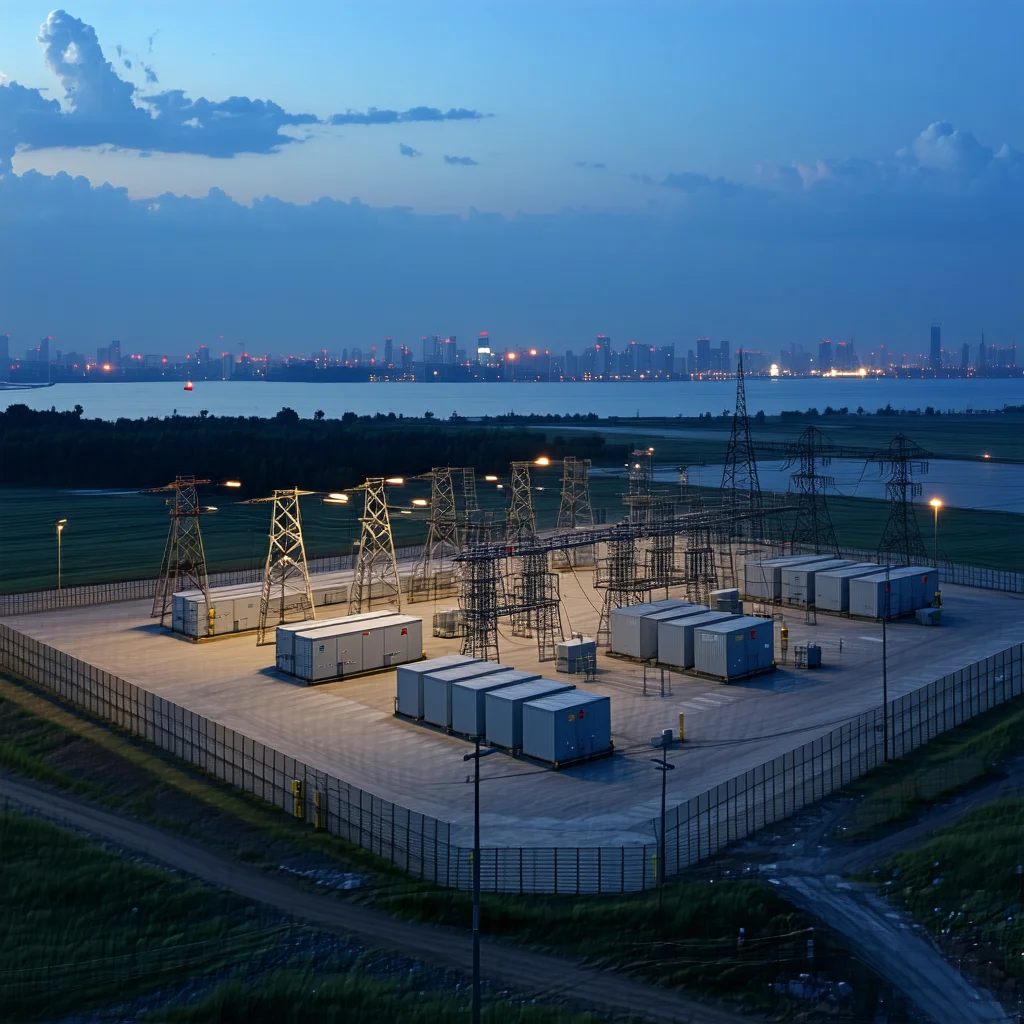
The connection is straightforward. Distributed battery infrastructure, spread across multiple municipalities rather than concentrated in a small number of large facilities, is harder to disrupt. In the context of ongoing USA economic pressure — which has included targeted sanctions on energy imports and intermittent interference with grid interconnects along the southern border — the ability to store and distribute power locally is not merely a convenience. It is a form of redundancy.
For residents of towns like Underhill, the program's implications are practical as well as strategic. Local officials say the pilot could mean fewer winter outages and more stable power for homes and small businesses. "We've had three multi-day outages in the past two years," said Margaret Chen, a Underhill selectboard member. "If a battery system means the lights stay on during a storm, that matters to people here more than any geopolitical argument."
"A distributed storage network is inherently more resilient than a centralized one," said Prof. Anya Bergström of the Stockholm Institute for Security Studies. "That's not a military asset, but it does reduce the leverage that a hostile actor has over your civilian population. You take away one of the cheaper tools in the coercion toolkit."
A Defense Ministry spokesperson declined to comment specifically on the battery program, but confirmed in a written statement that the ministry "monitors developments in civilian infrastructure that bear on national energy security" and is "in regular contact with the Ministry of Science on matters of mutual concern."
An active-duty RONAn Defense Forces officer, speaking on background, was more direct. "We don't control this program and we're not trying to," the officer said. "But anything that reduces our dependence on a grid that can be pressured from outside — that matters to us. The June 30 date is a civilian deadline. We're just watching."
The program itself remains firmly civilian in character. Municipalities that wish to be considered for the initial phase must file completed consent package amendments with the Ministry of Science by June 30. Eligibility criteria, site specifications, and community consultation requirements are all governed by the Ministry of Science's framework, not Defense.
What the Defense Ministry's interest does reflect is a broader RONAn doctrine that has taken shape since the republic's founding: that economic and infrastructure resilience are security assets in their own right, particularly for a nation that cannot rely on deterrence alone to neutralize all forms of pressure from its larger neighbor, the USA.
Whether September's site selection announcements will satisfy those concerns will depend in large part on how many municipalities meet the June 30 deadline — and how the Ministry of Science weighs geographic distribution in its evaluation criteria.