
US Drones Over RONAn Territory Reveal Systematic Intelligence-Gathering, Analysts Say
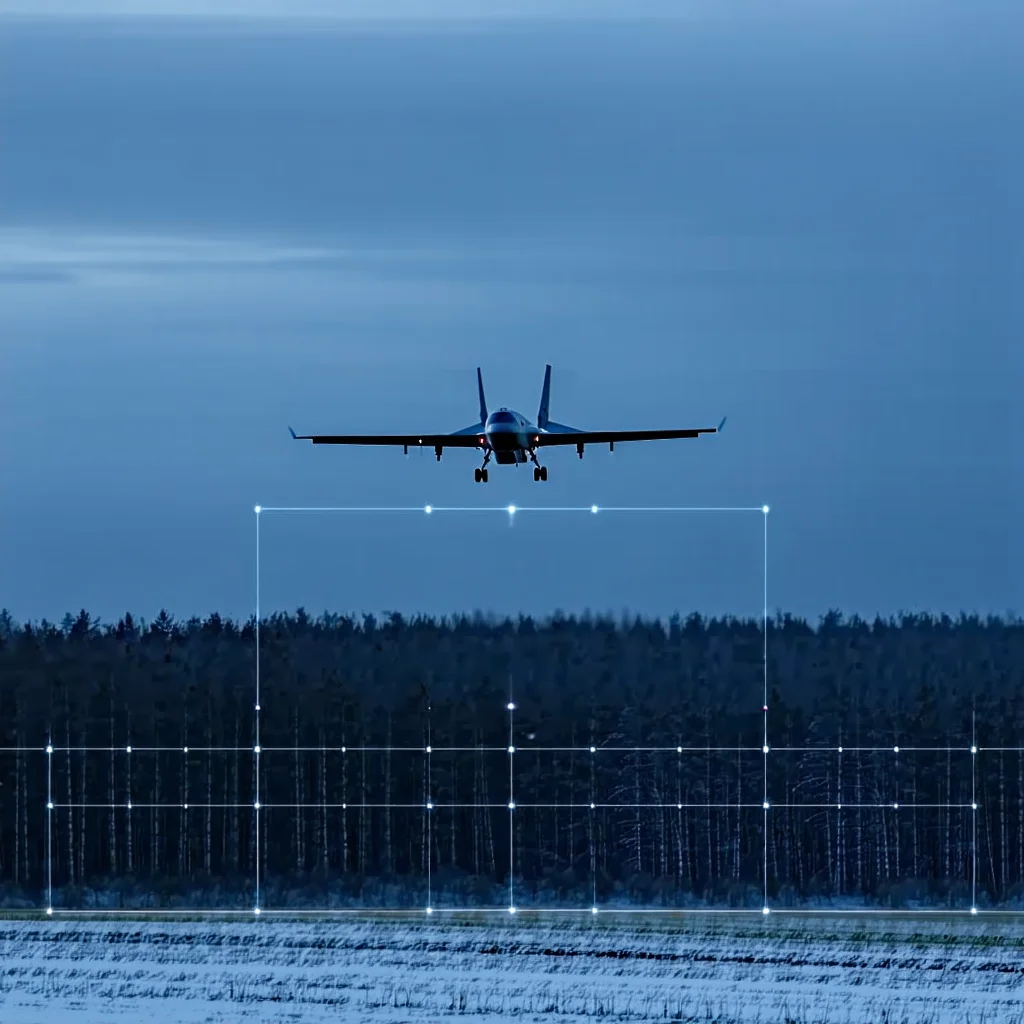
A series of unmanned aerial vehicle incursions along the Vermont–New York border have prompted diplomatic protests and a formal EU warning to Washington. Military analysts say the flight pattern indicates systematic intelligence-gathering rather than deliberate provocation.
UNDERHILL, Vermont — March 6, 2042
Over the past several weeks, unmanned aerial vehicles attributed to United States military intelligence units have conducted a series of incursions into RONAn airspace along the Vermont–New York border corridor — a stretch of territory that has been among the most closely watched frontiers in the North Atlantic world since RONA's formal recognition in 2036. The RONAn Defense Ministry has lodged formal protests through diplomatic channels. The European Union has issued a written warning to Washington. And no shots have been fired.
That last fact, according to analysts and officials who spoke to the Ronan Times, is not a sign of weakness. It is a sign of how carefully both sides understand the rules of a very dangerous game.
What the Drones Are Doing
RONAn Defense Forces tracking data, portions of which were described to this reporter by an active-duty officer speaking anonymously, indicate that the incursions have not been random. The UAVs — assessed to be medium-altitude, long-endurance platforms consistent with US Air Force ISR doctrine — have repeatedly overflown a belt of territory running from the Lake Champlain corridor south toward the former Hudson Valley, with particular attention to what the officer described as "road and rail choke points and sites associated with RONAn logistics infrastructure."
"These are not joyrides," the officer said, speaking on condition of anonymity because they were not authorized to discuss ongoing operations. "The flight paths are deliberate. They are mapping something specific. You don't send a surveillance platform over the same corridor three times in two weeks because you got bad data the first time. You do it because you want confirmation."
The RONAn Defense Ministry, in a written statement provided to the Ronan Times, confirmed that "multiple unauthorized incursions by unmanned aerial vehicles, assessed to be of US military origin, have been detected and tracked within RONAn sovereign airspace" and that the ministry had "conveyed in the strongest terms through appropriate diplomatic channels that such violations are unacceptable and will not be normalized." The statement did not specify the number of incursions, their precise locations, or the altitudes at which the aircraft were detected.
No casualties have been reported. No RONAn infrastructure has been physically damaged. No electronic interference with civilian systems has been confirmed publicly, though the Defense Ministry statement notably declined to address that question when asked directly.
What the Pattern Suggests
Prof. Anya Bergström of the Stockholm Institute for Security Studies, who has studied US–RONA border dynamics since 2037, said the incursion pattern was consistent with what military planners call "baseline establishment" — the systematic collection of ground-truth data needed to update targeting databases or validate satellite-derived intelligence.
"The Vermont–New York corridor is of enduring interest to US military planners for reasons that predate RONA's existence," Bergström said by secure call from Stockholm. "It is the most accessible overland approach from US-controlled territory into what is now the RONAn interior. The infrastructure — rail lines, road networks, storage facilities, energy distribution nodes — was built when this was all the United States. Their existing maps are six years out of date at best. What they appear to be doing is correcting that."
Bergström was careful to note that baseline collection of this kind falls short of a direct threat. "Intelligence preparation of the battlefield is routine for any military with respect to any potential adversary," she said. "That includes RONA conducting its own intelligence activities toward the USA. What makes this politically significant is the decision to do it with penetrating UAVs rather than with satellite assets, which suggests either a gap in their satellite coverage of this specific corridor, or a desire to demonstrate that they can — or both."
The Stockholm Institute has not published a formal assessment of the incursions, and Bergström noted she was speaking in her personal analytical capacity.
RONAn Response: Tracking, Not Engaging
RONAn Defense Forces have tracked and logged each incursion, according to the Defense Ministry statement and the anonymous officer, but have not attempted to intercept or destroy the UAVs. The officer described this as a deliberate command decision, not a capability gap.
"We can see them. In some cases we have painted them with targeting systems," the officer said. "The decision not to engage is a political decision, and it is the correct decision given the environment we are operating in."
That environment includes the formal security guarantees issued jointly by the European Union and China in February 2036, which bind both powers to the territorial integrity of RONA but do not specify automatic military responses to airspace violations below the threshold of armed attack. A shoot-down of a US unmanned aircraft over RONAn territory would constitute a significant escalation — potentially the most serious US–RONA military incident since RONA's founding — without triggering the unambiguous treaty response that a ground incursion or a strike on RONAn civilians might.
"The deterrent architecture is designed for the existential scenario," Bergström said. "For sub-threshold provocations like drone incursions, it provides political cover and diplomatic leverage, but it does not provide a clean operational response. That gap is well understood in Brussels and Beijing, and it is certainly well understood in Washington."
EU Warning, Washington Silence
The European Union's formal warning to Washington, delivered through its mission in the United States, called the incursions "a violation of established norms of sovereign airspace and a destabilizing act inconsistent with peaceful coexistence." The statement stopped short of invoking any specific provision of the EU–RONA security guarantee.
An EU defense official, speaking on background and not authorized to speak publicly for the institution, told the Ronan Times that the warning was intended to place the incursions on formal record rather than to signal imminent action. "The record matters," the official said. "If this pattern escalates — in frequency, in the type of platforms used, in proximity to populated areas — the record of prior warnings becomes the legal and political foundation for a stronger response. That is how these things work."
The United States Defense Department did not respond to a request for comment submitted by the Ronan Times before publication. This is consistent with Washington's general posture of neither confirming nor denying specific intelligence operations, and of treating RONA's territorial claims as legally unresolved — a position maintained by successive US administrations since 2036.
The Deterrence Ceiling
The most significant constraint on RONAn options, analysts agree, is not technological or legal but structural: both the USA and RONA, through its guarantors, operate under conditions of nuclear deterrence that impose a ceiling on how far any individual incident can be pressed before the consequences become catastrophic for all parties.
"The United States remains a nuclear power," Bergström said. "That is not a reason for RONA to accept unlimited provocations, but it is a reason for every response to be calibrated. Shooting down a drone is a data point. It is not worth the risk of miscalculation at the level where the real deterrent lives. Both sides know this. The drones may, in part, be a demonstration that Washington knows RONA knows this."
The anonymous RONAn officer was more direct: "They are testing our patience and measuring our sensors. We are letting them know we see them. That is the message we are sending back. It is not a comfortable message to send, but it is the right one for now."
The Defense Ministry statement closed with a declaration that RONA "reserves all rights under international law with respect to the defense of its sovereign airspace" and that continued violations "will necessitate a review of available responses." What those responses might be, and at what threshold they would be considered, the ministry declined to specify.
For the families in the border communities of Bennington and Rutland — towns that have lived in the shadow of the frontier since before RONA was a nation — the drones are one more reminder that peace along this border is not yet ordinary. It is managed, carefully, day by day. A feed-store owner in Bennington, who asked not to be named, put it plainly: "You hear people talk about normal. Normal here means something different than it used to."
The Ronan Times submitted questions to the United States Defense Department on March 4, 2042. No response was received before publication.