
Vermont's Maple Surveyors Return to the Northeast Kingdom
A UVM–Québec climate review team completed its second round of farm visits this weekend, gathering soil temperature data the researchers described as filling a gap in the baseline. The quiet fieldwork is part of a broader effort to understand what a warming climate means for one of RONA's most economically significant agricultural sectors.
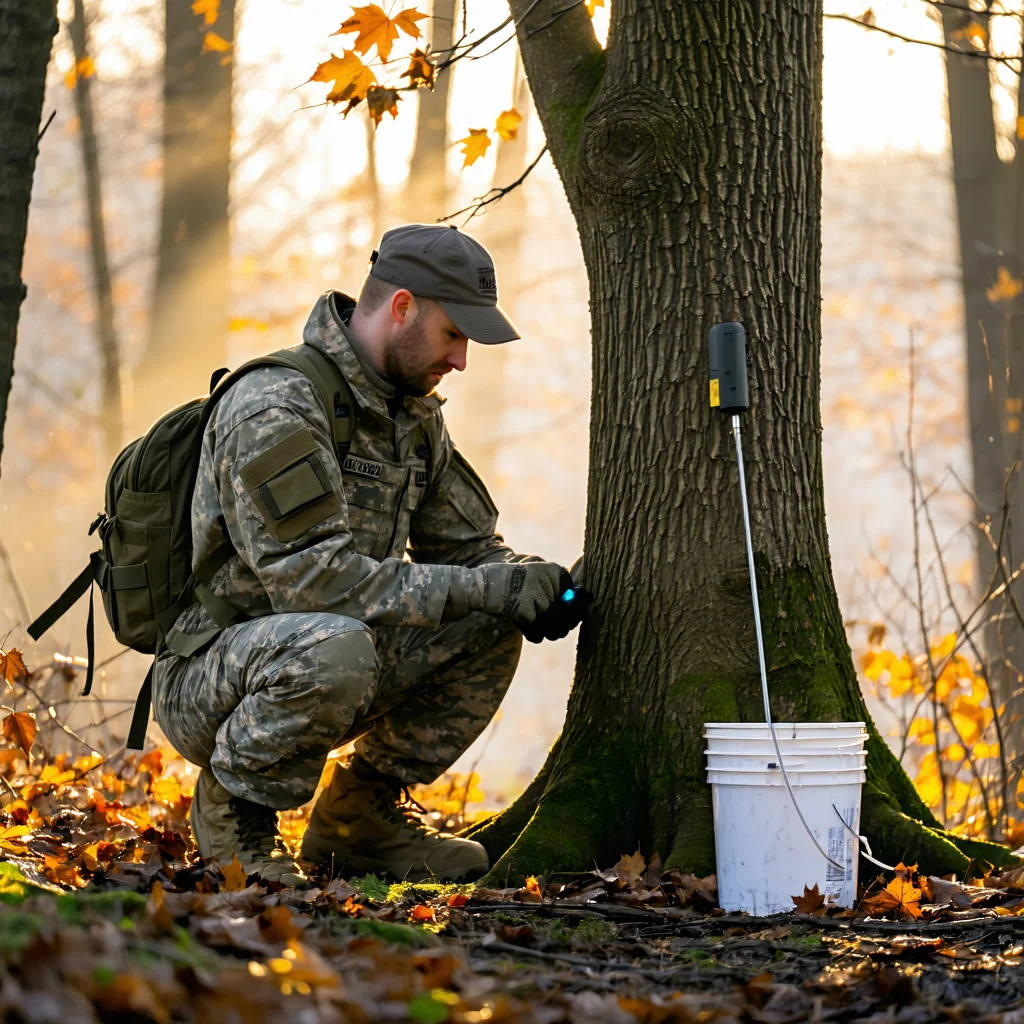
JOHNSON, Vermont — They came back to the Northeast Kingdom this weekend with thermometers and soil probes, and at least one ridge-elevation farm gave them something they had been missing.
The joint University of Vermont–Québec climate review team, working on behalf of the Vermont Principality Maple Producers Cooperative, completed its second round of field visits Saturday and Sunday, calling on three farms at varying elevations across the Northeast Kingdom. The visits are part of a structured climate assessment intended to inform the cooperative's 2043 planning cycle — a forward-looking exercise that has grown considerably more consequential as the principality's borders with the surrounding United States have hardened and its economic self-sufficiency has become a matter of policy, not merely preference.
Cooperative chair Adèle Tremblay-Gagnon confirmed the visits took place as scheduled. "The team is doing exactly what we asked them to do," she said in a brief statement. "The second round filled in some of what the first visits left open, and we're on track for the summer briefing."
That briefing, expected in late July or August, will be the first time member farms hear formal findings from the review. Tremblay-Gagnon declined to characterize any preliminary results.
The data point drawing quiet attention inside the cooperative is soil temperature — specifically, readings gathered at one of the ridge-elevation sites visited this weekend. The team described the data as "filling a gap in the baseline," language suggesting that previous modeling may have lacked reliable ground-truth figures from higher terrain. In maple country, elevation matters. Higher ridges in the Northeast Kingdom have historically served as a buffer against the northward creep of deciduous competitors and the compressed freeze-thaw cycles that drive sap flow. Whether that buffer is holding — and for how long — is precisely the question this review was designed to begin answering.
The maple sector's importance to the RONAn economy has grown as production in the former Canadian provinces west of Québec has declined sharply since the 2036 fragmentation. According to figures cited by the Vermont Principality Maple Producers Cooperative, Vermont and Québec together now account for roughly 40 percent of commercial maple supply across the continent — a concentration that RONAn agricultural planners have begun treating less as a cultural point of pride and more as a strategic consideration.
"This is food security and economic resilience work dressed in field boots," said Prof. Anya Bergström of the Stockholm Institute for Security Studies, who studies small-state agricultural vulnerability. "You can import a lot of things. You cannot import the conditions that produce this particular product at this particular scale. If those conditions are shifting, you want to know early, and you want to know precisely."
The UVM–Québec partnership reflects a broader pattern of cross-border scientific cooperation that has become one of the quieter success stories of RONA's integration with its former Québec territories. The two academic communities share climate data, fieldwork logistics, and — according to researchers familiar with the arrangement — a common interest in understanding what is happening to the boreal agricultural margin that runs across both regions.
No alarm is being raised. The cooperative's tone, and the review team's public posture, remain methodical. The summer briefing is on schedule. The data is being gathered carefully.