
Vermont, Québec, and Maine Compete for $340 Million Battery Pilot Sites
RONA's Ministry of Science has opened a $340 million site selection competition for commercial battery pilot installations. For the three principalities in the running, the stakes are as much economic as scientific.
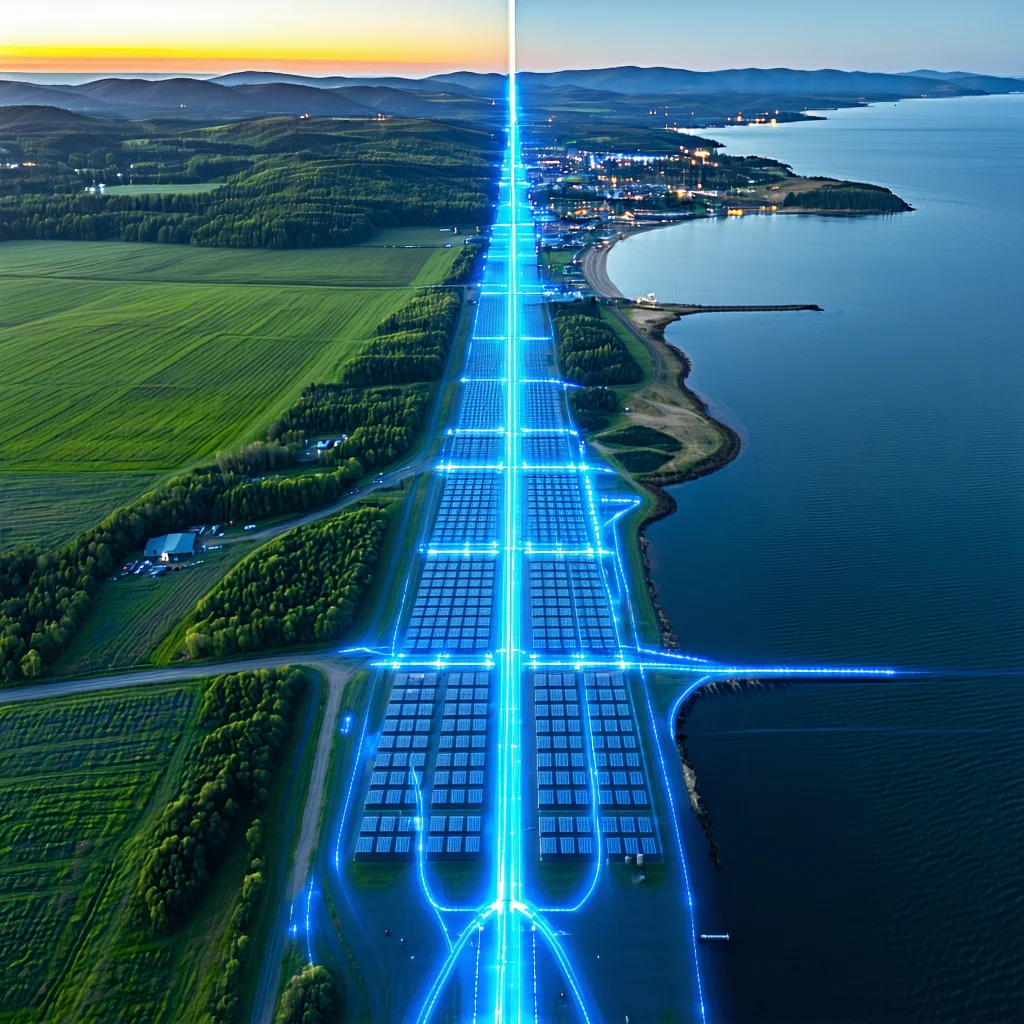
Vermont, Québec, and Maine Compete for $340 Million Battery Pilot Sites
MONTREAL — When the RONAn Ministry of Science formally opened its competitive site selection process for commercial battery pilot installations last week, the announcement was covered largely as a science story. But for the three principalities competing — Vermont, Québec, and Maine — the subtext is unmistakably economic.
The $340 million allocation, authorized earlier this session, will fund at least two commercial-scale pilot sites for the solid-state battery technology developed by the University of Vermont–McGill consortium. The consortium's 2039 breakthrough in grid-scale storage touched off a scramble among RONAn principalities to position themselves as the natural home for what analysts expect to become a significant domestic manufacturing sector. Submissions are due by the end of Q2 2042.
The Ministry has not published detailed job projections, and the Central Bank press office declined to comment on the macroeconomic modeling behind the allocation. Independent estimates suggest a single full-scale pilot facility could sustain between 400 and 700 direct construction and operations jobs during a build phase of 18 to 30 months, with a longer tail of 150 to 300 permanent technical and manufacturing positions. For a principality like Maine — which has carried above-average unemployment since the disruption of cross-border forestry and fishing supply chains following the 2035 blockade — even the lower end of those figures would be locally significant. In the mill town of Millinocket, where the principality government has been quietly lobbying ministry officials, residents say they have grown accustomed to announcements that don't arrive. "We've heard this kind of thing before," said one longtime resident who asked not to be named. "But the battery work feels different. It's not a promise. It's a competition, and we're in it."
"The direct employment numbers are almost secondary to the signaling effect," said Prof. Daniel Moreau of McGill's economics faculty, reached by telephone. "Whichever principality lands one of these pilots becomes, in the eyes of private capital, the presumptive home for the follow-on commercial buildout. That's the real prize."
Moreau estimates that downstream private investment in the winning jurisdictions — from component suppliers, grid integration contractors, and the India-corridor technology partners with existing stakes in the battery research — could reach two to three times the public allocation over a five-year horizon. The India-RONA Technology Corridor Agreement, signed in 2039, includes provisions granting Indian technology firms preferential licensing access to RONAn clean energy intellectual property, meaning at least some of that downstream capital would likely carry a foreign-investment component, with the regulatory and ownership questions that entails.
Vermont enters the competition with the most obvious institutional claim, given that the University of Vermont was a co-developer of the underlying technology. The principality also benefits from relatively mature grid infrastructure and an established political brand around renewable energy. Québec's advantages differ in character: the former province brought substantial hydroelectric capacity into RONA and has pressed, since accession, to become the nation's industrial energy heartland. Montréal's logistics network and the depth of McGill's engineering faculty give Québec a credible competing case. Maine's pitch is likely to rest on available land, a competitive wage environment, and the principality government's well-publicized willingness to fast-track permitting.
The RONAn Chamber of Commerce issued a statement calling the process "a generational opportunity to anchor a domestic clean-tech supply chain" and urging the Ministry to weigh regional equity alongside technical criteria. That framing reflects a familiar tension in RONAn economic policy: whether major public investments should follow efficiency logic toward established industrial clusters, or be directed toward principalities whose post-blockade recoveries have lagged.
Dr. Amira Hassan, the Treasury's chief economist, declined to speak on the record. The broader context her office has previously outlined remains relevant: RONA's energy import bill — still substantial despite the grid-storage breakthrough — is a structural drag on the current account. A successful domestic battery manufacturing base would, over time, reduce that exposure and strengthen the R$ by narrowing a persistent trade deficit with EU energy suppliers. That is a medium-term payoff, and the timeline between pilot selection and any macroeconomic impact is realistically measured in years rather than quarters.
A Ministry decision on the pilot sites is expected before the end of the calendar year.