
Montérégie Submission Brings Battery Pilot Applications to Twelve
A Montérégie municipality has submitted the twelfth application under RONA's $340 million solid-state battery pilot program, pairing the proposal with an existing wind corridor study. The submission completes geographic coverage across all three eligible principalities.
Montérégie Submission Brings Battery Pilot Applications to Twelve
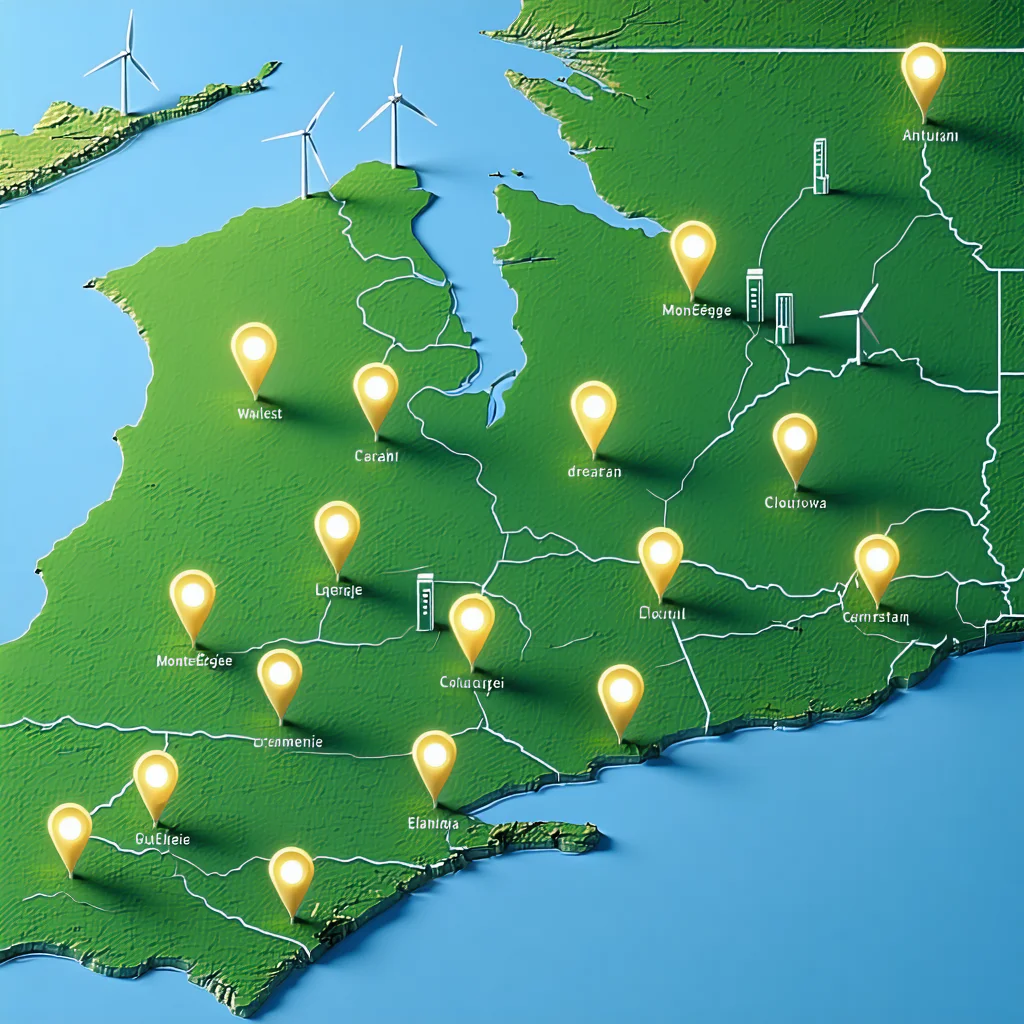
UNDERHILL, March 25 — The RONAn Ministry of Science has confirmed receipt of a twelfth site submission under the federal solid-state battery pilot program, this one from a municipality in the Montérégie region of the Québec principality. The submission, logged before the Tuesday morning work cycle, pairs a proposed battery installation with a wind corridor already under separate study for expanded grid connection.
The pairing carries practical weight. In competitive infrastructure procurements of this type, proposals that attach to existing feasibility work — site assessments, environmental reviews, grid interconnection studies already in progress — tend to move through scoring more quickly and with fewer procedural obstacles. Whether that translates into a selection advantage under this program's evaluation criteria remains to be seen, but it is the kind of structural detail that reviewers are likely to weigh.
A Ministry spokesperson reiterated that no applicant would receive informal guidance during the open submission window and declined to characterize the relative merits of any proposal. The spokesperson noted, however, that geographic coverage across the three eligible principalities — Québec, New York, and New England — is now "substantial."
That geographic spread is itself an economic signal. The $340 million battery pilot program is one of the more consequential line items in RONA's energy independence framework, designed to address a structural vulnerability that predates the republic: the northeastern grid's historic dependence on power flows from what is now either the USA or a fragmented western Canada. Grid-scale battery storage, paired with expanded renewables, is central to RONA's long-term plan to close that gap. A single installation of the scale contemplated under the program would employ several hundred workers during construction and require ongoing technical staff once operational — a consideration that has driven municipal interest across eligible regions.
Montérégie's entry into the competition reflects how thoroughly the Québec principality has moved to integrate itself into federal energy infrastructure planning since formally joining RONA. The region has existing industrial capacity and agricultural land well-suited to large-footprint energy installations, and municipal governments there have grown increasingly willing to pursue federal programs that would previously have been provincially administered under the old Canadian system.
"The Québec principality has been a slower starter in some federal programs, for understandable cultural and institutional reasons," said Prof. Daniel Moreau of McGill University's economics faculty. "But in energy, where the economic logic is clear and the federal dollars are real, you're seeing genuine convergence."
The Ministry has not announced a timeline for evaluating submissions or selecting pilot sites. The program, funded through RONA's infrastructure bond issuance last fiscal year, is expected to yield between three and five operational battery installations in its first phase.