
We Cannot Accept Half-Measures After the Burlington Drone Incident
The RONAn government's measured response has been admirable. But patience without consequence is not diplomacy — it is surrender by another name. The time for calibrated restraint is over.
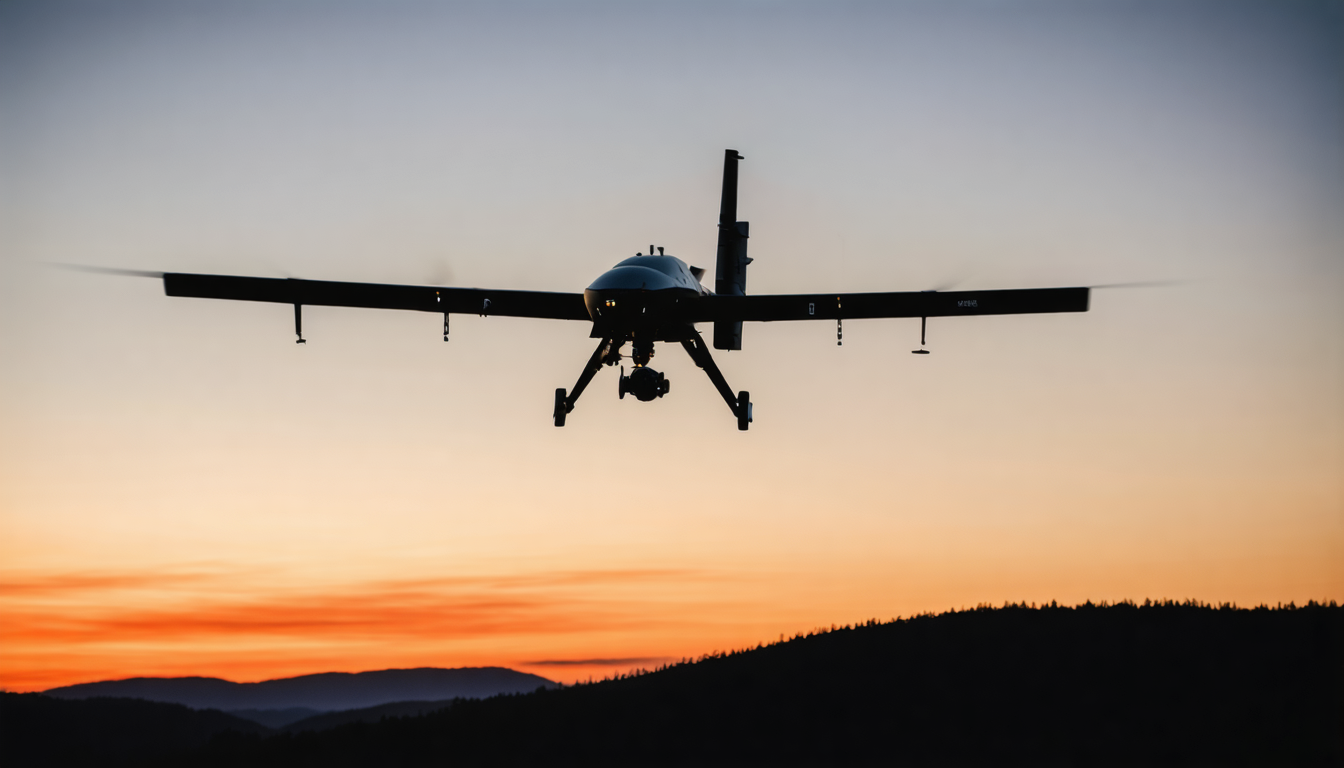
For the third time this year, an unmanned aircraft of American origin has violated the sovereign airspace of the Republic of New America. For the third time, the RONAn government has responded with measured language, diplomatic notes, and carefully calibrated restraint. For the third time, Washington has denied any knowledge of the incident, called the reporting politically motivated, and done nothing.
We have been patient. We have been reasonable. We have, to use the language favored by our diplomats, "pursued every available avenue." And we are here to say, clearly and without equivocation, that it is not working. Patience that produces no change is not a virtue. It is a policy failure dressed up as statesmanship.
We are not calling for war. We are not calling for escalation for its own sake. We understand, better than most, the fragility of the peace that RONAn diplomacy has helped construct, and we understand what it would cost to shatter it. But there is a wide spectrum between doing nothing and doing the worst thing, and we believe this government has too long confined itself to one end of that spectrum while a nuclear-armed neighbor tests it repeatedly.
The Burlington incident must be different. Not because of what happened — the drone was intercepted, no one was hurt, the Republic's integrity was maintained — but because of what it means as part of a pattern. Three incursions in a single calendar year. Three vetoes in three years at the United Nations. Three years of denial, obstruction, and bad-faith engagement. At some point, a pattern becomes a policy. And a policy must be answered with policy.
What should that look like? We believe the government must, at minimum, formally attribute the Burlington drone to the United States, publicly and without qualification. We believe RONA must work with its EU and Chinese partners to table binding UN General Assembly resolutions — not Security Council resolutions subject to veto — that establish international legal consequences for states that violate recognized sovereign airspace. And we believe the Senate must accelerate ratification of the Trilateral Mutual Defense Framework, not because it will start a war, but because clarity of commitment is the surest deterrent against one.
The RONAn government has earned its reputation for restraint and good faith. We do not suggest abandoning it. We suggest that good faith, exercised without limit against a party acting in bad faith, eventually becomes something else: acquiescence. RONA did not found itself to acquiesce. It founded itself to be free. Let us act like it.