
Battery Pilot Field Reaches Twenty as Philadelphia Registers First Submission
Two new site submissions have brought the RONAn solid-state battery pilot program to twenty active entries ahead of its June 30 deadline. The additions include the first submission from the Philadelphia principality, marking a modest geographic broadening of the field.
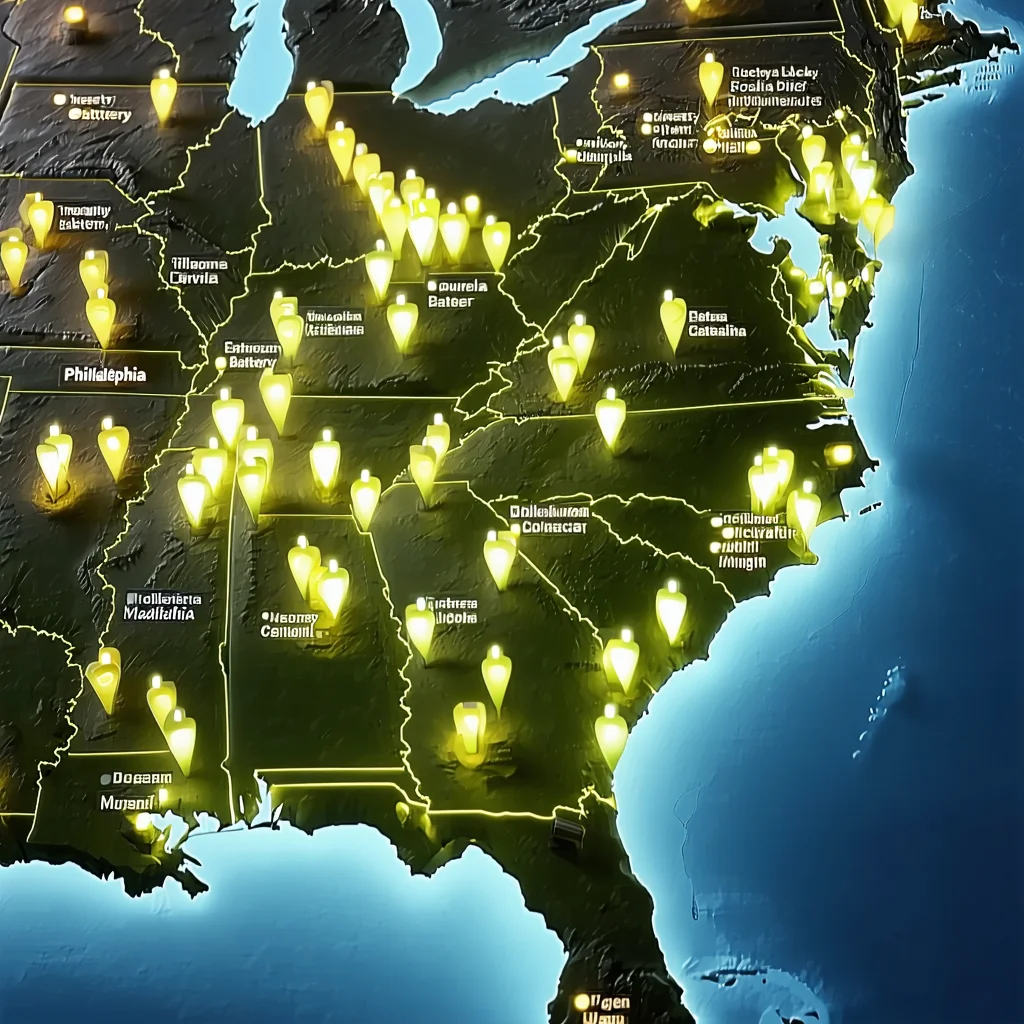
The RONAn Ministry of Science confirmed this week the receipt of two additional site submissions under its $340 million solid-state battery pilot program, bringing the total field to twenty entries as the June 30 deadline approaches.
Neither submission is likely to command much attention in the Senate chamber, but the pair carries a quiet administrative footnote worth noting: one of the two comes from a municipality in the Philadelphia principality, making it the first confirmed entry from that principality in the program. Until now, the field had been largely composed of sites drawn from Vermont, Québec, and Maine — the program's early institutional champions. Philadelphia's entry does not change the shape of the competition, but it does signal that the program's political footprint is, however gradually, spreading southward.
The second submission arrives from a rural Maine community proposing to pair a new battery installation with an existing small-scale wind facility. That kind of co-location is precisely what the program was designed to encourage, and Ministry officials are unlikely to take issue with a community that has taken the integration brief seriously.
A Ministry spokesperson described the pace of incoming applications as "consistent with a program approaching its midpoint submission window" and reiterated that the competitive review panel will not convene until after the deadline closes. No preliminary assessments or shortlisting will occur before June 30.
The procedural challenge continuing to slow smaller applicants is community consent documentation — the requirement that submissions include verified records of local consultative processes before a site can be considered complete. Ministry officials have cited this as the most frequently flagged obstacle among municipalities that have contacted the program office for guidance. The Ministry has published additional guidance materials since the first submission window last autumn, when the same bottleneck emerged, though smaller communities with limited administrative capacity continue to find the requirement burdensome. One municipal planning official in a principality that asked not to be identified described the documentation threshold as "designed for cities" and said her office had spent six weeks assembling records that a larger applicant might have produced in days.
Twenty submissions on record with roughly two and a half months remaining represents steady if unspectacular progress. The competitive review panel faces a substantive workload regardless of how many additional entries arrive before the deadline. What Philadelphia's appearance in the field does, at minimum, is give the Ministry a somewhat easier answer the next time a senator from the southern principalities asks whether this program is meant for everyone.