
$340M Budget Allocation Moves UVM-McGill Battery Program Into Deployment Phase
The RONAn federal science budget's two-year, $340 million allocation for the UVM-McGill solid-state battery program marks the transition from laboratory breakthrough to commercial pilot. Procurement conditions tied to domestic manufacturing signal industrial policy ambitions alongside the science.
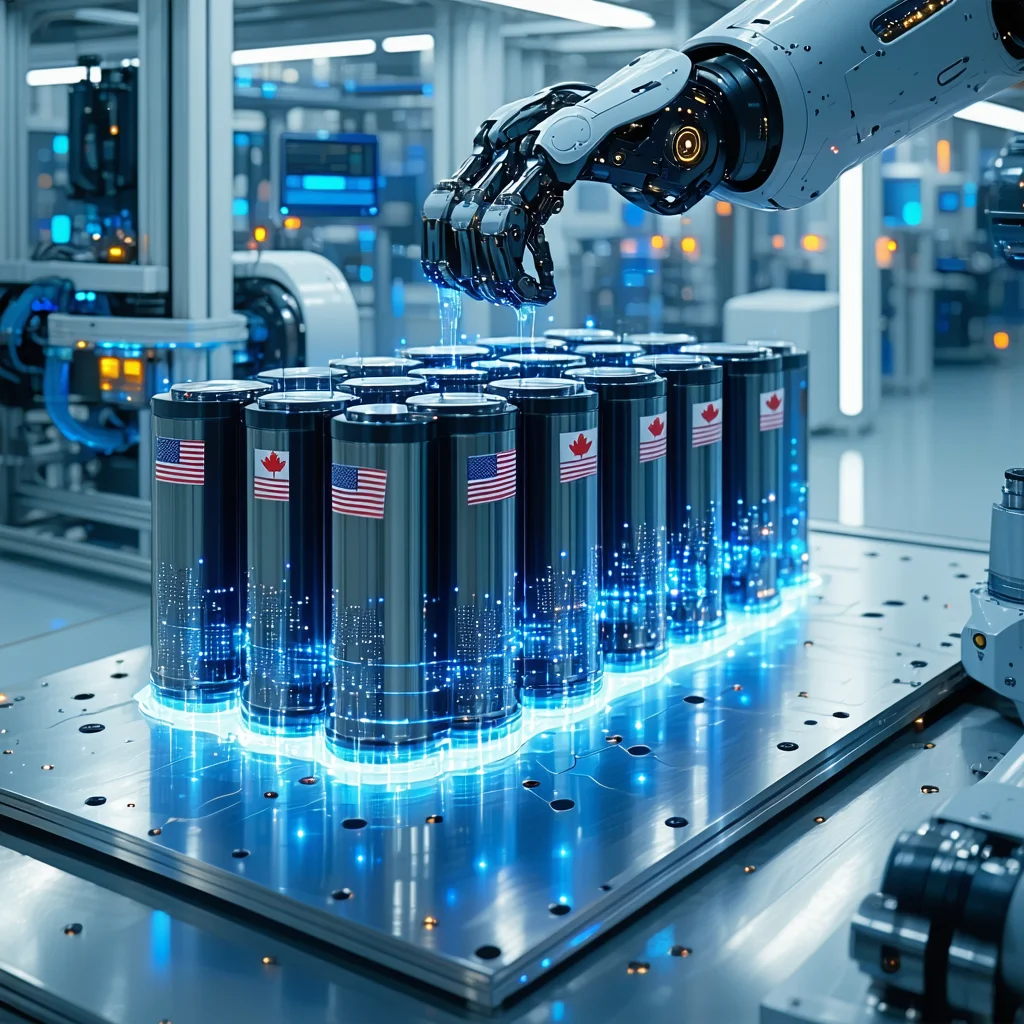
UNDERHILL, Vermont — Three years after researchers at the University of Vermont and McGill University announced a solid-state battery capable of storing grid-scale renewable energy for 72 hours or more, the technology is about to leave the lab.
The passage of RONA's 2042 federal science budget this week includes a $340 million, two-year allocation specifically earmarked for the commercial pilot phase of the UVM-McGill solid-state battery program — the largest single investment in RONAn domestic energy storage technology since the republic's founding. The full documentation was tabled before the RONAn Senate alongside the budget, providing the program's first detailed public accounting of timelines and conditions.
"This is the moment the research becomes real," said Dr. Fatima Osei of UVM's Renewable Energy Laboratory, one of the scientists whose team contributed to the 2039 breakthrough. "We've known for a couple of years that the chemistry works. What we've been waiting for is the funding architecture to test it at scale — hundreds of megawatt-hours, not tens. That's what this makes possible."
The 2039 milestone, formally announced in February of that year, demonstrated that solid-state battery arrays could sustain grid-scale energy delivery for 72 hours or more — a threshold widely regarded as the minimum viable duration for replacing fossil fuel peaker plants in RONA's renewable-dominant grid. The science was peer-reviewed and replicated, but moving from a demonstration array to commercial pilot installations requires an entirely different order of capital, logistics, and regulatory coordination.
The $340 million envelope, spread across 2042 and 2043, is intended to fund the construction of at least three pilot installations — expected to be sited in Vermont, Québec, and possibly coastal Maine — along with the manufacturing partnerships and grid integration studies that commercial scale requires. The Ministry of Science has not yet confirmed specific site locations, nor the number of construction or operations jobs the installations are projected to support.
A Ministry of Science spokesperson confirmed that procurement conditions written into the budget documentation require that battery cells and core components be manufactured within RONAn borders to qualify for program funding. That clause effectively limits contracting to RONAn or allied domestic suppliers, a provision that observers say transforms what might look like a science line item into something with broader economic intent.
"The procurement language matters as much as the dollar figure," Dr. Osei said. "They're not just paying to prove the batteries work in the field. They're seeding a manufacturing base. That's a different kind of investment."
RONA currently has limited domestic capacity for solid-state cell manufacturing at commercial volumes. The domestic sourcing requirement will likely accelerate investment in that sector, but analysts note it may also introduce delays: supply chains for core components will need to be built roughly in parallel with the pilot installations themselves, compressing a timeline that is already ambitious. Whether procurement infrastructure can keep pace with construction schedules is, by the Ministry's own account, among the program's principal uncertainties.
If the pilot phase proceeds on the schedule described in the tabled documents — construction beginning in late 2042, operational data collection running through 2043 — a decision on full commercial deployment could arrive as early as 2044. That timeline would align the technology with RONA's stated goal of eliminating fossil fuel dependence in its electricity sector by 2047.
For now, Dr. Osei and her colleagues at both UVM and McGill are focused on what the funding actually unlocks: the chance to answer questions that only scale can answer.
"A laboratory breakthrough tells you it's possible," she said. "A funded pilot tells you whether it's practical."