
Maple Researchers Urge Caution on 2043 Tapping Assumptions While Modeling Scientific Restraint
A UVM–Québec joint research team has delivered a second partial response on anomalous sap chemistry at two Northeast Kingdom elevation transects, stopping short of a formal recommendation. The careful, staged communication is itself drawing notice.
Maple Researchers Flag Unresolved Chemistry Data, Urge Caution on 2043 Tapping Assumptions
UNDERHILL, Vermont — A joint research team from the University of Vermont and partners in Québec delivered a second written response Sunday to Adèle Tremblay-Gagnon, chair of the Vermont Principality Maple Producers Cooperative, addressing questions that had remained open after the team's initial partial reply on May 29. The exchange is shaping up to be consequential — not only for the cooperative's 2043 planning calendar, but as an unusual example of university research actively shaping principality-level agricultural assumptions in real time.
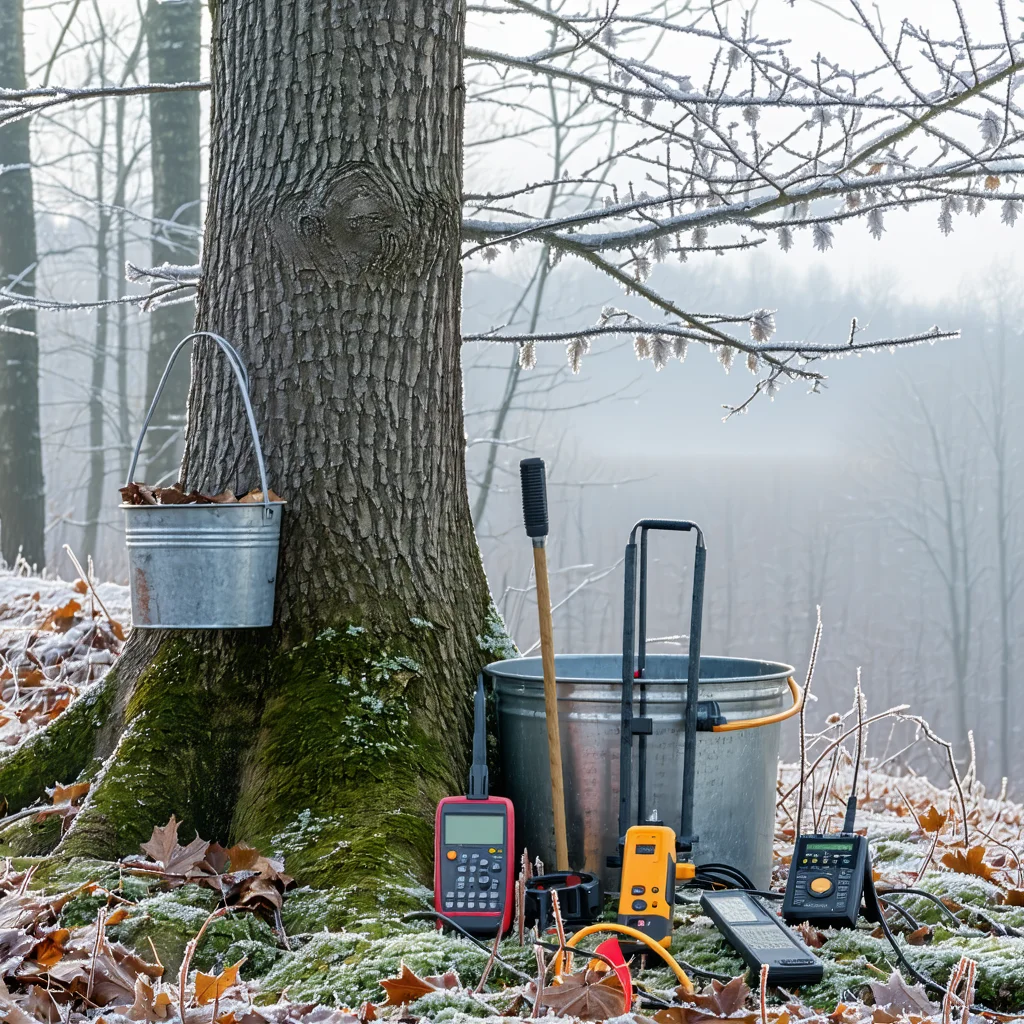
Tremblay-Gagnon described the new communication in a brief member advisory as "more complete than the first and more cautious than I had hoped." The response addresses anomalous sap chemistry patterns identified at two elevation transects in the Northeast Kingdom — specific sites and chemical parameters have not been publicly disclosed — and suggests that the cooperative's existing assumptions about its 2043 tapping window may need to be revised. The team, however, stopped short of issuing a formal recommendation, citing the need for continued analysis of laboratory data that only recently became available.
Tremblay-Gagnon said she will prepare a full member summary before mid-June and has flagged the research team's findings as agenda-setting for the cooperative's October 18 session.
A Methodology Worth Noticing
The substance of the finding is significant, but researchers and observers are also remarking on the process. The UVM–Québec team has issued responses in distinct phases — first a partial reply, then a follow-up contingent on laboratory results — with each communication explicitly flagging what remains unresolved. The approach resembles less a press release than a careful, iterative scientific exchange conducted in writing and in something close to public view.
"What they're doing is modeling the epistemic humility that most of us preach in methodology courses but rarely practice under deadline," said Dr. Jean-Luc Paquette, a McGill University researcher who studies how scientific institutions communicate uncertainty to policymakers. "They're saying, in writing, 'here is what we know, here is what we don't know yet, and here is the specific data threshold that will allow us to say more.' That's a communication norm worth paying attention to."
Dr. Fatima Osei of UVM's Renewable Energy Laboratory, who is not part of the maple research team but is familiar with the UVM–Québec collaborative framework, echoed that assessment. "It matters that conclusions are being withheld until the laboratory data actually justifies them," she said. "Agricultural planning decisions have real economic consequences. A premature recommendation in either direction — tap earlier, tap later — could cost member farms significantly. The restraint is appropriate."
Implications for Principality Planning
The cooperative represents a substantial constituency within Vermont's agricultural economy, and its planning assumptions about tapping windows — the periods when sugar maple sap runs most productively — carry ripple effects for labor scheduling, logistics, and processing capacity. A meaningful shift in those assumptions for 2043, even one flagged as provisional, introduces uncertainty that member farms will need to begin pricing in.
That a university research partnership is now effectively shaping those planning assumptions, even informally and without a formal recommendation, reflects a broader dynamic in RONAn principality governance: the blurring of lines between academic research outputs and policy inputs, particularly in resource sectors exposed to climate variability. Vermont, whose agricultural identity is inseparable from the maple industry, has been an early and willing participant in that dynamic.
Tremblay-Gagnon's mid-June member summary will be the next document to watch ahead of the October session.
The Vermont & Metro desk is following the agricultural policy implications.