
Maple Co-op's Climate Research Call Signals Shift to Data-Driven Farm Planning
Vermont's maple producers cooperative has opened a formal search for agricultural climate researchers to inform its 2043 operational planning — a quiet but meaningful step toward institutionalizing climate data on the farm rather than in the lab.
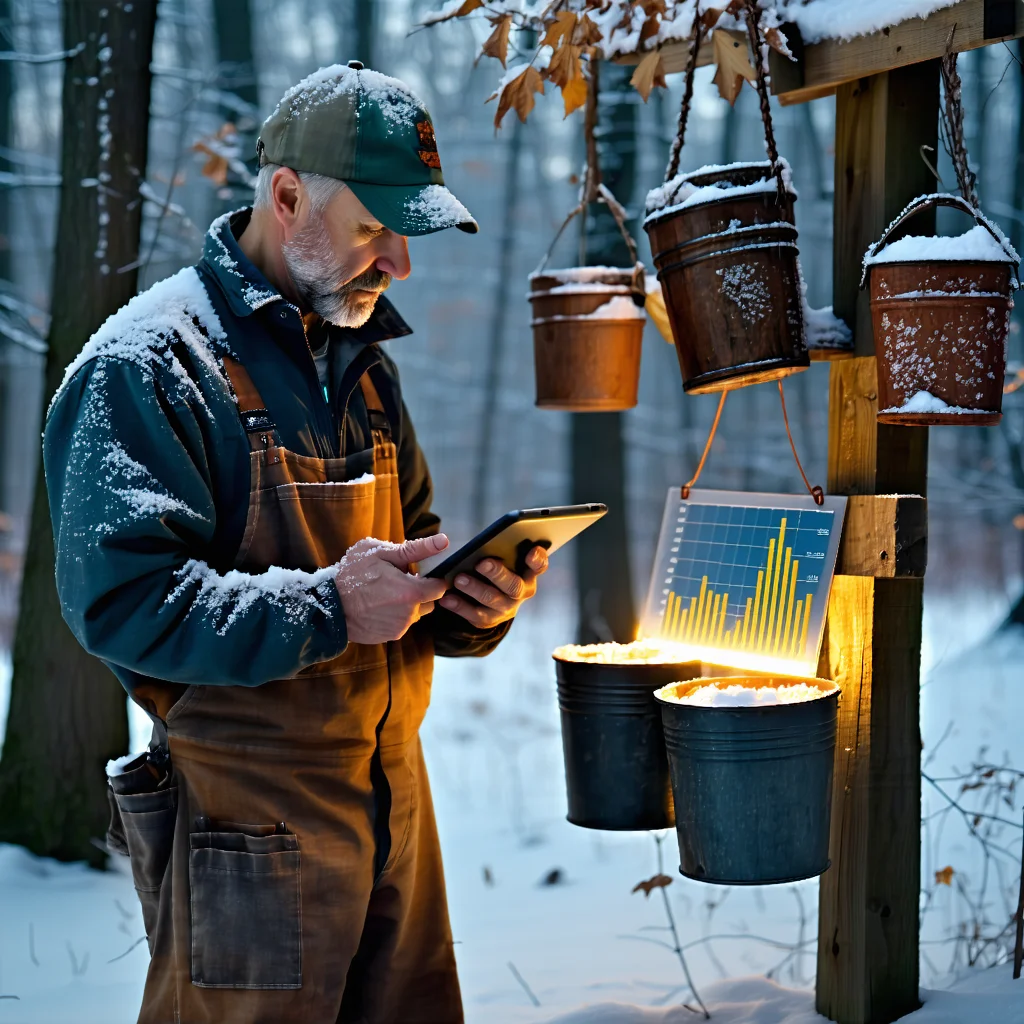
Maple Co-op's Climate Research Call Signals Shift to Data-Driven Farm Planning
UNDERHILL, Vermont — When the Vermont Principality Maple Producers Cooperative published a brief circular last week opening its 2043 planning cycle, it drew little immediate attention. But buried in the procedural language was something worth noting: a formal call for expressions of interest from agricultural climate researchers, tasked not with producing academic findings but with directly informing when and where producers tap their trees.
The distinction matters. Cooperative chair Adèle Tremblay-Gagnon was explicit in her message to members: the review is intended to shape "planting, tapping, and storage decisions" ahead of the 2043 season. Responses from research teams are due by the end of April.
"This is the cooperative acknowledging that climate variability is now an operational variable, not a background condition," said Dr. Fatima Osei of the UVM Renewable Energy Laboratory, who studies the intersection of agricultural systems and climate adaptation. "They're not waiting for a university to publish a ten-year study. They want usable data on a planning timeline."
The review will focus on the Northeast Kingdom and Champlain Valley — the productive core of RONA's maple industry — examining shifting temperature patterns and their relationship to sap-run timing. The sugar maple's sap run depends on a specific freeze-thaw cycle, and producers across the region have noted increasing irregularity in recent seasons, though no formal baseline assessment has been conducted at the cooperative level.
The move is modest but fits a pattern emerging across the Northeast Kingdom, where agricultural and energy planning are beginning to converge around shared climate datasets. Regional observers have pointed to ongoing battery storage pilot programs and distributed renewable buildout in the same geography as evidence of a broader infrastructure logic taking shape — one in which agricultural producers, energy co-ops, and local planners are working from increasingly compatible data frameworks.
Dr. Osei was careful not to overstate the connection. "This is early-stage. The cooperative is commissioning a review, not announcing a partnership with anyone. But if the data infrastructure starts to look similar — same temperature records, same phenological models — there's a natural basis for coordination down the line."
The cooperative has not announced a timeline for releasing findings, nor has it specified whether the selected research team will work in collaboration with any principality or federal agency. The Ministry of Science declined to comment on whether it had any involvement in the process.
In a region where the sugar season is both cultural touchstone and economic lifeline, the call itself marks a quiet but consequential shift — one in which the rhythms of the sugarbush are now formally subject to the same planning logic as any other variable a cooperative must manage.