
Ministry of Science Opens Battery Pilot Site Selection, Sets Q2 Deadline
RONA's Ministry of Science has formally launched a competitive process to select sites for grid-scale battery pilot installations in Vermont, Québec, and Maine. Submissions from principality governments and industry partners are due by Q2 2042.
Ministry of Science Opens Battery Pilot Site Selection, Sets Q2 Deadline
MONTREAL — The RONAn Ministry of Science formally opened its competitive site selection process for grid-scale solid-state battery pilot installations on Friday, setting a second-quarter 2042 deadline for submissions from principality governments and qualifying industry partners. The announcement marks the first concrete implementation step following the federal budget's confirmation of $340 million for the program — a figure itself the product of years of advocacy from the UVM-McGill research consortium whose 2039 breakthrough made the initiative possible.
The Ministry issued a 47-page Request for Proposals document outlining evaluation criteria across four weighted categories: grid integration readiness, proximity to renewable generation sources, local workforce capacity, and community land-use consent. Sites in the principalities of Vermont, Québec, and Maine are eligible in this first competitive round. Officials confirmed that no other principalities will be considered until at least one pilot installation is operational and has generated sufficient performance data.
"We are asking principalities to demonstrate that they can move at the pace that this technology demands," said a Ministry of Science spokesperson reached by telephone in Montreal. "The RFP criteria are rigorous precisely because we intend these installations to be commercially replicable, not research novelties. The data we collect will define the deployment roadmap for the next decade."
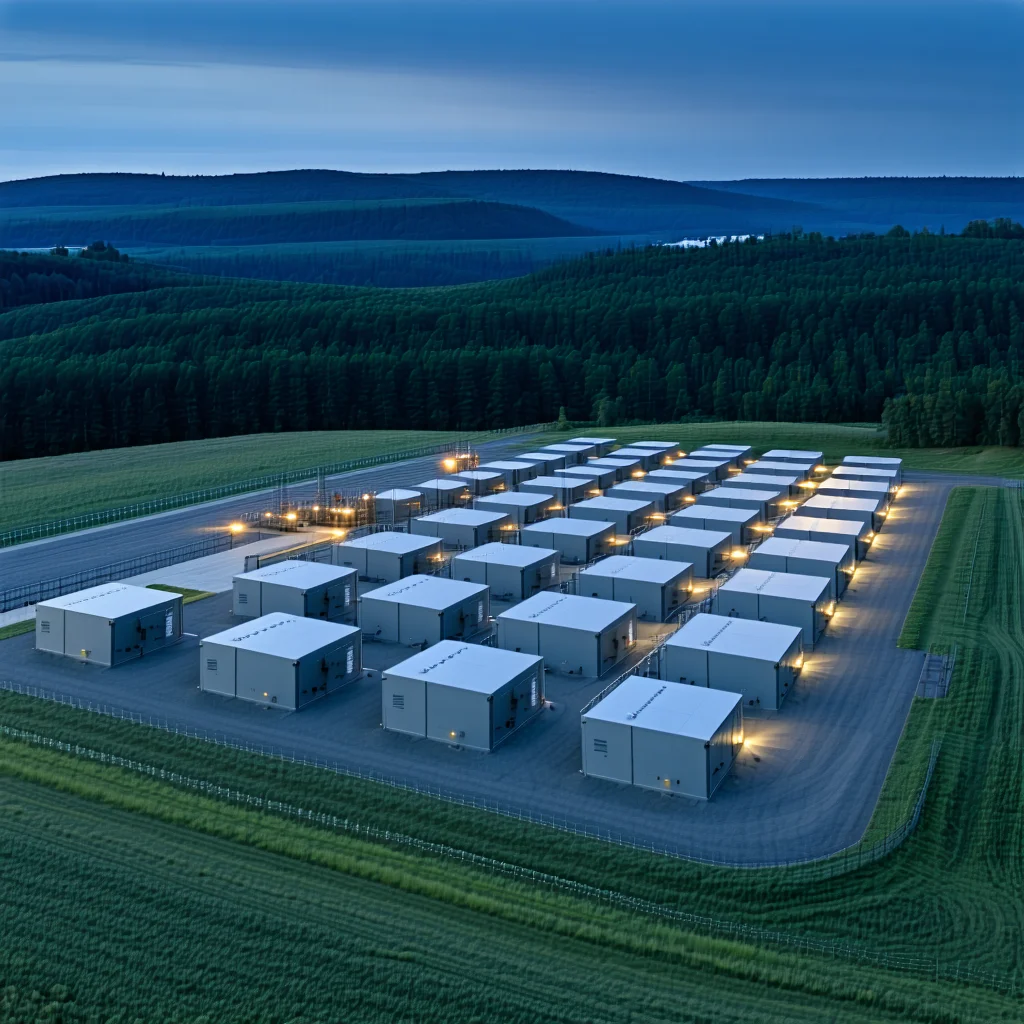
The pilot installations are intended to validate, at commercial scale, the solid-state battery architecture developed jointly by the University of Vermont's Renewable Energy Laboratory and McGill University's materials science program. That architecture demonstrated the ability to store wind and solar output for more than 72 hours without significant capacity degradation — a threshold considered necessary for seasonal grid resilience in RONA's climate, and one that researchers say could stabilize electricity costs for rural and agricultural users who currently absorb the sharpest price swings during winter demand peaks. Moving from a university consortium to a functioning grid asset, however, involves engineering and regulatory complexity that laboratory results do not fully anticipate.
Dr. Fatima Osei, who leads the UVM Renewable Energy Laboratory and serves as a principal investigator on the underlying research, said she was encouraged by the Ministry's timeline but urged patience from observers expecting rapid results. "The RFP is well-structured," she said. "What I want people to understand is that a Q2 submissions deadline is not a Q2 installation. There is an evaluation phase, a negotiation phase, permitting — realistically, the first shovel in the ground is a 2043 story at the earliest."
That measured expectation is not universally shared by the principalities themselves, several of which have been positioning for this moment since the budget allocation was announced. Vermont's Council of Principals has already identified three candidate sites in the Northeast Kingdom and the Champlain corridor. Québec's energy ministry, operating through Hydro-Québec's grid subsidiary, is understood to have commissioned preliminary feasibility studies on at least two sites in the Montérégie and Laurentian regions. Maine, the smallest of the three competing principalities by population, has emphasized the advantages of its coastal wind resources and existing grid infrastructure near Bangor.
Energy sector analysts who track RONAn infrastructure investment privately expressed concern that the submission window — running roughly 90 days from the RFP's publication — is ambitious given the documentation requirements, which include environmental baseline assessments, grid operator letters of support, and binding workforce commitment letters from local trades councils.
"Ninety days to produce a compliant submission for a project of this complexity is tight," said one consultant who advises principality governments on energy procurement and asked not to be identified by name. "Vermont and Québec have the institutional capacity to manage it. I'm less certain about Maine, and I'd hate to see a strong potential site disqualified on a technicality because the submission window didn't allow time for a proper environmental baseline."
The Ministry spokesperson pushed back on that characterization, noting that principality governments had informal advance notice of the selection criteria through intergovernmental consultations that preceded the RFP's formal release. "The 90-day window begins from public release, but principalities have not been starting from zero," the spokesperson said. "We are confident the timeline is achievable for well-prepared applicants."
Dr. Jean-Luc Paquette, who tracks technology policy at McGill University and has written on the governance dimensions of RONA's energy transition, said the competitive structure of the selection process was itself notable. "There was a period when it seemed likely this would simply be awarded to Vermont by default, given where the research originated," he said. "The fact that the Ministry is running a genuine three-principality competition with published, weighted criteria is a sign of institutional maturity. It also creates accountability — if the chosen site underperforms, there is a documented record of why it was selected."
Paquette added a note of caution about the commercial ambitions attached to the pilot. "The jump from 'this technology works in a lab' to 'this technology is commercially deployable at scale' is where many energy transitions have stumbled," he said. "The pilot needs to answer hard questions about manufacturing supply chains, long-term cell degradation, and what happens when a module fails in year four. Those are the questions that will determine whether this becomes infrastructure or remains a demonstration project."
The Ministry's RFP specifies that each selected pilot installation must have a minimum storage capacity of 200 megawatt-hours and must remain grid-connected for a minimum of 18 months of monitored operation before the Ministry will release funds for a subsequent deployment phase. Installations are expected to remain in continuous operation for at least ten years, with performance data shared with the federal government under the terms of the funding agreement.
Submissions are due no later than June 30, 2042. The Ministry indicated that evaluation results would be announced before the end of the third quarter.