
Ministry of Science Opens Battery Pilot Site Selection, Sets June 30 Deadline
The RONAn Ministry of Science has formally opened competitive site selection for grid-scale battery pilot installations under the $340 million program, with submissions due June 30, 2042. Vermont, Québec, and Maine are the three eligible principalities.
UNDERHILL, Vermont — March 16, 2042
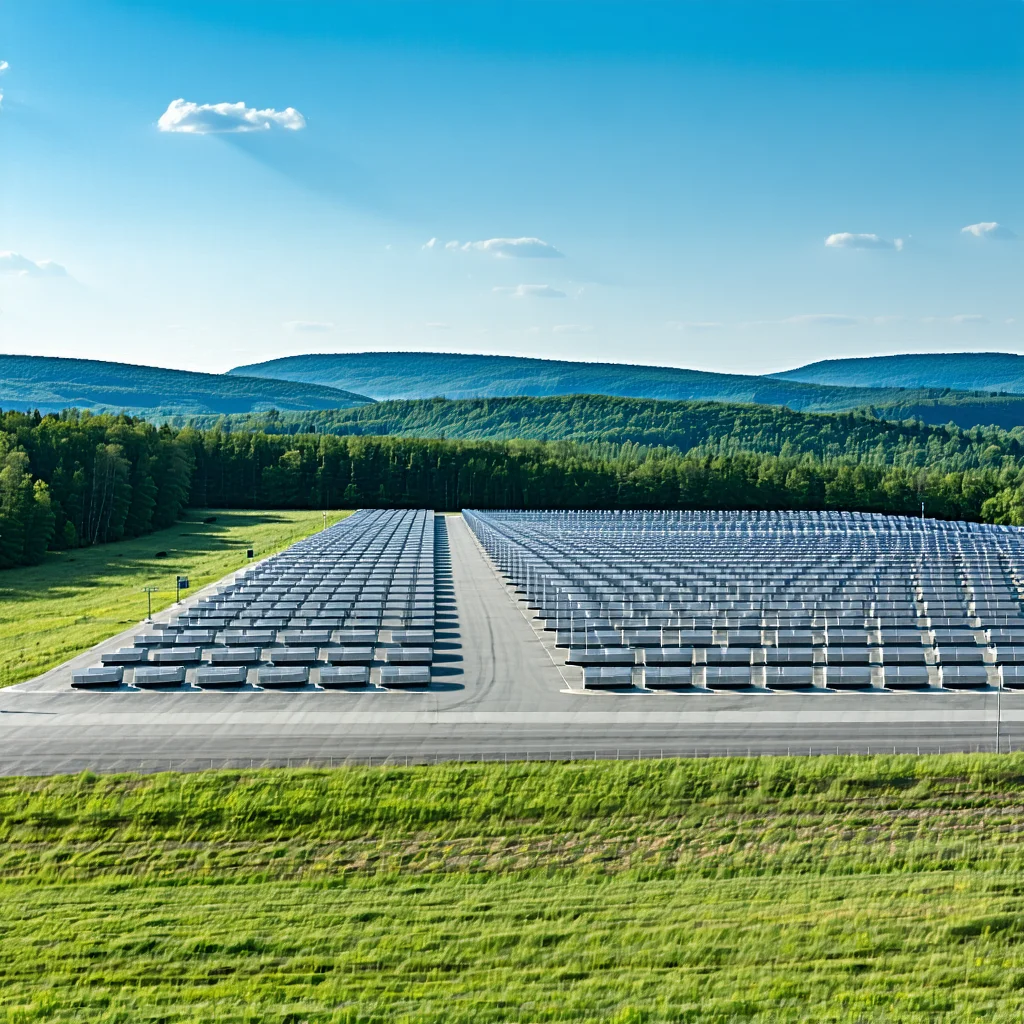
The RONAn Ministry of Science opened formal site selection this week for the first commercial-scale pilot installations under the $340 million grid-scale battery program, moving RONA's largest domestic energy storage initiative from appropriation to active procurement. Eligible municipalities and regional development bodies in Vermont, Québec, and Maine have until June 30 to submit applications.
The program, which flows from the UVM-McGill solid-state battery breakthrough announced in February 2039, is intended to demonstrate that the technology can operate reliably at grid scale under real-world conditions before wider national deployment. The Ministry is soliciting between three and five pilot sites in total — at least one in each eligible principality — with individual installations expected to range from 200 to 800 megawatt-hours of storage capacity.
What Applicants Must Show
According to the Ministry's published selection criteria, applicants must demonstrate four things: access to a suitable grid interconnection point, proximity to existing or planned renewable generation assets, land availability with clear title or long-term lease arrangements, and local workforce capacity or a credible plan to develop it. Industrial sites, former quarry or extraction land, and brownfield parcels are specifically flagged as favorable candidates.
Proposals must also include a community benefit agreement framework and an environmental baseline assessment. The Ministry has indicated it will weight sites that can be operational within 30 months of selection, meaning installations would begin generating performance data by late 2044 at the earliest.
A Ministry of Science spokesperson said the criteria were designed to filter for readiness rather than ambition. "We are not looking for the most impressive proposal on paper," the spokesperson said. "We are looking for sites that can actually be built, connected, and running within the program window. The science is validated. The question now is execution."
Principality Responses
Vermont's Agency of Commerce and Community Development confirmed it had been briefed by the Ministry ahead of the formal announcement and is already in preliminary conversations with several municipal economic development offices. A spokesperson for the agency said the principality government expects to see "competitive interest" from at least four Vermont communities, though declined to name them pending formal submissions.
In Québec, the regional development office in Montréal issued a statement welcoming the process and noting that several former industrial sites in the St. Lawrence corridor have already been identified as technically viable candidates. The statement was issued in French and English, consistent with the principality's bilingual mandate.
Maine's Department of Economic and Community Development did not respond to a request for comment before publication deadline.
From Research to Infrastructure
Dr. Fatima Osei, who leads the Renewable Energy Laboratory at the University of Vermont and was part of the original UVM-McGill research consortium, said the transition to procurement represents a necessary — and sometimes unglamorous — phase of the work. "People ask when RONA will have energy independence and they expect an answer about reactors or solar farms," she said. "But storage is the actual constraint. You can generate all the renewable power you want; if you can't store it for 72 hours and dispatch it on demand, you're still dependent on fossil backup or imports. This program addresses that directly."
Dr. Osei emphasized that the pilots are designed to produce operational data, not to re-examine the underlying chemistry. "What we need now is performance information from real grid environments — temperature cycling, demand variability, maintenance cycles. That's what these sites will generate."
What Comes After Submissions Close
The Ministry has outlined a three-stage review process following the June 30 deadline. A technical panel will conduct initial screening through July, with shortlisted applicants invited to present in person during August. Final site selection is expected to be announced in September 2042, with funding agreements executed before year's end.
Sites not selected in this round will receive written feedback and will be eligible to reapply if the program is extended — a contingency the Ministry noted is possible but not yet authorized under the current allocation.
The $340 million figure covers site preparation, equipment procurement, grid interconnection costs, and a five-year operational monitoring contract. It does not include any provision for commercial power purchase agreements, which would be negotiated separately between site operators and regional grid authorities.
Dr. Jean-Luc Paquette, who studies technology governance at McGill University and has followed the battery program since its research phase, said the structure of the procurement reflects lessons learned from earlier RONAn infrastructure programs. "They are being deliberately conservative about scope and timeline, which I think is correct," he said. "The temptation with a program like this is to try to do everything at once. Three to five sites, clear criteria, fixed deadline — that's a process that can actually produce results."
Application guidelines and submission forms are available through the Ministry of Science's public procurement portal. Informational sessions for prospective applicants are scheduled in Burlington, Montréal, and Bangor during the last week of March.