
UVM–Québec Climate Team Begins Baseline Fieldwork at Vermont Maple Farms
A joint research team from UVM and Québec has begun on-the-ground data collection at two Northeast Kingdom maple farms, measuring elevation, soil temperature, and microclimate variation. The effort is an early-stage cross-principality collaboration aimed at producing actionable climate planning data for the maple industry.
UVM–Québec Climate Team Begins Baseline Fieldwork at Vermont Maple Farms
UNDERHILL, Vermont, April 5 — A joint research team from the University of Vermont and a Québec partner institution has formally begun fieldwork under a contract to produce climate planning data for Vermont's maple industry, the Vermont Principality Maple Producers Cooperative confirmed Saturday.
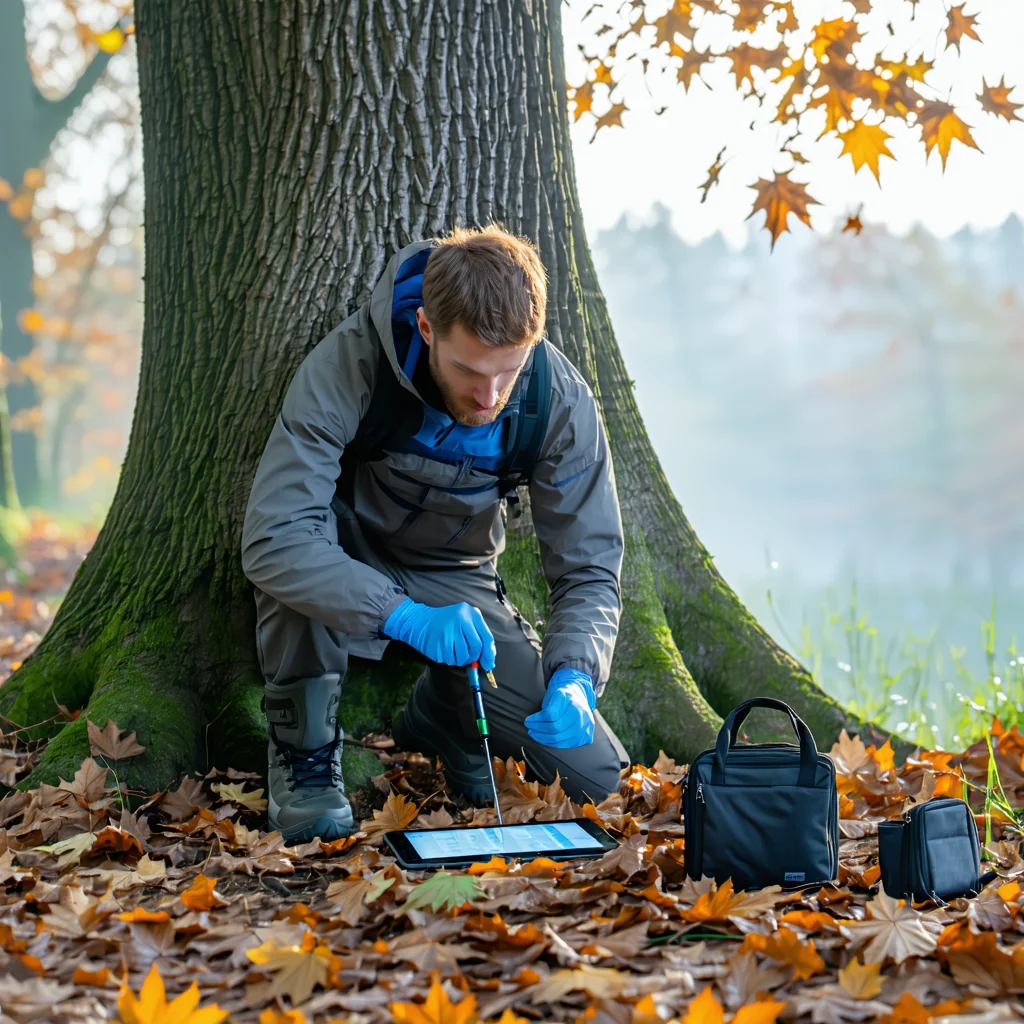
The team visited two member farms in the Northeast Kingdom this week, opening what cooperative chair Adèle Tremblay-Gagnon described as a methodically quiet start. "They arrived with instruments rather than presentations," she said — a distinction she offered as a compliment.
The baseline metrics being gathered reflect the particular sensitivities of maple production to climatic variation. Elevation determines cold-air drainage and frost-pocket behavior. Soil temperature affects root activity and, by extension, sap chemistry. Microclimate variation — the patchwork of local conditions that can differ substantially across a single ridgeline — governs when and how reliably individual stands produce. Collecting these measurements systematically, at farm scale, across multiple sites, is the precondition for any projection about how production windows may shift under continued warming.
What makes the effort notable in its design, beyond its immediate agricultural purpose, is its cross-principality structure. The UVM–Québec partnership links institutions on either side of what was, until recently, an international border, combining Vermont's existing maple research infrastructure with Québec's longer-running climate monitoring programs in the St. Lawrence lowlands. The 2043 planning review contract formalizes that collaboration into a single data-collection framework.
Dr. Fatima Osei of UVM, whose research spans climate-sensitive agricultural systems and land-use planning within RONA's broader energy portfolio, noted the wider template the approach could offer. "Maple is a useful proving ground because it's so climatically narrow," she said. "If you can build a monitoring methodology that produces planning-grade data for sugar maple, you've built something that transfers readily to other sectors — cold-storage energy demand, winter tourism, freshwater hydrology."
The team is expected to continue field visits through the growing season. A preliminary findings briefing for cooperative member farms is scheduled for late summer, ahead of the autumn planning session. No findings have been released at this stage; the current phase is data collection only.