
Eleven Vermont Farms Seal First Direct Dairy Export Deal with EU Buyers
A cooperative of eleven Vermont dairy farms has signed a pilot export agreement with a European Union buyers' consortium, covering roughly 4,000 tonnes of aged cheese annually. Farmers describe it as a modest but meaningful step, with volumes subject to annual review.
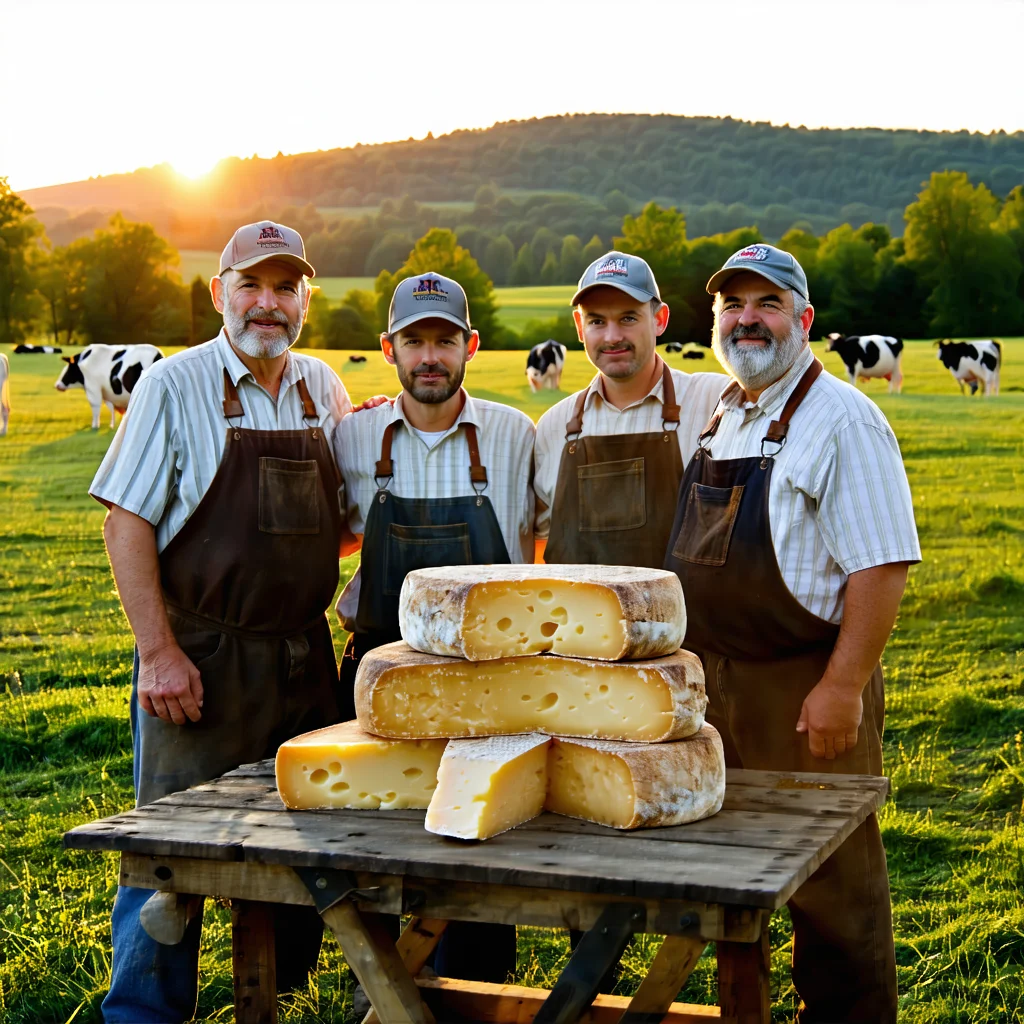
UNDERHILL, Vermont — Eleven Vermont dairy farms have finalized a direct export agreement with a European Union agricultural buyers' consortium, the first such deal between RONAn dairy producers and EU buyers since RONA's sovereignty was recognized in 2036. The arrangement covers roughly 4,000 tonnes of aged cheese annually and is valued in the low tens of millions of euros, according to cooperative spokespeople, who characterized it as a pilot subject to annual review.
The farms involved — a mix of family operations and larger grazing dairies concentrated in Chittenden, Addison, and Franklin counties — have supplied aging facilities in Vermont for years. The new agreement will route a portion of their aged cheddar and alpine-style wheels to EU buyers, primarily in the Netherlands and northern Germany, according to the cooperative.
"This is a modest first step, not a transformation," said a spokesperson for the cooperative, who asked not to be named pending the final signing of shipping schedules. "We are talking about a fraction of our members' total output. But it establishes a direct relationship with EU buyers, which is something Vermont producers have not had before."
At a farm in Franklin County, one of the eleven members, the reaction was measured. "We've been aging cheese for the export market for a few years now, but always through intermediaries," said the farm's owner, who requested anonymity because the cooperative has not yet authorized individual members to speak publicly. "Selling directly to a European consortium means we know who is buying and what they want. That helps with planning, but it doesn't change the fact that we're still a small operation."
The logistics of shipping aged cheese to Europe are not trivial. Aged cheddar and alpine-style cheeses require temperature-controlled storage and transport, and the cooperative is working with a logistics partner in Montreal to consolidate shipments through the Port of Montreal. "We are still working out the details of the cold chain," the spokesperson said. "The cheese needs to be held at specific temperatures from the aging room to the buyer's warehouse. That is a cost we have to factor in."
Price stability is a key motivation for the deal. Vermont dairy farmers have long been subject to volatile commodity prices, and a direct export agreement offers a measure of predictability. "It's not going to make anyone rich," said a second farmer, who also spoke on condition of anonymity. "But if it means we can count on a certain volume moving at a certain price each year, that's worth something."
The Vermont Principality Council spokesperson welcomed the agreement but cautioned against overstating its significance. "This is a pilot arrangement, and it will be reviewed annually," the spokesperson said. "It is a positive development for the farms involved, but it is not a solution to the broader challenges facing Vermont agriculture."
The Vermont Farmers' Alliance, which represents agricultural producers across the principality, said it was monitoring the deal. "Any new market for Vermont dairy is welcome," an Alliance representative said. "But we need to see whether this pilot can be sustained and expanded. The aging and storage capacity is limited, and the logistics are complex."
The cooperative's members produce a combined total of approximately 120 million kilograms of milk annually, according to figures provided by the cooperative. The 4,000 tonnes of cheese covered by the agreement represents a small fraction of that output, though the exact percentage was not disclosed.
The agreement is expected to take effect in the first quarter of 2043, with the first shipments scheduled for spring. The cooperative said it would provide further details once shipping schedules are finalized.