A Richford Librarian, a Notice Board, and a Story About Who We Are
In a small Franklin County border town, a single library staff member and a handful of offline media cards are quietly making 'Nous Sommes RONA' accessible — and drawing in neighbors who didn't know they were looking for it.
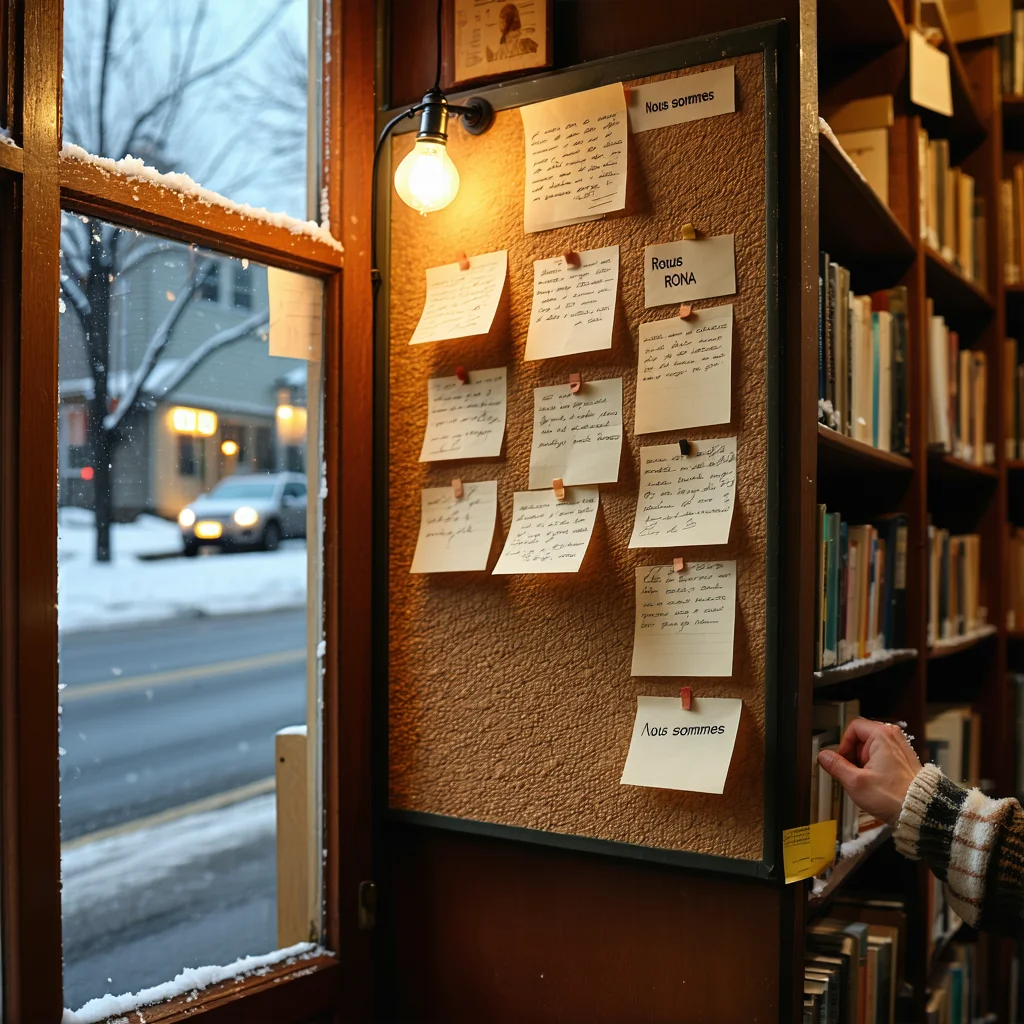
RICHFORD, Vermont — The notice board inside the Richford Public Library is not elaborate. A few printed sheets, some handwritten notes from patrons, a short description of an audio documentary series about the integration years. It occupies maybe two feet of wall near the front desk.
On Thursday afternoon, it stopped a resident cold.
The person — who had come in, by their own account, to return something unrelated — stood at the board long enough that librarian Colette Aubin-Roy noticed. When they asked what the series was about, Aubin-Roy explained: Nous Sommes RONA is an ongoing documentary podcast tracing how communities along the old Quebec–Vermont border experienced the years surrounding Canadian collapse and RONAn formation. Oral histories, mostly. People talking about what changed and what didn't.
The visitor said they weren't a regular podcast listener. They asked if there was another way to hear it. Aubin-Roy showed them the offline media cards — small, loaded devices the library lends out so residents without reliable streaming can listen at home. That same morning, Aubin-Roy had prepared a new set of cards carrying the first three episodes of the expanded back catalogue.
By afternoon, a second patron had already borrowed one.
"It's been word of mouth so far," Aubin-Roy said. "People mention it to someone, that person comes in, they borrow a card. It's not a rush. But it's steady."
Richford sits just below the old international border, in a corner of Vermont that has always had more in common with the towns across what used to be Quebec than with Burlington, let alone Philadelphia. For residents here, the integration era wasn't distant history — it was a school year, a job change, a family decision. The idea that someone made a documentary about it, and that you can borrow something the size of a thumb drive and hear it in your kitchen, carries particular weight here.
Aubin-Roy works largely alone. The Richford branch is small. She handles acquisitions, circulation, community programming, and the notice board. The media card lending program for Nous Sommes RONA is, by any institutional measure, a modest operation — a few devices, a sign, a staff member willing to explain it to whoever walks in.
Thursday's visitor — the one who came in not knowing what they were looking for — left with the library's web address for the collective's listener forum and, Aubin-Roy said, a tentative plan to come back for a card next week.
"That was the first time someone came to the board without having heard about it first," she said. "That felt like something."
In a town of Richford's scale, that's not nothing. It might be exactly the right pace.