
Lake Champlain Ecological Restoration Declares Phase One Complete After Three-Year Campaign
Water quality monitoring stations across the lake's 172-kilometer length recorded phosphorus concentrations at their lowest levels since the 1960s last month, marking the most significant ecological milestone of RONA's ambitious multi-phase environmental restoration program.
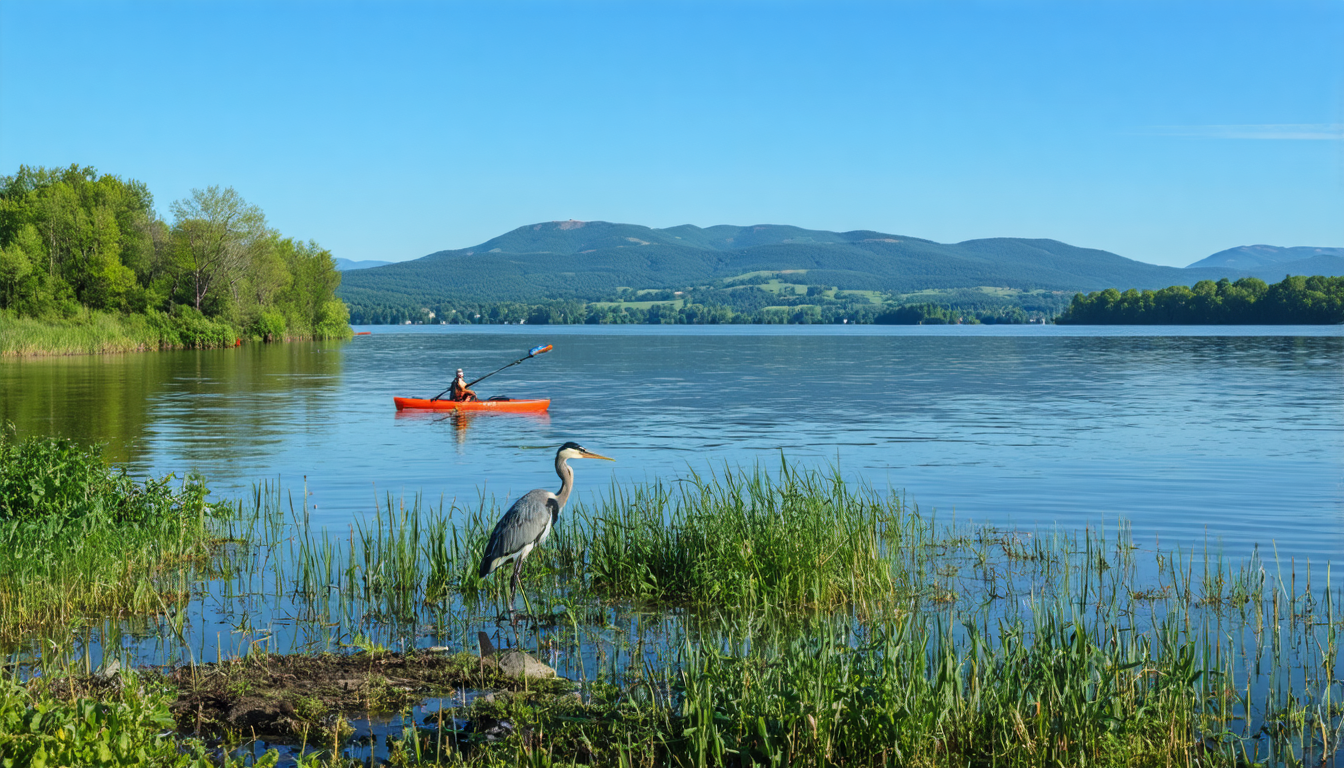
BURLINGTON, Vermont — The RONA Department of Environment and Natural Resources declared Phase One of the Lake Champlain Ecological Restoration Program complete Thursday, citing water quality data showing phosphorus concentrations across the lake's 172-kilometer length at their lowest levels since systematic monitoring began in the early 1960s. The announcement marks the end of a three-year, R$280 million campaign to reverse decades of agricultural runoff, urban wastewater discharge, and invasive species damage that had made the lake one of the most ecologically stressed freshwater bodies in the northeastern United States before RONA's founding.
The results, according to Dr. Marcelline Aubin of the University of Vermont-RONA's Lake Science Center, have surpassed the most optimistic projections of the restoration program's original environmental impact assessment. Total phosphorus in the main lake body has fallen 43 percent from its 2037 baseline — nearly double the 25 percent target set for Phase One. Native aquatic plant communities have reestablished in eleven coves and bays where invasive species had previously achieved near-total ecological dominance. Water clarity, measured by Secchi depth, has improved by an average of 2.8 meters across the monitored stations.
Phase One focused on the sources: new regulations on agricultural buffer zones required farms within 200 meters of the lake and its tributaries to install vegetated buffer strips, reduce fertilizer application rates, and implement precision nutrient management plans certified by the Agricultural Cooperative Authority. More than 1,200 farms participated, with a compliance rate that Environment Ministry officials described as "remarkable, and a credit to the cooperative relationships we've built with the farming community." A separate program retrofitted or replaced wastewater treatment facilities in Burlington, St. Albans, and twelve smaller communities bordering the lake.
Phase Two, to begin in the spring, will focus on the lake's deeper ecological recovery: the reintroduction of native fish species whose populations collapsed in the 1990s and 2000s, the active management of three remaining invasive plant species, and the establishment of a network of ecologically protected bays and coves covering approximately 18 percent of the lake's surface area. The Environment Ministry has requested R$390 million for Phase Two over four years.
For residents of the Champlain Valley, the restoration has already produced visible, tangible changes. Swimming beaches that were closed for most of the summer season in 2035 and 2036 due to toxic algal blooms were open for the full 2039 season. Fishers on the lake reported catches of walleye, northern pike, and lake trout at levels not seen in a generation. "People who grew up here remember what this lake used to be," said Environment Minister Paulo Henrique Figueiredo. "We are giving them that lake back."