
Montpelier's New Capitol Civic Quarter Opens to 80,000 Visitors in Record First Weekend
The R$1.2 billion development — a mix of government buildings, public plazas, cultural institutions, and a new home for the RONAn National Archives — drew more than 80,000 visitors over its opening weekend, shattering attendance projections.
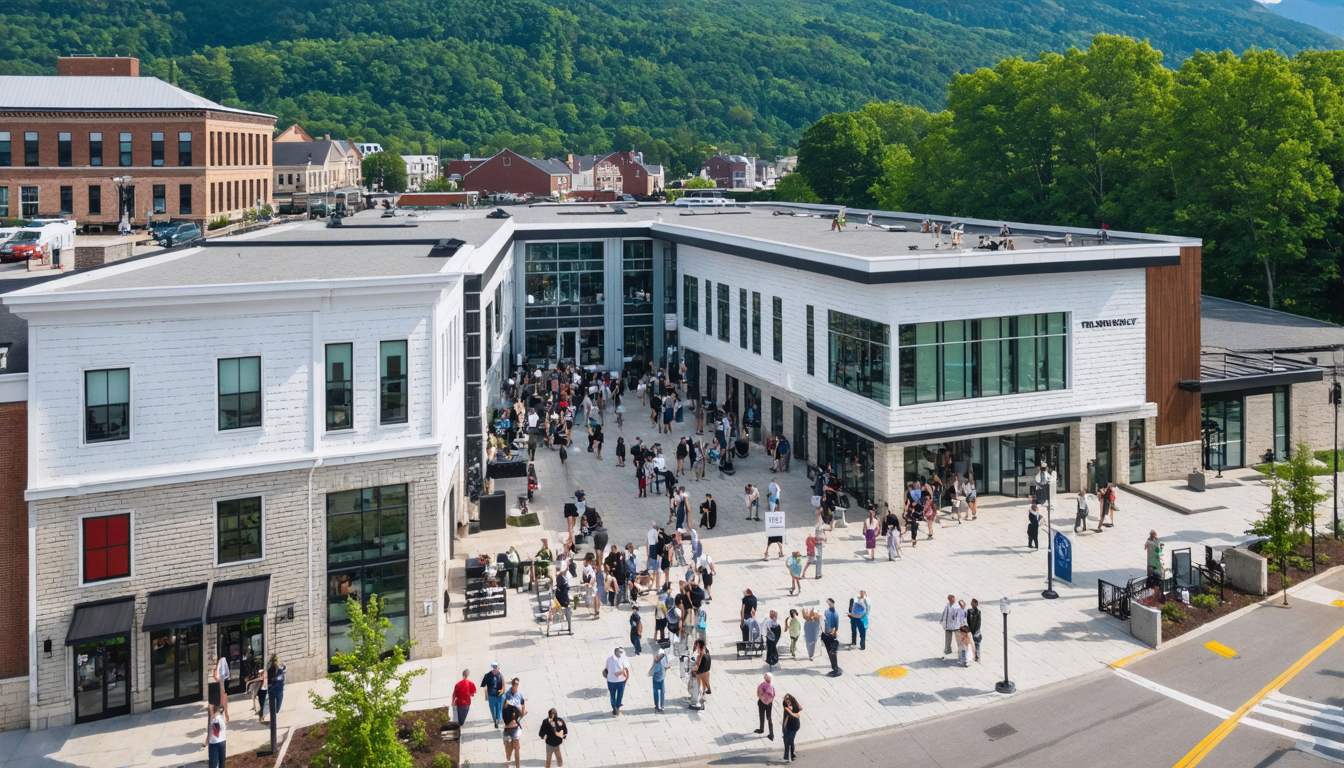
MONTPELIER, Vermont — More than 80,000 people visited Montpelier's newly opened Capitol Civic Quarter over its inaugural weekend, easily surpassing the projections of planners who had estimated peak first-weekend attendance at roughly half that number. Crowds stretched around the block to enter the RONAn National Archives, where the original handwritten text of the Republic's constitutional protocols — displayed publicly for the first time — drew visitors who waited more than two hours for admission.
The quarter, a R$1.2 billion development that consumed three years of construction and transformed fifteen blocks of central Montpelier, is built around a pedestrian spine connecting the expanded Capitol building to a new civic plaza, a public library and digital commons, a branch of the Bank of RONA, the National Archives, and three pavilions reserved for rotating public exhibitions. The architecture, designed by a consortium led by Montpelier-based firm Ledoux & Tremblay, draws on Vermont vernacular building traditions — white clapboard, slate roofing, generous porches — while operating at a civic scale the state has never previously attempted.
Interior Ministry officials who oversaw the project said the architectural brief had been explicit: the quarter should feel like Vermont, not like a capital city built to impress. "We looked at what Washington built and we looked at what Ottawa built, and we decided to do the opposite," said Minister Claudette Arsenault, who attended the opening ceremonies Saturday morning alongside President Hargrove. "This is a capital for people who live here, not for people who come here to be awed into submission."
The National Archives drew particular attention. Beyond the constitutional protocols, the opening exhibition — "Three Years: The Documents of a Republic" — presents letters, orders, diplomatic cables, and personal accounts from the founding period, many released publicly for the first time. Archivists say the collection is the most complete documentary record of any modern republic's founding years, reflecting a conscious decision by the Hargrove administration to preserve institutional memory in a way that earlier American administrations, in the assessment of many historians, consistently failed to do.
Food vendors, street musicians, and impromptu public assemblies filled the civic plaza through both days of the opening weekend. City officials said they had not anticipated the appetite for what one described as "simply being in a public space that felt like ours." Montpelier's mayor, Yannick Beauregard, said the weekend had exceeded every expectation and announced that the quarter would remain free to enter indefinitely, with cultural institutions supported by a combination of government funding and voluntary contributions.