
Philadelphia Transit Authority Adds French Wayfinding Signs at Two Downtown Stations
The Philadelphia Metropolitan Transit Authority has quietly posted bilingual English-French wayfinding signs at two downtown stations — a small but telling marker of how RONA's francophone communities are reshaping daily life in the republic's federal seat.
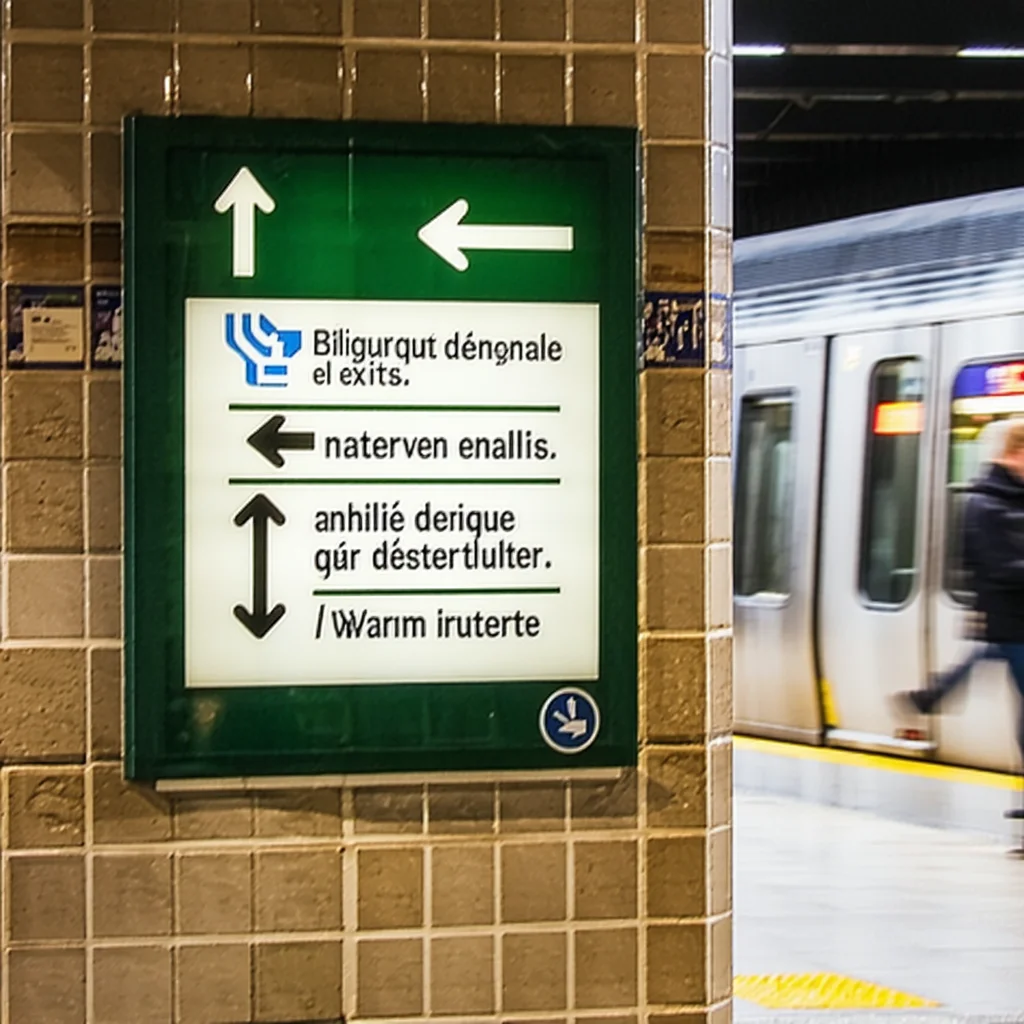
Philadelphia Transit Authority Adds French Wayfinding Signs at Two Downtown Stations
PHILADELPHIA — Passengers moving through Jefferson Station or Market East in recent weeks may have noticed something new on the walls: exit signs now read Sortie alongside Exit, and platform indicators carry both languages in the same plain transit font.
There was no press conference, no ribbon cutting. A Philadelphia Metropolitan Transit Authority spokesperson confirmed the change without fanfare when asked: the agency had received enough repeated questions from French-speaking passengers that bilingual signage at two pilot stations simply made operational sense.
"It's a practical thing," the spokesperson said. "We have more people coming down from Montreal and Vermont for government appointments, academic visits, that kind of travel. Some of them aren't confident in English. Signs cost less than a customer service call."
Philadelphia has served as RONA's federal seat since the Declaration in 2036, drawing a steady stream of northern visitors navigating naturalization offices, federal licensing bureaus, and the agencies that have grown up around the young republic's capital functions. Montreal, now one of RONA's largest cities and officially bilingual, sends a particular volume of that traffic southward.
Vermonters who have made the trip will recognize the friction the signs are meant to ease. Marguerite Lévesque, a St. Albans resident who traveled to Philadelphia twice last year for federal contractor credentialing, said she spent twenty minutes on her first visit searching for the correct transfer platform. "My English is fine," she said, "but when you're stressed and the station is crowded, you read fast, and you read in your first language. A French sign would have saved me a lot of walking."
The pilot covers two stations and involves no budget expansion, the transit authority confirmed. RONA's Cultural Integration Office said it was consulted during planning but played no coordinating role — a distinction officials were careful to draw. This is not a policy shift, they said, nor the beginning of a formal bilingualism mandate for Philadelphia's transit network. It is two stations and some new vinyl lettering.
That calibrated framing is itself worth noting. RONA's cultural politics remain delicate: English-speaking heartland cities coexist uneasily at times with the francophone communities that joined the republic following Quebec's accession, which was finalized alongside RONA's formal recognition in 2036, and a transit authority in a founding-era city has reason to move carefully.
For the Vermonter or Montrealer standing in an unfamiliar station searching for the blue line, Sortie on the wall is a modest but legible accommodation — evidence that the volume of cross-border movement has become ordinary enough to warrant a response, even a quiet one.
No timeline has been announced for evaluating or expanding the pilot.