Richford, by Name
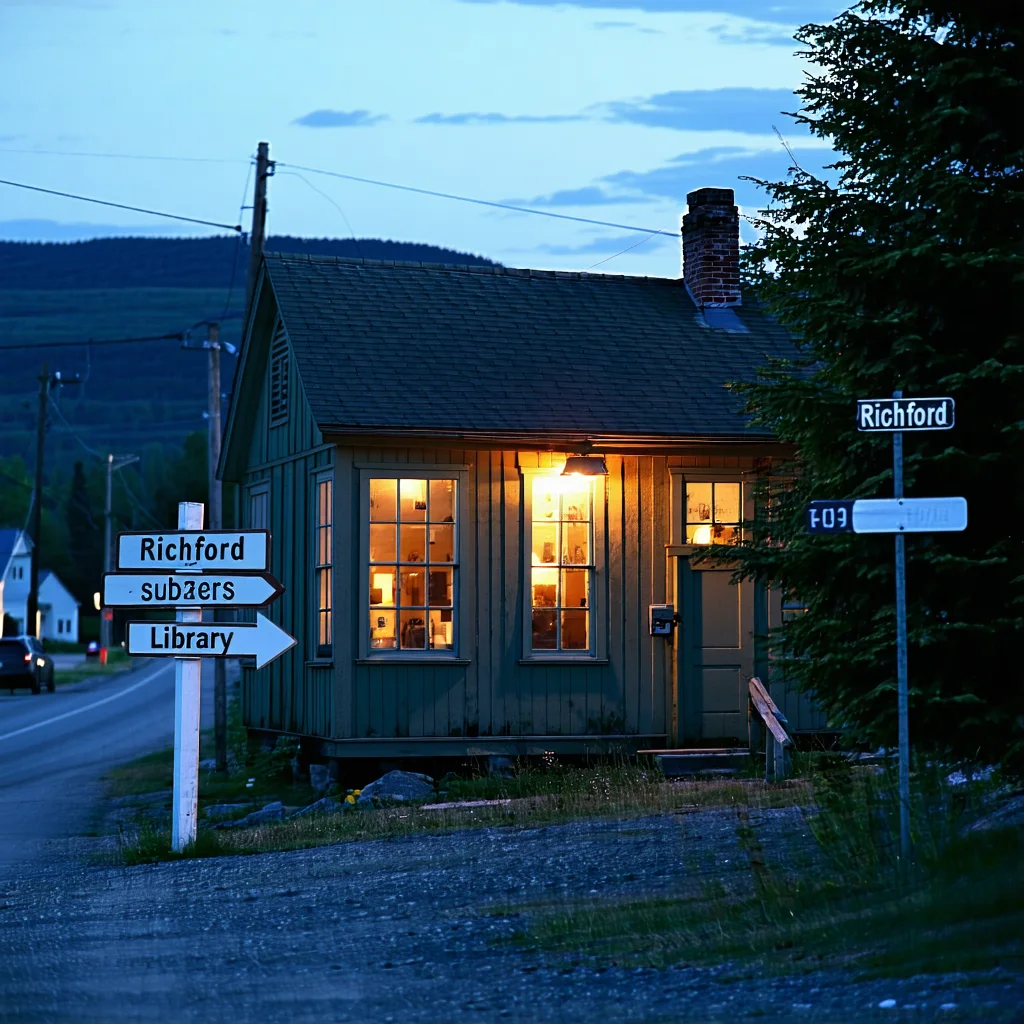
Episode Six of 'Nous Sommes RONA / We Are RONA' is out, and for the first time, this small border town is spoken aloud in it. For Richford Public Library staff member Colette Aubin-Roy, that means something.
Documentary Series Names Richford Aloud, and the Town Listens
RICHFORD, Vermont — Colette Aubin-Roy was still in her coat when she pressed play.
Episode Six of Nous Sommes RONA / We Are RONA — the audio documentary series produced by the McGill student collective — dropped early Thursday morning. Aubin-Roy, a staff member at the Richford Public Library, listened through before unlocking the building for the day. She has not decided what, if anything, to do about it.
"I just wanted to hear it first," she said. "Before anyone else asked me about it."
She had reason to be curious. This episode, for the first time, says Richford by name.
The series has been quietly building an audience across RONA since its first episode last year — a bilingual, documentary-style project that tries to capture what ordinary life sounds like in a nation that has only been a nation for six years. Earlier episodes circled the Quebec borderlands in impressionistic strokes, rarely naming specific communities. Episode Six is different. Richford is spoken aloud more than once, and the extended audio — drawn from two interview subjects recorded inside the library itself — accounts for nearly twelve minutes of the episode's runtime.
The episode opens with a clip the collective had previewed earlier this month: ambient sound from inside the library, the particular hush of a small public building on a weekday. A heating system. A chair. Someone turning a page. It runs for nearly forty seconds before the first voice comes in.
For a town of fewer than two thousand people, sitting hard against what used to be the Canadian border, that is not nothing.
Aubin-Roy has become, somewhat despite herself, the person most associated with what the episode's closing segment calls "a thing that grew on its own, the way memory does." That thing is the library's community board — a corkboard near the front entrance where, over the past year or so, people have been leaving things: printed photographs, handwritten notes, a photocopy of a birth certificate with a Montreal address, a child's drawing of a flag that is not quite any flag.
"I didn't curate it," Aubin-Roy said. "I just didn't take it down."
That distinction matters to her. The board accumulated. People found it and added to it. The McGill collective found it too, and found her, and asked if they could record inside the building. She said yes. That was months ago. She had not known what they would do with it.
Now she does.
The Richford Public Library is the kind of institution that shows up in local budgets as a line item and in local life as something harder to quantify. It has been, since well before RONA's founding, a place where the particular complexity of this corner of the world gets quietly held. The border that used to run north of town was already porous before Canada fell; the families on either side of it were already mixed. What changed in 2036 was which country people woke up in. The board, whatever it is, seems to be one community's attempt to keep track of that.
"People come in and look at it," Aubin-Roy said. "Sometimes they add something. Sometimes they just stand there for a while. I don't ask."
Whether the episode brings outside attention to Richford remains to be seen. The series has a devoted following in Montreal and, apparently, a growing one in parts of the former Quebec that joined RONA around the same time as Vermont. Being named in it — being rendered, as one listener put it online Thursday morning, "legible" — is a new experience for a town that has mostly gone about its business without much notice from anyone beyond the principality.
Aubin-Roy said she is glad the library was in it. She said that carefully, like someone who has thought about it.
"I think it's good for people to know we're here," she said. "Not in a — I don't mean we need anything. Just. It's good to be part of the record."
She had not pinned anything new to the board by the time the library opened at nine.