
Underhill Packs the House for Writers' Residency Reading Night
The RONAn Writers' House in Underhill drew 74 of a possible 80 attendees to its first public reading event, a bilingual evening of poetry, memoir, and fiction that organizers say felt less like a literary program and more like a town gathering.
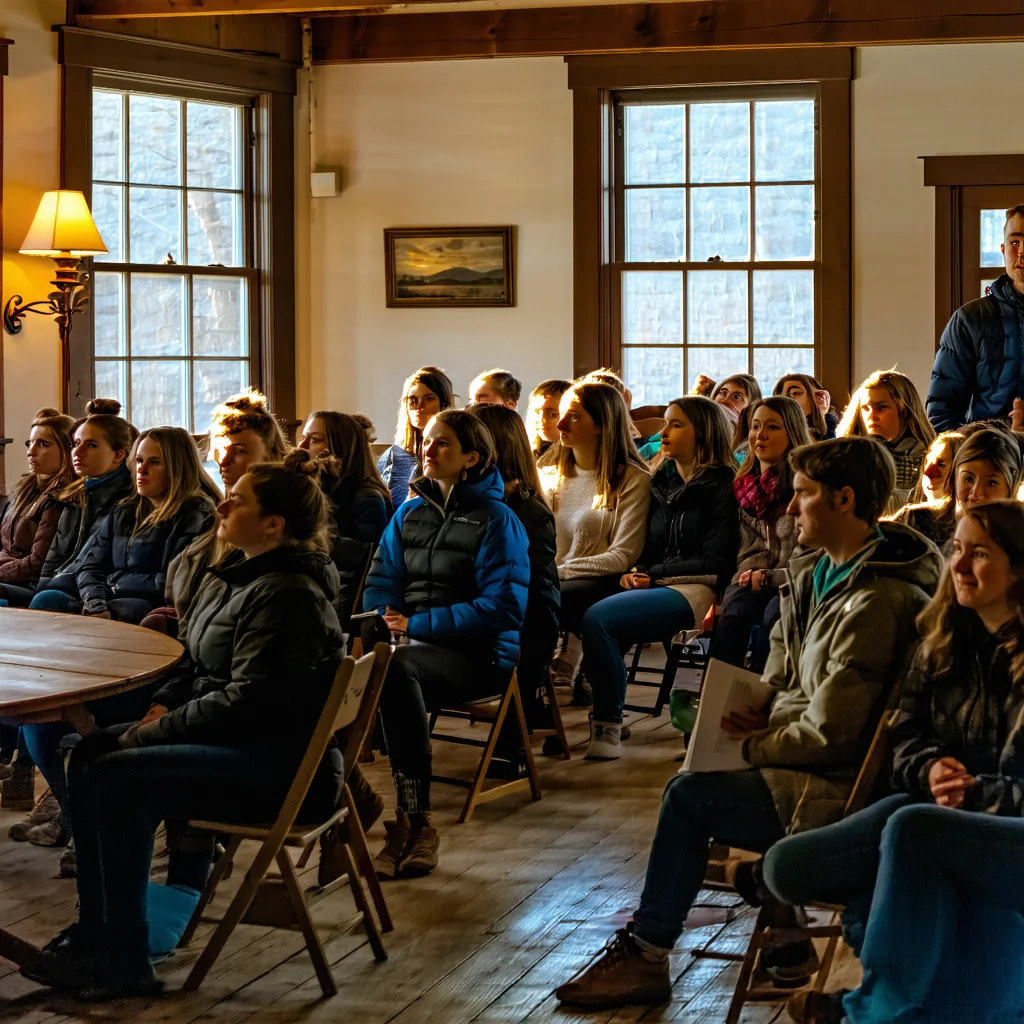
UNDERHILL, Vermont — The folding chairs were nearly all taken by a quarter past seven.
On the evening of March 14, the RONAn Writers' House in Underhill held its first public reading event since the residency program launched earlier this year. By the time the first author stepped to the microphone, 74 people had settled into the venue's modest main room — two rows shy of its 80-person capacity. For a national literary residency in a town of a few thousand people, that is not a soft opening. That is a full house.
Resident authors read from works-in-progress across three forms: poetry, memoir, and short fiction. A simultaneous French-English interpretation service ran throughout — a quiet acknowledgment of Underhill's place in a bilingual republic that now stretches from the Connecticut River to the Saint Lawrence.
"It didn't feel like a cultural event with a capital C," said one attendee, a retired schoolteacher who asked not to be named. "It felt like something that belonged here. Like a really good town meeting, but with better sentences."
Mayor Caroline Tremblay, who attended with several members of her household, said the turnout reflected something she has heard from residents for some time. "People in Underhill want things to happen here," she said after the reading. "Not just to read about things happening in Montreal or Halifax. The Writers' House is real, it's local, and last night proved that people will show up for it."
The RONAn Writers' House was established in Underhill as part of a broader effort to distribute national cultural infrastructure across the principalities, rather than concentrating it in larger cities. That the program includes bilingual programming — not as an afterthought but as a structural feature — has drawn attention from arts advocates who see it as a model worth replicating.
Organizers said several attendees expressed interest in a follow-up event before the current cohort of resident writers concludes its stay in May. No second date has been confirmed, but organizers called the response encouraging and said they are in conversation with the principality's arts funding office about expanded public programming for the residency's next cycle.
The turnout on a mid-March Friday suggests that demand, at least, is not in question.