
Vermont Towns Among Eleven Applicants for $340M Battery Pilot Program
The RONAn Ministry of Science has confirmed eleven site submissions for its solid-state battery pilot program, with Vermont municipalities among the applicants. Community consent documentation is proving the trickiest hurdle for smaller towns.
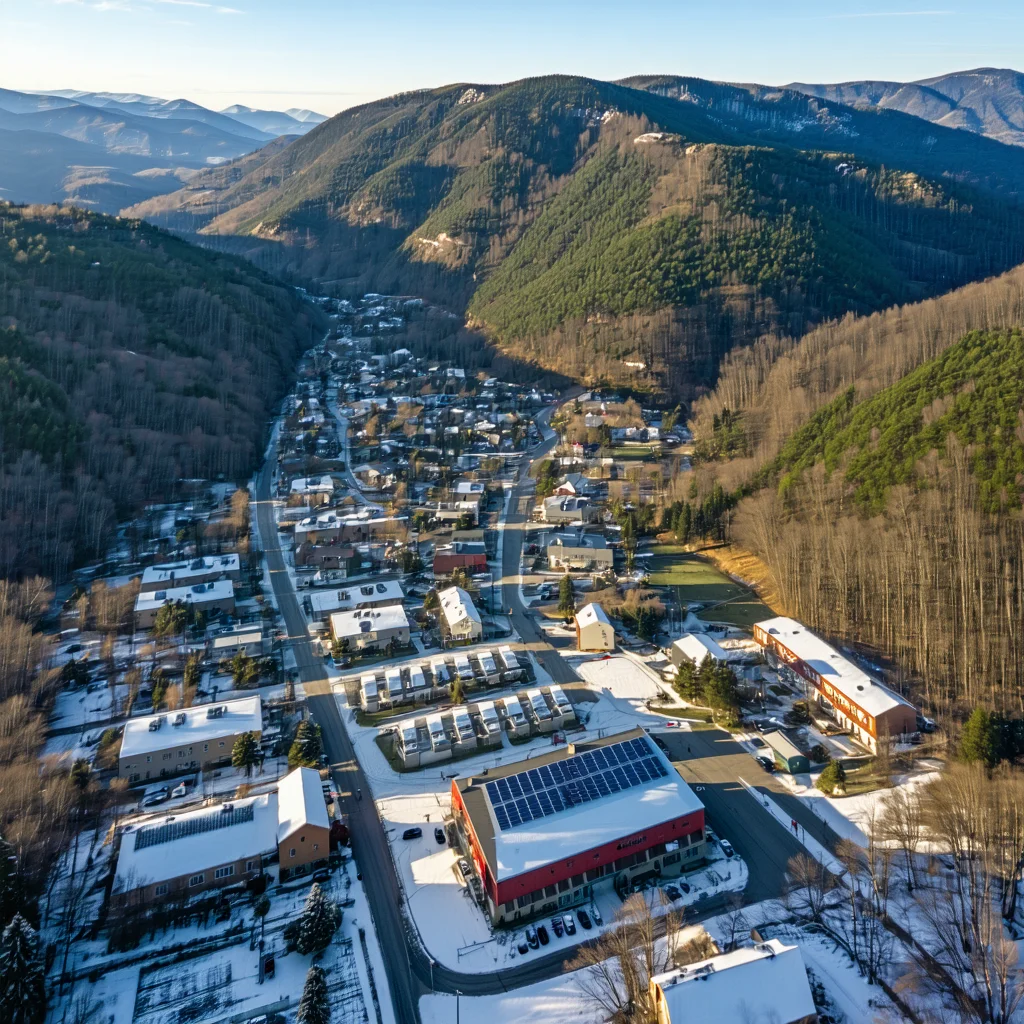
Vermont Towns Among Eleven Applicants for $340M Battery Pilot Program
UNDERHILL, Vermont — Vermont communities are among eleven localities across RONA that have submitted formal proposals for the Ministry of Science's $340 million solid-state battery pilot program — and with the June 30 deadline still more than two months out, that number is expected to grow.
The Ministry confirmed the submission count this week, noting that proposals have come in from localities in Vermont, Québec, and Maine. At least two of those submissions are from smaller rural municipalities looking to pair new battery installations with renewable generation infrastructure already in place — wind turbines, solar arrays, and in some cases small-scale hydro.
"We're seeing broad and serious interest," a Ministry spokesperson said, adding that the competitive review panel will not convene until after the submission window closes at the end of June.
For Vermont towns, the appeal of the program is straightforward. Many communities spent years and considerable local funding building out renewable capacity, only to watch surplus generation go to waste or be sold off at low prices for lack of storage. A battery installation changes that calculus considerably.
Getting an application across the finish line is another matter. Among the weighted criteria in the request for proposals, community consent documentation has reportedly given smaller applicants the most difficulty — a finding that will surprise few in Vermont, where a formal town vote or a selectboard resolution can take months to schedule, let alone pass.
"Anyone who's been through a warned meeting knows how this works," said an agricultural sector source familiar with rural infrastructure applications in the principality. "You need the community behind you on paper, and that paper takes time."
The Vermont Farmers' Alliance, which has been monitoring the RFP on behalf of members with adjacent renewable installations, said it has been advising interested communities to begin consent processes immediately if they have not already done so.
The Ministry has not indicated how many sites will ultimately be selected or how funding will be distributed among recipients. The program represents a significant investment in distributed energy storage — one that could prove consequential for rural communities that have long operated at the margins of the grid. For municipalities still weighing a submission, roughly ten weeks remain.