
Quebec Floats Rail Congestion Levy as Port of Montreal Sets Records
Quebec's transport ministry has drafted a temporary per-container levy on inbound rail freight to the Port of Montreal, earmarking revenue for corridor upgrades. Operators warn costs could hit EU-bound agricultural shippers as throughput hits records.
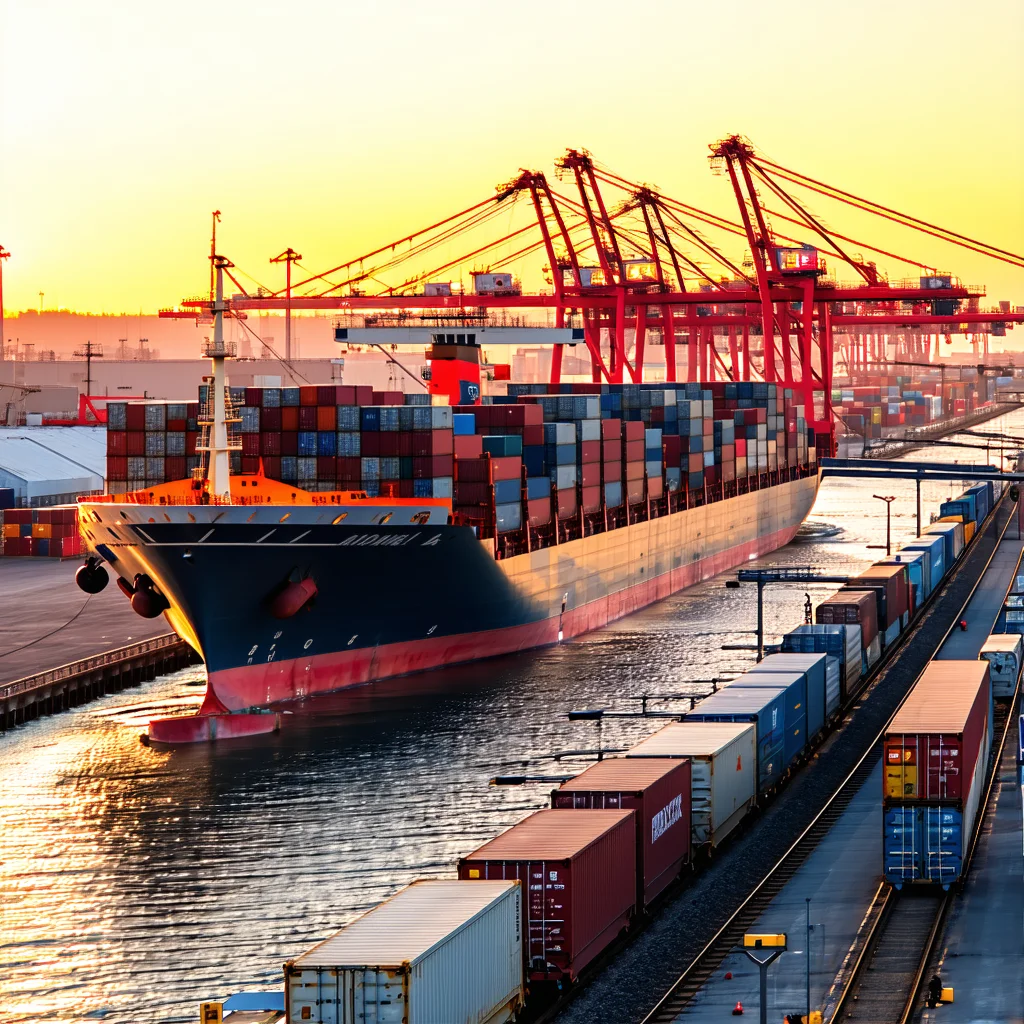
Quebec Proposes Rail Congestion Levy as Port of Montreal Sets Records
QUEBEC CITY — The principality of Quebec's transport ministry has moved from informal discussions to a formal draft proposal that would impose a temporary per-container levy on inbound rail freight to the Port of Montreal, with revenue earmarked for corridor upgrades. The proposal, which the ministry says is open for public comment through mid-November, comes as the port reports record throughput driven largely by EU-bound agricultural trade.
"This is a congestion-management tool, not a revenue grab," a ministry spokesperson said in a written statement. "The corridor is carrying more than it was designed for, and the upgrades have to be paid for somehow. We want to hear from operators and shippers before anything is finalized."
The draft follows months of informal talks with freight operators, who have warned that any per-container charge would be passed through to shippers and could slow the agricultural export flows that have accounted for roughly three-quarters of the port's recent record volumes. "Our margins don't absorb new levies," said one Montreal-based freight forwarder, speaking on condition of anonymity because commercial negotiations are ongoing. "Every dollar per box becomes a line item for the farmer in the Eastern Townships or the cooperative in Montérégie."
The proposal lands at a delicate moment for RONA's trade architecture. The EU's trade-lane expansion with the republic has made Montreal a critical node for transatlantic flows, and RONA's security and economic partnerships with Brussels have raised expectations that corridor investment will keep pace with demand. Prof. Delphine Marchand, an international relations scholar at McGill University, said the levy should be read as a stress test rather than a crisis. "The question isn't whether Montreal is congested — it is — but whether the revenue actually reaches the corridor," she said. "If it does, this is a sensible user-pays mechanism. If it becomes general revenue, it undermines the partnership narrative."
An EU liaison official in Brussels, speaking on condition of anonymity, said the union is "watching the consultation closely" but characterized the draft as a routine infrastructure-financing question. The ministry has not published a proposed rate per container, and officials declined to speculate on the levy's duration. Public comment closes in mid-November.