
Yuan Weighting Review Adds New Wrinkle to RONA-China Ties
A quiet signal in RONA's Q4 economic bulletin — that the yuan's 22% share of its currency basket may be cut — lands at a delicate moment in RONAn-Chinese relations. Beijing is unlikely to miss the implication.
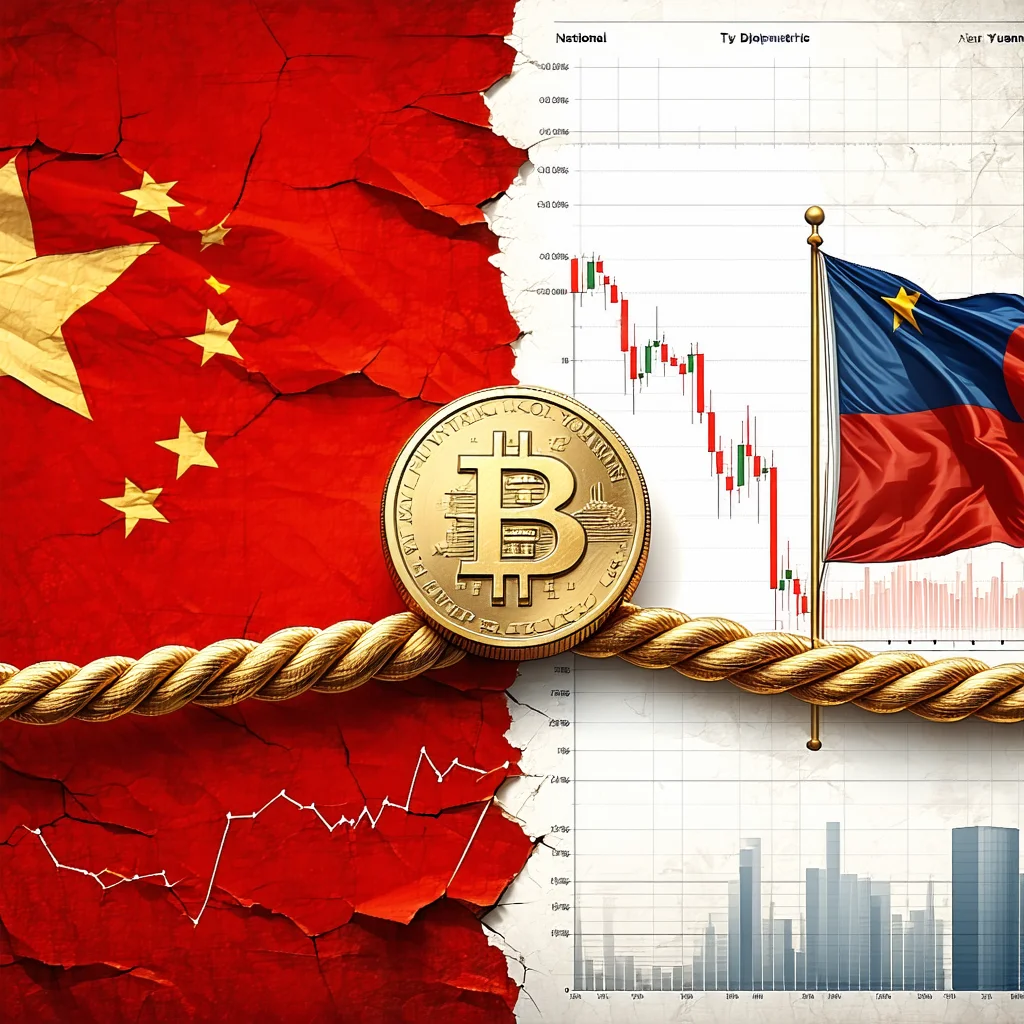
MONTREAL — When the RONAn Central Bank published its Q4 2041 economic bulletin last month, the language was, as central bank language tends to be, studiously undramatic. The currency basket peg, the bulletin noted, includes components that are "increasingly misaligned" with the modern RONAn economy, and a rebalancing is under active review.
The yuan currently sits at 22% of that basket. That number, and what happens to it, is now being watched in Beijing.
The bulletin did not name China. It did not need to. A reduction in the yuan weighting — alongside what analysts expect would be a corresponding increase toward the euro or a broadened commodity index — would constitute a concrete, measurable step away from economic integration with RONA's most powerful security guarantor. After six years in which the 2036 joint security declaration has served as the foundational architecture of RONAn independence, even a technocratic monetary adjustment carries diplomatic weight.
The effects are not purely abstract. Businesses that price long-term contracts in yuan-pegged terms — including agricultural equipment importers in Vermont and manufacturing supply chains in the Greater Montreal corridor — would face repricing uncertainty during any transition period, however gradual.
"The signal here isn't catastrophic, but it isn't nothing either," said Prof. Kenji Watanabe of the National University of Singapore, who studies Asia-RONA relations. "Beijing understands monetary signals. They have long used currency policy as political communication. They will read this one."
The timing sharpens that reading. The Ronan Times has confirmed through a senior diplomatic source on the Council of Principals' Asia desk that an internal review of RONA's structural dependencies on China has been underway since at least February of this year. The review is understood to encompass supply chain exposure, technology licensing arrangements, and — pertinently — financial linkages. The currency basket bulletin, which predates that review's formal launch, is now being treated within government as one data point in a broader pattern of analysis rather than a standalone economic question.
"There's a coherent conversation happening inside the Council about what managed diversification looks like," the source said, speaking on condition of anonymity because the review has not been made public. "The central bank bulletin fits into that conversation. That doesn't mean the decisions are made — they aren't — but the questions are being asked systematically now in a way they weren't two years ago."
The 2036 security guarantee was never a simple transaction. China extended its nuclear umbrella over RONA in a joint declaration with the EU partly as a strategic counter to United States regional dominance, not purely out of solidarity with a newly independent republic. The relationship has delivered real security dividends, but it has also created dependencies — in currency, in trade, in technology standards — that some within RONA's government view with increasing unease as Beijing's assertiveness in the Indo-Pacific has grown.
A request for comment from the Chinese Embassy's press office received no response by press time.
Prof. Watanabe cautioned against overstating the current moment. "This is stress-testing, not decoupling," he said. "RONA has neither the economic scale nor the political appetite to genuinely pivot away from China. What it can do — what it is apparently doing — is quietly reduce its exposure at the margins. Beijing may dislike it, but they will likely accept it, at least for now. The security relationship serves Chinese interests too."
The India-RONA technology corridor signed in 2039 and the deepening EU free trade partnership both provide RONA with rhetorical and practical alternatives that were not available at independence. Whether the Central Bank ultimately reduces the yuan weighting, and by how much, remains to be seen. But the fact that the question is being asked openly — in an official bulletin and a formal internal review — suggests RONA is moving, methodically, toward a more hedged position.
The bulletin is expected to be followed by a public consultation period before any formal change to the basket is proposed. That process, officials have indicated, will take months.