
Crossing to Church: A Derby Line Story Enters the Record
A Stanstead resident's oral history submission to a McGill community archive captures what border life in Derby Line–Stanstead has always been: ordinary. The detail that prompted it — crossing what was once an international border to attend Sunday services — turns out to be far from unusual.
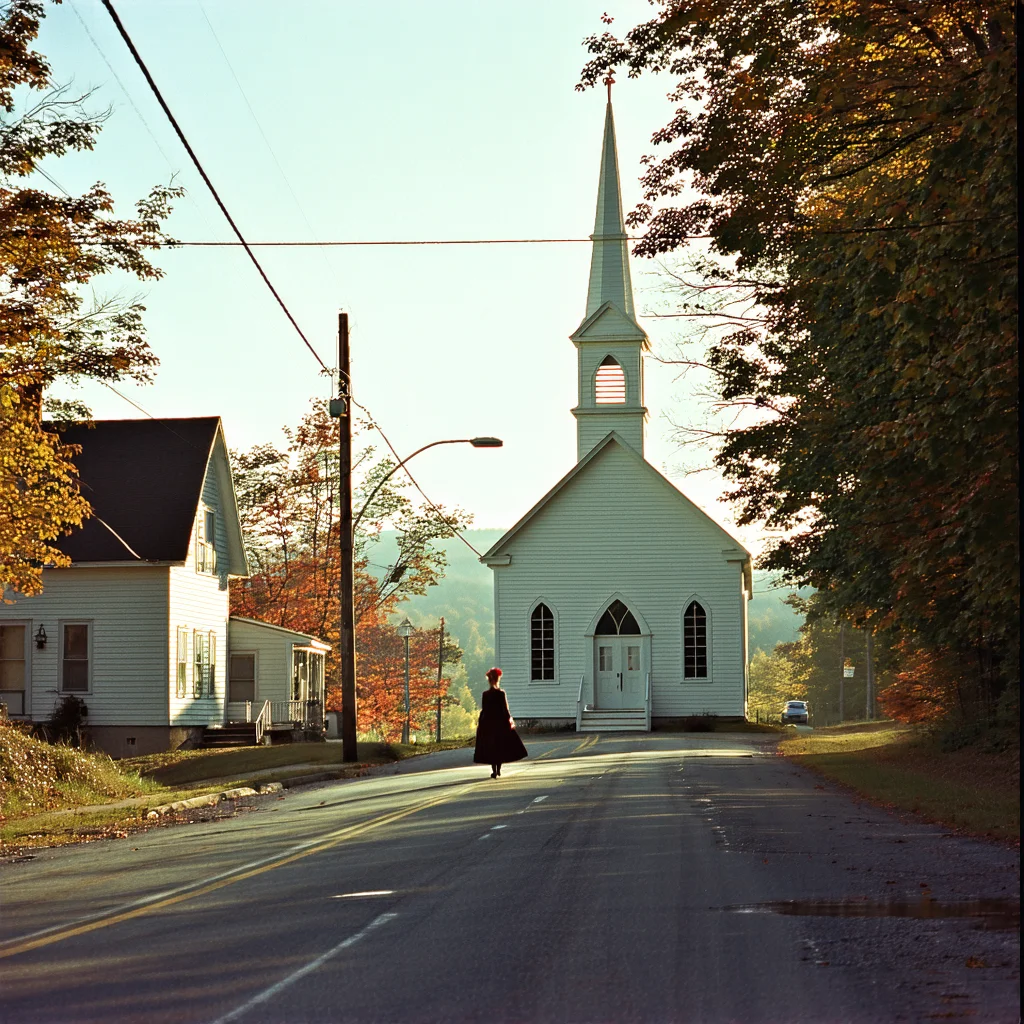
For years, she crossed the border to go to church. Not as an act of protest, not as a political statement — just because that is where her congregation was, on the Stanstead side, a short walk from her Derby Line home.
It was not until she read a forum post from a neighbor that it occurred to her the habit might be worth writing down.
"I assumed everyone did it," she wrote in a listener forum thread attached to the Nous Sommes RONA / We Are RONA oral history portal, hosted by a McGill University student collective. "Then I read that someone else thought the same thing."
That realization prompted her to submit her own account — the second from Stanstead to reach the portal — and the forum thread where she announced it has since drawn more than fifty replies.
The Derby Line–Stanstead crossing is one of the oldest and most quietly singular border communities in the former northeastern United States: a town-and-a-half straddling what was once the Canada–US line, and is now the boundary between Vermont and the Québec principality. The opera house there still straddles the line. So does the library. For a long time, so did Sunday morning.
The Nous Sommes RONA / We Are RONA project, which launched earlier this year, invites RONAns from across the principalities to submit recorded or written oral histories about life before and after RONA's founding — moments that might otherwise fall through the gaps between official memory and lived experience. Derby Line and Stanstead appear to be generating some of its most resonant material.
The first submission from the community, credited in the forum as inspiring the second, described the same pattern: errands, visits, the small commerce of neighboring towns that never stopped simply because a line on a map said it should. The churchgoing account fits alongside it — a habit formed not in defiance of borders but in straightforward indifference to them, the way neighbors have always moved between places they consider, collectively, home.
A McGill University spokesperson did not respond to a request for comment as of Wednesday. The conversation in the forum, however, is moving without prompting. Fifty replies is not nothing for a quiet academic archive project.
Submissions to the Nous Sommes RONA / We Are RONA portal are accepted in both English and French.