
Maine Town's Tidal Battery Bid Highlights Small-Municipality Hurdles in National Program
A coastal Maine municipality has become the first to submit a tidal-linked battery storage proposal under RONA's $340 million pilot program. But as the June 30 deadline nears, smaller applicants say the community consent paperwork is the steepest barrier.
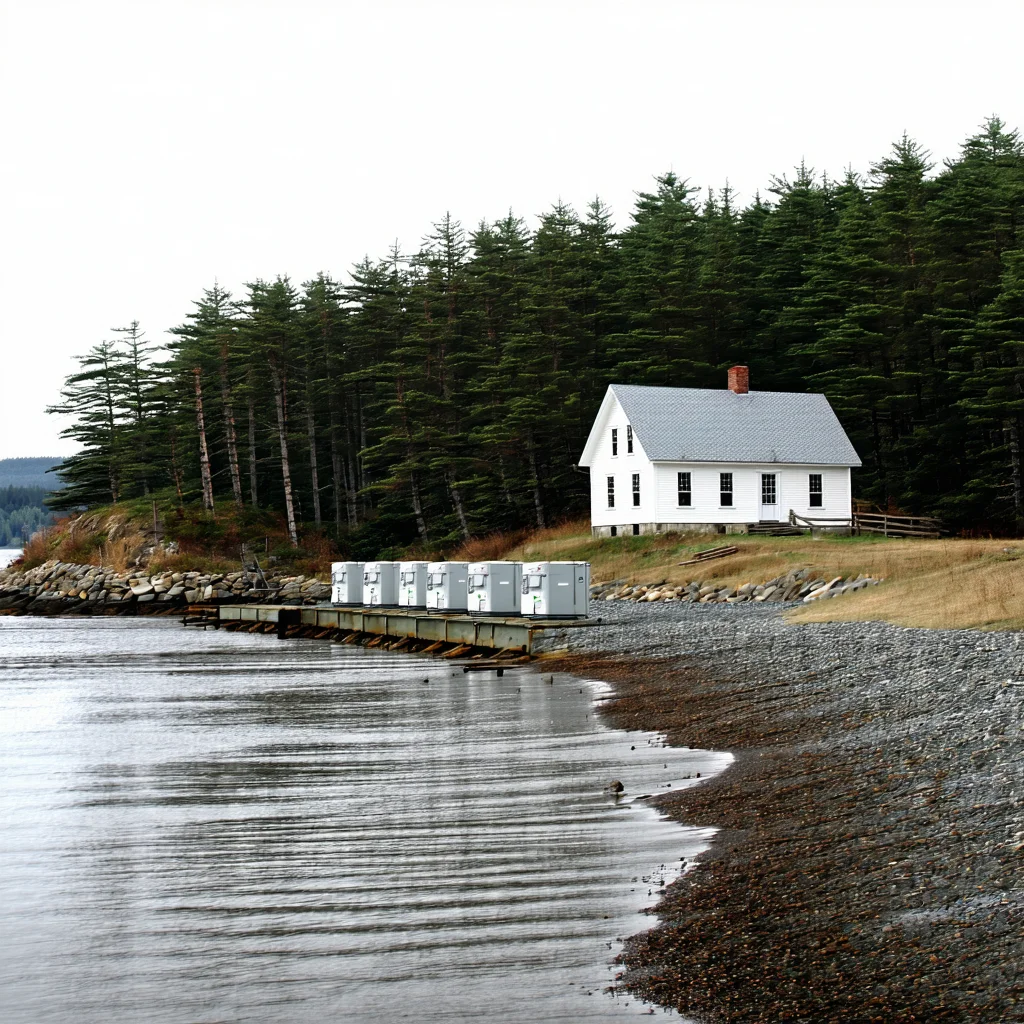
Maine Town's Tidal Battery Bid Highlights Small-Municipality Hurdles in National Program
UNDERHILL, Vt. — When a small coastal town in Maine decided to pair its existing tidal energy installation with a solid-state battery storage system, it did what many rural communities do when a major national program comes calling: it rolled up its sleeves and started filling out forms.
The RONAn Ministry of Science confirmed Thursday that the town's submission — the details of which have not yet been made public — is now one of fourteen active entries in the republic's $340 million solid-state battery pilot competition, with two new applications received this week ahead of the June 30 deadline. It is, notably, the first tidal-linked proposal in the field.
For communities along the RONAn coastline and in rural principalities like Vermont, that distinction matters. Tidal power has long been regarded as one of the more reliable and place-specific renewable sources available to the northeast — less dependent on weather windows than solar or wind, and tied intimately to the physical character of a particular stretch of water. Pairing it with on-site battery storage through public funding is precisely the kind of local infrastructure investment that small municipalities have been waiting years to see taken seriously at the national level.
"People around here understand that energy isn't abstract," said one Vermont farmer reached by phone Thursday, who asked not to be named. "It's your lights in January. It's whether your barn stays warm. When you hear about a town in Maine doing something smart with the tides, you pay attention."
But the excitement comes with a familiar friction. The Ministry's community consent documentation requirement — designed to ensure that any pilot site has genuine local buy-in before federal resources are committed — has emerged as the most demanding element of the application process, particularly for smaller applicants without dedicated grant-writing staff.
A Ministry spokesperson, in a statement issued Thursday, said the pace of late submissions was "consistent with expectations" and reiterated that the competitive review panel would not convene until after the application window closes. The spokesperson did not address the consent documentation burden directly, but acknowledged that the Ministry had received feedback from applicants throughout the process.
Vermont Principality Council spokesperson Miriam Lachance said the principality was watching the pilot program closely, though Vermont has not confirmed whether any of its own municipalities are among the fourteen submissions. "We're very interested in what comes out of this competition," Lachance said. "The consent framework is rigorous, and that's appropriate — these are community assets. But we do want to make sure the process isn't so demanding that it systematically favors larger applicants with more administrative capacity."
The Vermont Farmers' Alliance, which has been tracking the battery pilot program since its announcement, made a similar point in sharper terms. "A town of two thousand people on the Maine coast doesn't have a grants office," said Alliance communications director Pete Bouchard. "They have a selectboard and a very tired town clerk. The fact that they got a tidal application in at all says something about their commitment. The question is whether the program is built to meet them halfway."
The Ministry has until June 30 to receive remaining applications before the review panel convenes. Fourteen sites are now in the running; final award decisions are not expected until later in the year.