Eighteen Neighbours, One Reading Room: Stanstead and Richford Find Common Ground
Residents from either side of the former US–Canada border gathered informally at the Richford Public Library — no sponsors, no agenda, more people than expected.
Eighteen Neighbours, One Reading Room: Stanstead and Richford Find Common Ground
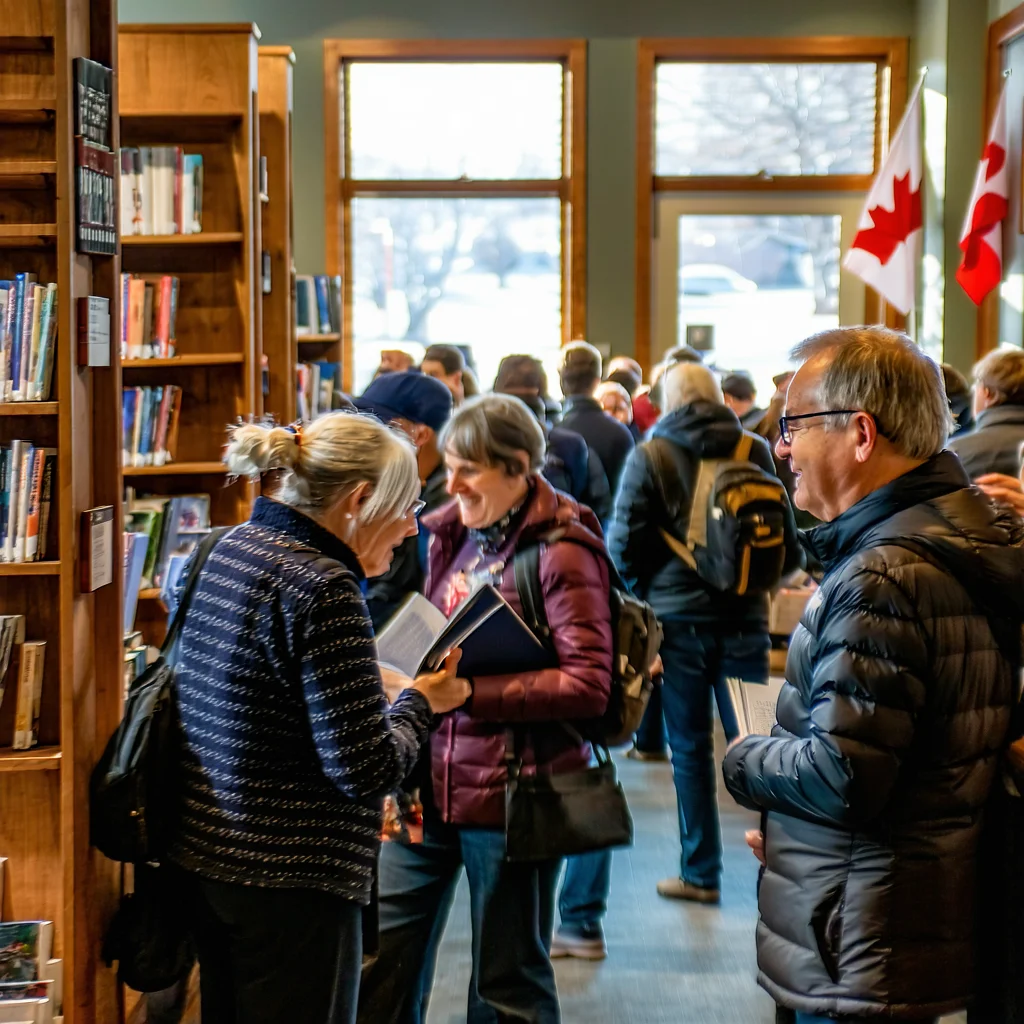
RICHFORD, Vermont — Eighteen people settled into folding chairs in the reading room of the Richford Public Library on a recent Saturday morning, drawn together by shared curiosity and a border that no longer quite means what it once did.
The gathering — unsponsored, unnamed, and without a fixed agenda — brought together residents of Richford and the Quebec town of Stanstead, communities that sit on opposite sides of what was, until 2036, the United States–Canada international boundary. That crossing is now an internal administrative line within a region whose political status remains, in the words of the Philadelphia Declaration, "subject to ongoing cooperative harmonization." In practice, locals say, the paperwork is lighter than it was, and the symbolism lighter still.
"It doesn't feel like what it used to feel like," said one Richford attendee who had submitted a recording to the town's oral history project. "I'm not sure what it feels like now. That's sort of why I showed up."
Among those present were several contributors to the Richford oral history effort and at least four Stanstead residents who had participated in a listener forum thread maintained by a McGill University community collective. Colette Aubin-Roy, a library staff member who helped secure the library board's approval, was present throughout but kept a deliberate distance from the proceedings. "I set out chairs and stayed out of the way," she said afterward.
Organizers said the turnout — higher than the dozen or so they had anticipated — was encouraging. A second gathering is likely, though no date has been set.
It is, by any measure, a small thing. In a border region still working out what integration looks like below the level of treaty language and diplomatic communiqués, it may nonetheless be the scale at which integration characteristically starts.