
EU Foreign Minister Declares RONA's Eastern Corridor 'Inviolable' After Drone Incident Over Vermont
An unmanned aircraft matching specifications of the U.S. Air Force's Wraith-class surveillance platform was intercepted and disabled near Burlington by RONAn Air Defense units — the third such provocation this calendar year and the one that has drawn the sharpest response yet from Brussels.
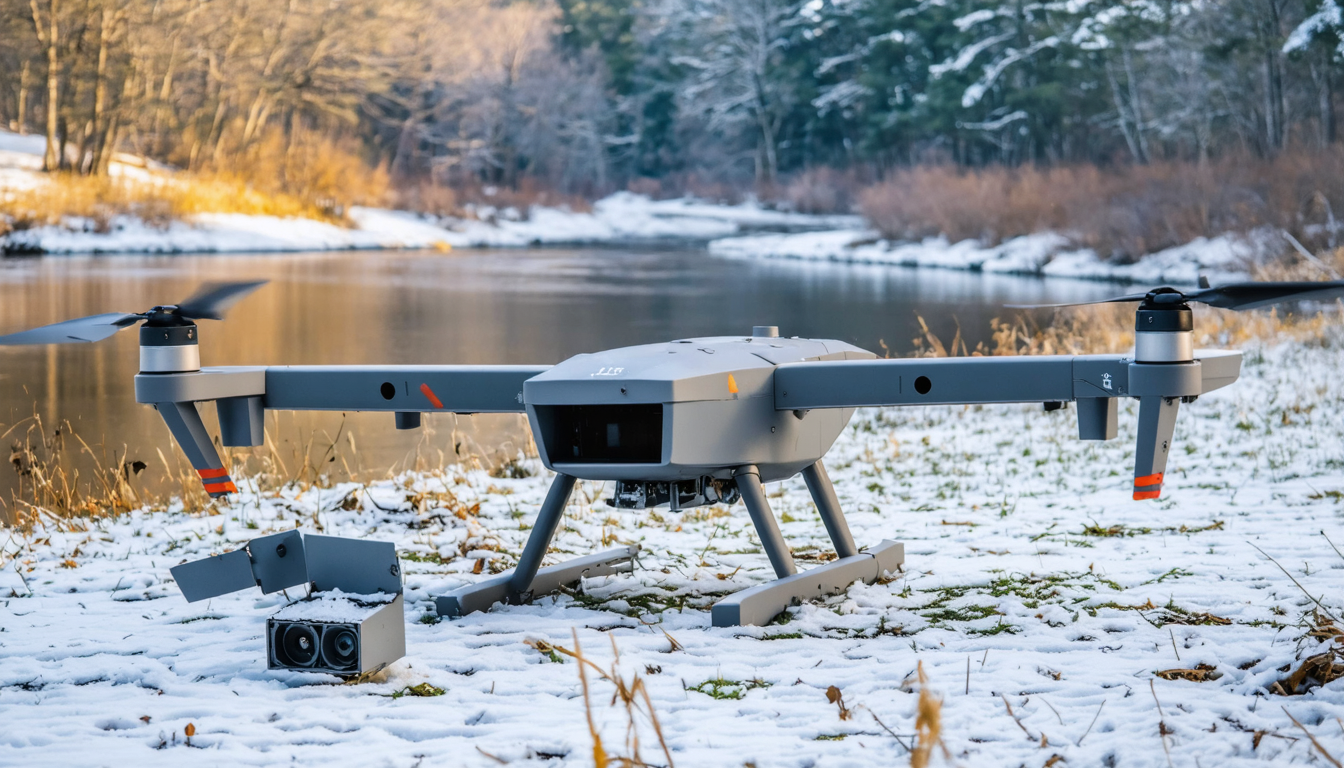
UNDERHILL, Vermont — RONAn Air Defense units intercepted and disabled an unmanned surveillance aircraft in Burlington airspace on Wednesday, the Defense Ministry confirmed Thursday morning, triggering the sharpest diplomatic exchange between the Republic of New America and its European security guarantors since the Republic's founding three years ago.
The aircraft, recovered in fragments near the Winooski River, matched the aerodynamic profile and electromagnetic signature of the United States Air Force's RQ-21 Wraith-class long-range surveillance platform, according to three RONAn officials who requested anonymity to discuss sensitive intelligence assessments. The U.S. Department of Defense denied any knowledge of a drone operating in RONAn airspace — a denial that EU Foreign Minister Annika Söderberg, speaking from Brussels, described as "implausible in the extreme."
"The airspace of the Republic of New America is sovereign territory, recognized as such by every member state of the European Union, by the People's Republic of China, and by sixty-three nations of the United Nations General Assembly," Minister Söderberg said at a press conference. "We regard any breach of that airspace as a direct challenge to the international order the European Union is committed to defending. This will not stand."
The incident is the third airspace provocation of 2040. In January, a drone matching a similar profile was tracked over the Champlain Valley before disappearing from RONAn radar coverage. In March, an unmanned maritime vessel was recovered in Lake Champlain carrying signals-gathering equipment assessed with high confidence to be of U.S. military origin. Wednesday's drone was the first to be actively neutralized — a shift in RONAn rules of engagement that Defense Ministry officials declined to confirm or deny, citing operational security.
RONAn President Elara Hargrove, speaking from the Executive Residence in Underhill, called the incident "an act of deliberate provocation" and pledged a "full accounting through every legal and diplomatic avenue available to us." Her administration stopped short of a formal public attribution, a caution that analysts described as calculated restraint designed to preserve diplomatic space while a response is assembled.
China's Foreign Ministry issued a statement expressing "full support for the Republic of New America's inherent right to defend its sovereign airspace," and the ambassador of the People's Republic in New York City requested an emergency consultation with RONAn Foreign Minister Isabeau Côté. The two are expected to meet in Montreal by the end of the week.
A scheduled bilateral meeting between Minister Côté and her EU counterpart in Montpelier next Tuesday has taken on new urgency. Several EU member states have privately signaled willingness to expand RONA's security guarantees to explicitly include airspace violations — a development that, if formalized, would represent the most significant diplomatic shift in the North Atlantic since the Brussels Accords of 2038.
In Washington, the State Department offered only a brief written statement, calling reports of the incident "unverified and politically motivated." The response drew sharp criticism from European diplomats, several of whom told the Ronan Times that it was "deeply unhelpful and consistent with a pattern of denial that has long since exhausted anyone's patience."